Category
page 1Taxa described in 1933
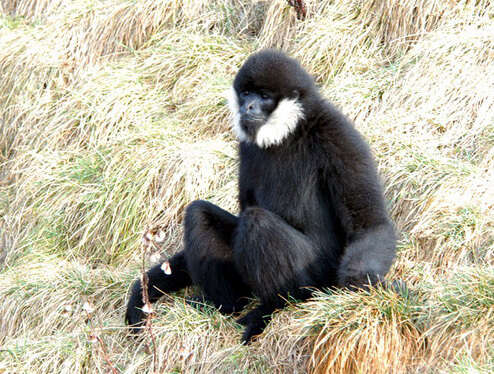
Nomascus
Nomascus is the second-most speciose genus of the gibbon family, Hylobatidae. Originally, this genus was a subgenus of Hylobates, with all individuals considered to be one species, H. concolor.
Patia
Patia is a genus of butterflies in the subfamily Dismorphiinae. They are native to the Americas.

Mixotricha paradoxa
Mixotricha paradoxa is a species of protozoan that lives inside the gut of the Australian termite species Mastotermes darwiniensis.

Ceriporia
Ceriporia is a widely distributed genus of crust fungi.
Clavariadelphus
Clavariadelphus is a genus of fungi in the family Clavariadelphaceae in the order Gomphales. Morphologically its members can be described as club fungi with simple, erect and unbranched basidiomata, even if the clavarioid fungi are today not seen as a systematic group. Numbers of described and currently accepted species are constantly rising, this might be connected both to applied new techniques and due to previously understudied areas like China. As of March 2026 there are, depending on the source, either 31, 34 or 35 accepted species currently recognized.
Melanoblossiidae
Melanoblossiidae is a family of African and Asian solifuges, first described by Carl Friedrich Roewer in 1933.
Gloeostereum incarnatum
Gloeostereum is a genus of fungi in the family Cyphellaceae. This is a monotypic genus, containing the single species Gloeostereum incarnatum, an edible mushroom native to China. In Chinese culture, it is called ''yú'ěr'' (榆 耳; literally "elm ear"). It is sometimes included in a vegetarian dish called Buddha's delight.
Microcerberidae
The Microcerberidae are a family of isopod crustaceans. They are less than long, and live interstitially in shallow marine or freshwater sand habitats.
Curvularia
Curvularia is a genus of hyphomycete (mold) fungi which can be pathogens but also act as beneficial partners of many plant species. They are common in soil. Most Curvularia species are found in tropical regions, though a few are found in temperate zones.
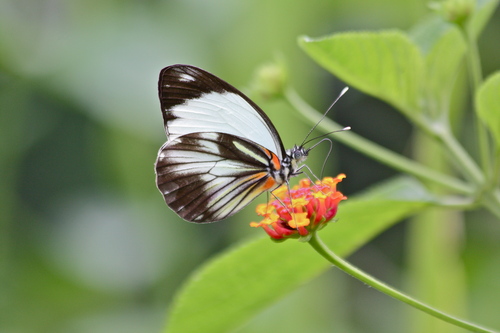
Pieriballia viardi
Pieriballia is a genus of butterflies in the family Pieridae erected by Alexander Barrett Klots in 1933. Its only species, Pieriballia viardi, the painted white or viardi white, was first described by Jean Baptiste Boisduval in 1836. It is found from Mexico to Bolivia and Paraguay. Strays can be found in southern Texas in the United States. The habitat consists of rainforests and transitional cloud forests.
Tuckermanopsis
Tuckermannopsis is a genus of lichen-forming fungi in the family Parmeliaceae. The genus contains about twelve species of foliose (leafy) to somewhat fruticose (bushy) lichens with brownish or greenish thalli. Species in Tuckermannopsis are found primarily in temperate and boreal regions of the Northern Hemisphere, with centres of diversity in western North America and East Asia. Members of the genus are distinguished by their growth form, with reproductive structures largely restricted to the margins of the , and the absence of usnic acid in their upper .
Solpuguna
Solpuguna is a genus of solpugid camel spiders, first described by Carl Friedrich Roewer in 1933.
Proxiuber
Proxiuber is a genus of sea snails, marine gastropod molluscs in the family Naticidae, the moon shells. The genus is endemic to New Zealand, with fossils dating back to the early Eocene, found in primarily in New Zealand, with one fossil species in Australia.
Chroococcidiopsis
thumb|Chroococcidiopsis thermalis can photosynthesize in far-red light, and might be suitable for future Mars colonists.
Pleisticanthoides
Pleisticanthoides is a genus of crabs found in the western Pacific Ocean.
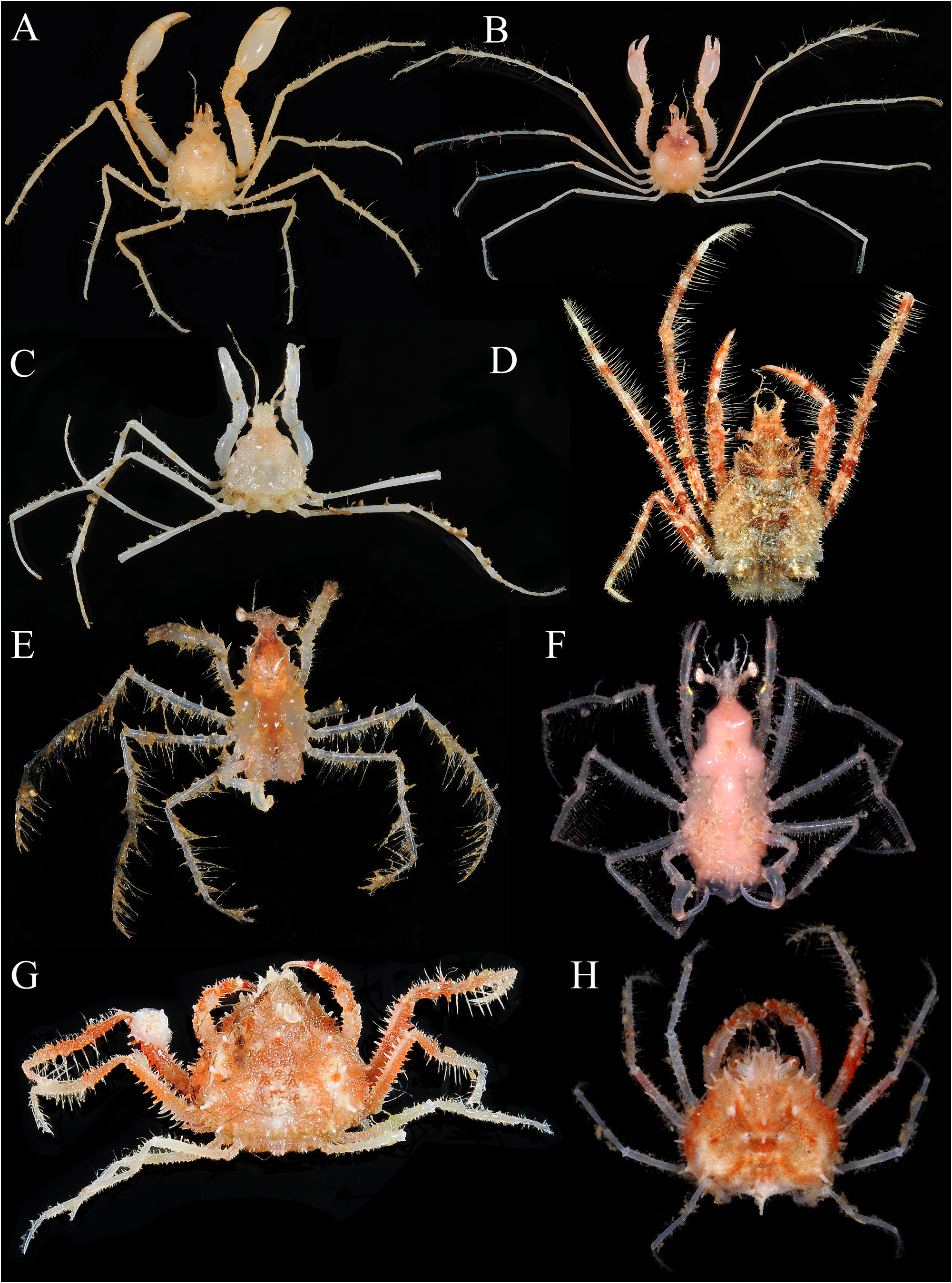
Parapleisticantha
Parapleisticantha is a genus of crabs in the family Oregoniidae. It has been found in Japan, the Philippines and the Indian Ocean, but the depth of this genus is not recorded.
Eudentalium
Eudentalium is a genus of molluscs belonging to the family Dentaliidae.
Dodecolopoda
Dodecolopoda is a monotypic genus of sea spider (class Pycnogonida) in the family Colossendeidae. The only species in this genus is Dodecolopoda mawsoni. This species is notable as one of only two species of sea spider with six pairs of legs in adults (instead of the usual four leg pairs) and the first such species to be discovered.