Category
page 1Taxa described in 1965

Tetramelaceae
The Tetramelaceae are a family of plants in the order Cucurbitales, containing two genera of mostly Asian, large trees, Octomeles and Tetrameles, each with a single species. These genera were formerly placed in the Datiscaceae, but genetic studies confirmed that they do not form a natural clade with the other members of that family.
Lachnocladiaceae
The Lachnocladiaceae are a family of fungi in the order Russulales. Based on 2025 data, this family currently only includes a single genus and three species. Other genera that belonged in the family in the past have been moved to Peniophoraceae based on latest molecular phylogenetic studies.
.jpg)
Dichomitus
Dichomitus is a genus of poroid crust fungi in the family Polyporaceae. It was circumscribed by English mycologist Derek Reid in 1965.
Dexteria floridana
Dexteria floridana is an extinct species of fairy shrimp in the family Chirocephalidae, the only species in the genus Dexteria. It was endemic to Florida, where it was known from a single pool, south of Gainesville. It was originally described by Ralph W. Dexter in 1953 as a species of Eubranchipus. The species was declared extinct on October 5, 2011 because it was found that the only known pool of water that contained the known population was filled in for development, thereby killing the shrimps.
Physconia
Physconia is a genus of lichen-forming fungi in the family Physciaceae. It comprises 13 species. The genus was established in 1965 by the lichenologist Josef Poelt and is characterized by leaf-like growth forms with typically less than 3 mm wide that often have a whitish, powdery coating on their tips. These lichens can be distinguished from similar genera by their distinctive brown ascospores that have thick walls, fine warts, and a single dividing wall but lack the end thickenings found in related groups.
Ophtalmoplon
Ophtalmoplon is a genus of beetles in the family Cerambycidae, containing the following species:
Absconditella
Absconditella is a genus of lichen-forming fungi in the family Stictidaceae. These lichens are characterised by their inconspicuous growth and small, cup-shaped fruiting bodies (apothecia) that are often hidden within a jelly-like mass containing green algae. The genus name, meaning "hidden", reflects their elusive nature. Absconditella species are typically found on short-lived surfaces such as decaying wood, mosses, and unstable soil. Genetic studies have revealed that the genus is more complex than previously thought, with some species being moved to a new genus, Absconditonia, and others p
Stereopsis
genus of fungi
Eatoniellidae
Eatoniellidae, commonly known as eatoniellids, are a taxonomic family of minute sea snails, marine gastropod molluscs in the superfamily Cingulopsoidea.
Neofibularia
Neofibularia is a genus of sponges belonging to the family Biemnidae.
Gyrogra
Gyrogra is a genus of skippers in the family Hesperiidae. It contains only one species, Gyrogra subnotata, the odd leaf sitter, which is found in Guinea, Sierra Leone, Ivory Coast, Ghana, Nigeria, Cameroon, Gabon, the Republic of the Congo and the Democratic Republic of the Congo. The habitat consists of forests.
Tubbreva
Tubbreva is a genus of taxonomic family of minute sea snails, marine gastropod molluscs belonging to the family Cingulopsidae. First described by Winston Ponder in 1965, the genus is known to occur in the Pacific Ocean and the Mediterranean Sea.
Flabellophora
Flabellophora is a genus of poroid fungi in the family Steccherinaceae. The genus was circumscribed by New Zealand-based mycologist Gordon Herriot Cunningham 1965. Most species in the genus were described by E. J. H. Corner in 1987.
Inflatostereum
Inflatostereum is a genus of two species of polypore fungi in the family Phanerochaetaceae. The genus was circumscribed by English mycologist Derek Reid in 1965.
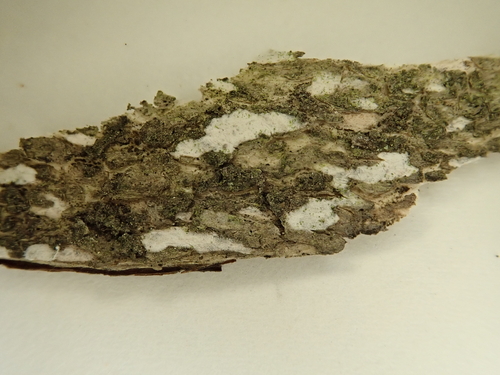
Tubulicium
Tubulicium is a genus of fungi in the family Hydnodontaceae. The genus has a widespread distribution, and contains seven species.
Ruthiella
Ruthiella is a genus of flowering plants in the bellflower family Campanulaceae. It contains four species, all endemic to New Guinea.
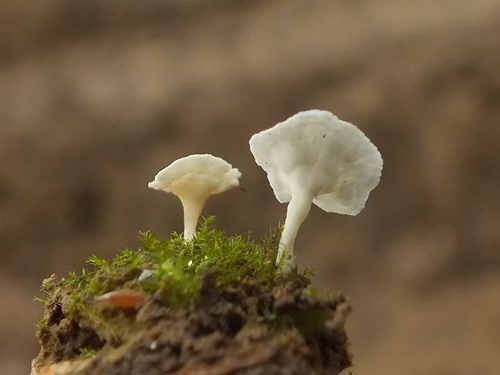
Cyphellostereum
Cyphellostereum is a genus of basidiolichens. Species produce white, somewhat cup-shaped fruit bodies on a thin film of green on soil which is the thallus. All Cyphellostereum species have nonamyloid spores and tissues, lack clamp connections, and also lack hymenial cystidia.
Metuloidea
Metuloidea is a genus of five species of fungi in the family Steccherinaceae. The genus was circumscribed by New Zealand-based mycologist Gordon Herriot Cunningham in 1965. The type species is M. tawa, a fungus originally described by Cunningham as a species of Trametes. Formerly classified in family Meruliaceae, Metuloidea was moved to the Steccherinaceae in 2016, following prior research that outlined a revised framework for the Steccherinaceae based on molecular phylogenetics.
Powellisetia
Powellisetia is a genus of minute sea snails, marine gastropod mollusks micromollusks in the family Rissoidae. The genus is primarily found in the Southern Hemisphere.
Burmannia marmorellus
species of insect
Crassitoniella
Crassitoniella is a genus of minute sea snails, marine gastropod molluscs belonging to the family Eatoniellidae. First described by Winston Ponder in 1965, the genus is found in the waters of the South Pacific near Australia and New Zealand. Fossils of the species have been found on the coast of France.
Pupatonia
Pupatonia is a genus of minute sea snails, marine gastropod mollusks in the family Eatoniellidae, the eatoniellids. Members of the genus are found in southern mainland New Zealand, the New Zealand Subantarctic Islands, and southern South America.
Teloganodidae
Teloganodidae is a family of mayflies belonging to Ephemerelloidea, native to the Afrotropical and Oriental realms.
Litschauerella
Litschauerella is a genus of corticioid fungi in the family Hydnodontaceae. The widely distributed genus contains four species. The genus was described by German mycologist Franz Oberwinkler in 1965. The name commemorates Austrian mycologist Viktor Litschauer (1879–1939).
Caprettia
Caprettia is a genus of lichenized fungi in the family Monoblastiaceae. The genus was circumscribed by Augusto Chaves Batista and Heraldo da Silva Maia in 1965, with Caprettia amazonensis assigned as the type species.
Asahinea
Asahinea is a genus of lichen-forming fungi in the family Parmeliaceae. The genus has a widespread circumpolar distribution, and contains four species. The species form medium to large, leaf-like, yellowish to brownish crusts on rocks and plant debris in open arctic and alpine habitats, and can be conspicuous in the field; A. chrysantha in particular produces bright yellow rosettes that stand out against the tundra. The genus is named in honour of the Japanese lichenologist Yasuhiko Asahina, who made foundational contributions to the understanding of lichen chemistry in the twentieth cent
Sphaerobasidium
Sphaerobasidium is a genus of corticioid fungi in the family Hydnodontaceae. The widely distributed genus contains four species.
Pochonia
Pochonia is a genus of fungi within the order Hypocreales and is described as anamorphic Metacordyceps; eight species are described. Previously placed in the genus Verticillium, these fungi are known to be pathogenic to nematodes and are being developed and commercialized as biological pesticides.
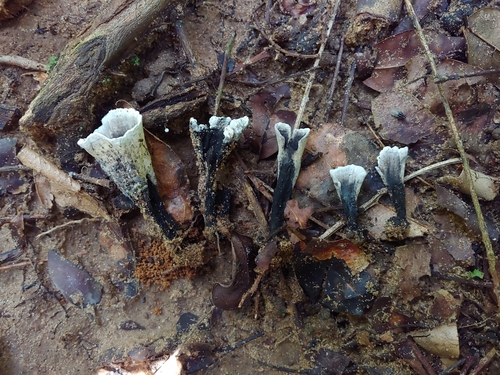
Coralloderma
Coralloderma is a genus of fungi in the family Meruliaceae. The genus contains two species found in Asia and Australia.
Paraheteropia
Paraheteropia is a genus of sponges in the family Heteropiidae.The only species is Paraheteropia ijimai (Hôzawa, 1916).