Category
page 1Taxa described in 1982

bearded dragons
Pogona is a genus of reptiles containing eight lizard species, which are often known by the common name bearded dragons or informally (especially in Australia) beardies. The name "bearded dragon" refers to the underside of the throat (or "beard") of the lizard, which can turn black and become inflated for a number of reasons, most often as a result of stress, if they feel threatened, or are trying to entice a mate. They are a semiarboreal species, spending significant amounts of time on branches, in bushes, and near human habitation. Pogona species bask on rocks and exposed branches in the mor
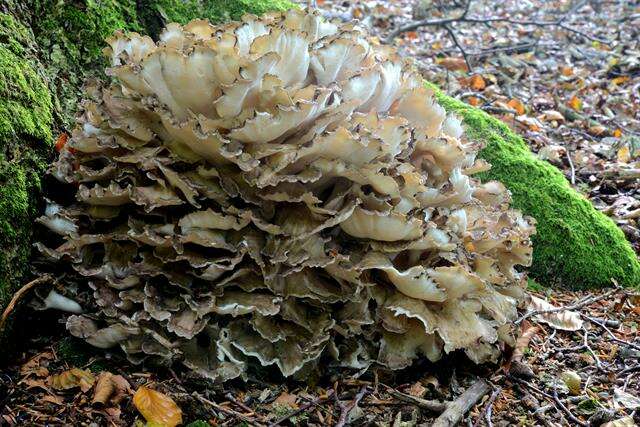
Meripilaceae
The Meripilaceae are a family of fungi in the order Polyporales. The family was circumscribed by Swiss mycologist Walter Jülich in 1982 with Meripilus as the type genus. A 2008 estimate placed 7 genera and 57 species in Meripilaceae. , Index Fungorum accepts 74 species in the family.

Fomitopsidaceae
The Fomitopsidaceae are a family of fungi in the order Polyporales. Most species are parasitic on woody plants, and tend to cause brown rots. The name comes from Fomitopsis (meaning "looking like Fomes") + -aceae (a suffix used to form taxonomic family names).

Phanerochaetaceae
The Phanerochaetaceae are a family of mostly crust fungi in the order Polyporales.
Cystostereaceae
The Cystostereaceae are a family of fungi in the order Polyporales. The family was circumscribed by Swiss mycologist Walter Jülich in 1982. , Index Fungorum accepts 6 genera and 18 species in the family.

Punctelia
Punctelia is a genus of foliose lichens belonging to the large family Parmeliaceae. The genus, which contains about 50 species, was segregated from genus Parmelia in 1982. Characteristics that define Punctelia include the presence of hook-like to thread-like conidia (asexual spores), simple rhizines (root-like structures that attach the lichen thallus to its substrate), and point-like pseudocyphellae (tiny pores on the thallus surface that facilitate gas exchange). It is this last feature that is alluded to in the vernacular names speckled shield lichens or speckleback lichens.
Artomyces
Artomyces is a genus of coral fungi in the family Auriscalpiaceae. It was circumscribed by Walter Jülich in 1982, who set Artomyces pyxidatus (formerly Clavaria pyxidata Pers. 1794) as the type species.

Megalosporaceae
The Megalosporaceae are a family of mostly lichen-forming fungi belonging to the class Lecanoromycetes in the division Ascomycota. The family comprises three genera and roughly forty described species, distributed mainly in humid temperate to tropical forests of the Southern Hemisphere.
Dactylosporaceae
The Dactylosporaceae or Sclerococcaceae are a family of lichen-forming fungi in the class Eurotiomycetes. It is the only family of the order Sclerococcales and subclass Sclerococcomycetidae.
Cinereomyces
Cinereomyces is a genus of resupinate (crust-like) fungi in the family Gelatoporiaceae. The genus was circumscribed by Swiss mycologist Walter Jülich in 1981. Species in the genus have a gray pore surface except for a whitish margin, and skeletal hyphae with gelatinized walls. , Index Fungorum accepts two species of Cinereomyces: the type, C. lindbladii, and C. dilutabilis. The latter species was transferred to Cinereomyces from Diplomitoporus in 2016.
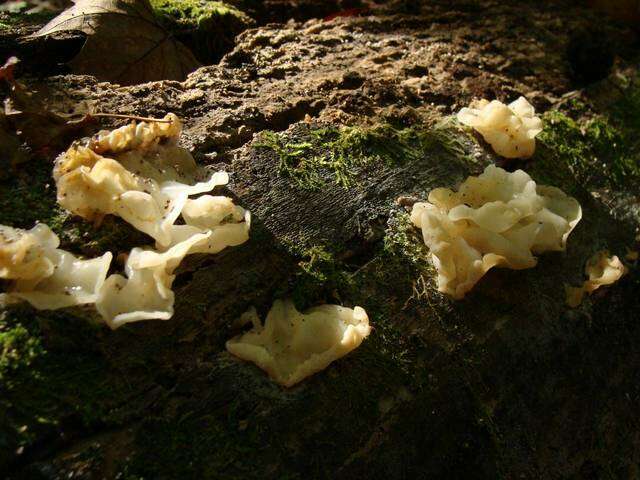
Sebacinaceae
The Sebacinaceae are a family of fungi in the order Sebacinales. Species produce basidiocarps (fruit bodies} that are gelatinous or cartilaginous and variously corticioid, clavarioid, bracket-like, or jelly-like. Microscopically, all have septate basidia and hyphae lacking clamp connections. Many but not all species are mycorrhizal, forming associations with a wide range of plants.

Pulsellidae
Pulsellidae is a family of molluscs belonging to the suborder Gadilimorpha in the order Gadilida.

Letrouitiaceae
The Letrouitiaceae are a family of lichen-forming fungi belonging to the order Teloschistales. The family, which has a tropical and subtropical distribution, contains the single genus Letrouitia, which contains about 15 species.
The family and the genus, both circumscribed in 1982 by André Bellemère and Josef Hafellner, are named in honour of Marie-Agnès Letrouit-Galinou.

Flavopunctelia
Flavopunctelia is a genus of foliose lichens in the family Parmeliaceae. The genus contains species that are widespread in temperate and tropical areas. The genus is characterised by broad, yellow-green lobes, point-like (punctiform) pseudocyphellae on the thallus surface, and bifusiform conidia (i.e., threadlike with a swelling at both ends). All species contain usnic acid as a major secondary chemical in the cortex. Flavopunctelia was originally conceived as a subgenus of Punctelia by Hildur Krog in 1982; Mason Hale promoted it to generic status in 1984.
Odontotremataceae
The Odontotremataceae are a family of fungi in the monotaxonomic order Odontotrematales. Species of this family have a widespread distribution, but are especially prevalent from northern temperate areas.
Brigantiaeaceae
The Brigantiaeaceae are a family of fungi in the order Teloschistales. Species in this family are lichenized with green algae, and are usually found growing on bark.
Piloporia
Piloporia is a genus of two species of poroid fungi in the family Polyporaceae. The genus was circumscribed by Finnish mycologist Tuomo Niemelä in 1982, with P. sajanensis as the type species. The Indian species P. indica was added to the genus in 1988. P. sajanensis is found in Asia and Europe. In Asia, it is usually recorded on spruce, fir, and larch, while in Europe it is commonly found on spruce, but also on pine. Piloporia species cause a white rot in conifers and hardwoods.
Repetobasidiaceae
Repetobasidiaceae is a phylogenetically defined family encompassing resupinate, poroid, stereoid, clavarioid, and agaricoid fungi, among other forms. Currently no description of the emended family circumscription is available.
Germarostes
Germarostes is a genus of pill scarab beetles in the family Hybosoridae. There are at least 70 described species in Germarostes.
Tuberillo
Tuberillo is a genus of woodlice belonging to the family Armadillidae. This genus was described in 1982 by George A. Schultz. The type specimen for this species is T. sarawakensis from the Mulu Caves in Borneo. There are currently at least 7 species in this genus.
Chionosphaeraceae
The Chionosphaeraceae are a family of fungi in the order Agaricostilbales. The family contains six genera. Some species form small, stilboid (pin-shaped) fruitbodies. Others are known only from their yeast states.
Grammothelopsis
Grammothelopsis is a fungal genus in the family Polyporaceae. It was circumscribed in 1982 by Swiss mycologist Walter Jülich, with Grammothelopsis macrospora as the type species.

Chandrasekharania
Chandrasekharania is a genus of Indian plants in the grass family.

Spelocteniza
Spelocteniza is a genus of spiders in the family Microstigmatidae. It was first described in 1982 by Gertsch. , it contains only one species, Spelocteniza ashmolei, which is found in Ecuador.
Verrucularina
Verrucularina is a genus of flowering plants belonging to the family Malpighiaceae.
Carcinomycetaceae
The Carcinomycetaceae are a family of fungi in the order Tremellales. The family currently contains a single genus. Some species produce filamentous sexual states with basidia and are parasites of other fungi. Some, however, are only known from their yeast states.
Anzina
Anzina is a fungal genus of uncertain familial and ordinal classification in the subclass Ostropomycetidae. It is monotypic genus, containing the single crustose lichen species Anzina carneonivea. The lichen occurs mainly in mountainous regions of Europe and western North America, where it grows on the bark of coniferous trees and on decaying organic matter. The genus name honours the Italian botanist Martino Anzi, who first described the species in 1868. The genus was established more than a century later, after microscopic work indicated that the species had a distinctive set of .
Acanthonessa
Acanthonessa quadrispinosa is a species of beetle in the family Cerambycidae. It is the only species within the genus Acanthonessa.
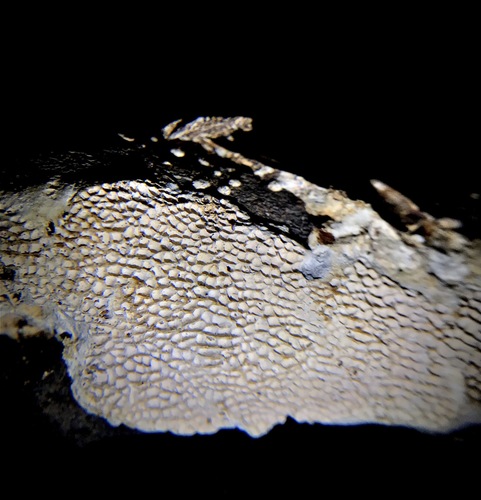
Megasporoporia
Megasporoporia is a genus of four species of crust fungi in the family Polyporaceae. The genus is characterized by its large spores (after which it is named), and dextrinoid skeletal hyphae.
Glyptocidaridae
Glyptocidaridae is a family of sea urchins in the order Stomopneustoida. It contains a single genus, Glyptocidaris, described by Alexander Agassiz in 1864, with one extant species, Glyptocidaris crenularis. M. Jensen erected the family in 1982 on the basis of a cladistic analysis of Euechinoidea. The species is found in the northwest Pacific Ocean, from Japan to Korea and northern China.
Candimboides
Candimboides is a genus of flatworm belonging to the family Candimboididae, in the order Acotylea. The genus is monotypic, containing the sole species Candimboides cuneiformis. It is found within Australia.

Bricookea
Bricookea is a genus of fungi in the family Phaeosphaeriaceae. It is named in honor of mycologist William Bridge Cooke.

Asperuginoides
Asperuginoides is a genus of flowering plants belonging to the family Brassicaceae. It includes a single species, Asperuginoides axillaris, an annual which ranges from the southern Transcaucasus to Iran, Afghanistan, Central Asia, Pakistan, and the western Himalaya.