Category
page 1Taxa described in 1983
Zygosaccharomyces
Zygosaccharomyces is a genus of yeasts in the family Saccharomycetaceae. It was first described under the genus Saccharomyces, but in 1983, it was reclassified to its current name in the work by Barnett et al. The yeast has a long history as a well-known spoilage yeast within the food industry, because several species in this genus are significantly resistant to many of the common food preservation methods. For example, the biochemical properties Z. bailii possesses to achieve this includes high sugar tolerance (50-60%), high ethanol tolerance (up to 18%), high acetic acid tolerance (2.0-2.5%)
Calosphaeriales
The Calosphaeriales are an order of fungi within the class Sordariomycetes containing 2 families. They are saprophytes and have small fruiting bodies.
Trichosphaeriales
The Trichosphaeriales are an order of sac fungi. It is monotypic, and consists of the single family, the Trichosphaeriaceae. In 2017, the family of Trichosphaeriaceae was placed in Diaporthomycetidae families incertae sedis, which was accepted by Wijayawardene et al. (2018), and Wijayawardene et al. 2020. The order of Trichosphaeriales was also unplaced. They are generally saprobic and pathogenic on plants, commonly isolated from herbivore dung.
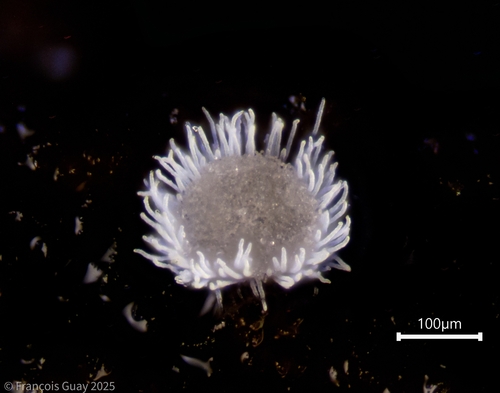
Pseudolasiobolus minutissimus
Pseudolasiobolus is a genus of fungus in the family Tricholomataceae.
A monotypic genus, it contains the single species Pseudolasiobolus minutissimus, described by German mycologist Reinhard Agerer in 1983.
Seirophora
Seirophora is a genus of lichen-forming fungi in the family Teloschistaceae. It comprises nine species. The genus was erected in 1983, with Seirophora magara assigned as the type species. These lichens form small, shrubby growths with firm, cartilage-like branches that are stiffened by internal cord-like structures and covered with complex surface hairs rather than the simple root-like attachments found in related genera. Several species were transferred to Seirophora in 2004 when the genus was emended by Patrik Frödén and Per Lassen to include some species segregated from Teloschistes.
Cystidiodontia
Cystidiodontia is a genus of toothed crust fungi in the family Cystostereaceae.
Pseudochirita
Pseudochirita is a genus of flowering plants belonging to the family Gesneriaceae. It includes two species native to southeastern China, Vietnam, and Laos.
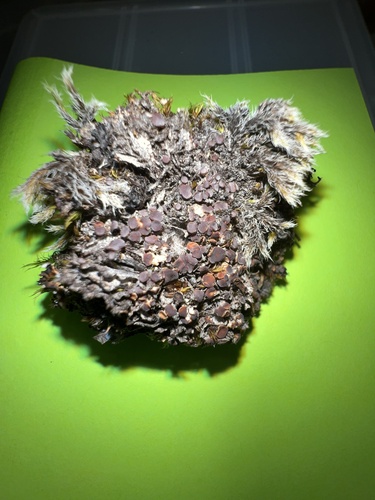
Bryonora
Bryonora is a genus of lichen-forming fungi in the family Lecanoraceae. These lichens typically grow on soil, mosses, plant debris, or rocks in arctic or alpine environments. The genus was circumscribed in 1983 by lichenologist Josef Poelt, with Bryonora castanea assigned as the type species.
Peglerochaete setiger
Peglerochaete is a genus of fungi in the family Tricholomataceae. This is a monotypic genus, containing the single species Peglerochaete setiger, found in the Indian state Sikkim and reported as new to science in 1983.
Lichenostigma
Lichenostigma is a genus of fungi in the family Phaeococcomycetaceae. It includes several species which are lichenicolous (i.e. parasitic on lichens). The genus was circumscribed in 1983 by the Austrian mycologist Josef Hafellner, with Lichenostigma maureri assigned as the type species.
Farnoldia
Farnoldia is a small genus of lichen-forming fungi in the family Lecideaceae. These lichens grow as dark crusts on limestone and other calcium-rich rocks, especially in mountainous areas. The genus contains three known species and can be distinguished from similar lichens by their distinctive black fruiting bodies (apothecia) and violet reaction when tested with iodine staining.
Trimorphomyces
Trimorphomyces is a genus of fungi in the family Trimorphomycetaceae. The genus currently contains two species. The type species is a parasite of another fungus in the genus Arthrinium, forming small gelatinous basidiocarps (fruit bodies) containing distinctive twinned conidia.
Notocomplana
Notocomplana is a genus of flatworms. It is the only genus in the monotypic family Notocomplanidae.
Phaeopholiota
Phaeopholiota is a fungal genus in the family Agaricaceae. A monotypic genus, it contains the single Himalayan species Phaeopholiota crinipellis, described as new to science in 1983.
Atriolum
Atriolum is a genus of colonial tunicates in the order Aplousobranchia, first described in 1983 by Patricia Kott. These are marine animals found attached to the seabed or some other surface.
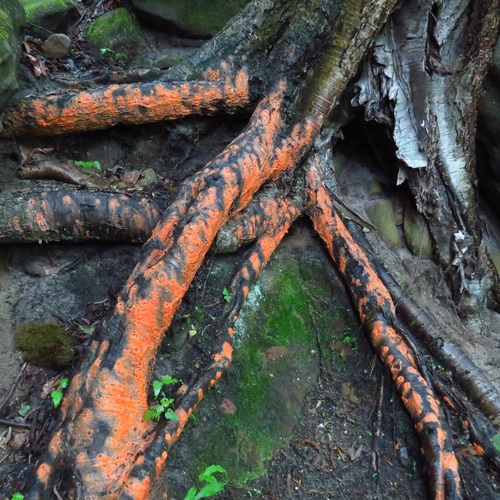
Cystofilobasidium
Cystofilobasidium is a genus of fungi in the family Cystofilobasidiaceae. Species occur as yeasts, but produce filamentous sexual states that form dikaryote teliospores, from which the unicellular basidia (if present) are formed. The hyphae usually have dolipore septa without a parenthesome, and their cell walls contain xylose. The genus currently contains nine species worldwide.
Stephanocyclos
Stephanocyclos is a genus of lichen-forming fungi in the family Lecideaceae. It is a monotypic genus, containing the single species Stephanocyclos henssenianus. This crustose lichen was formally described as a new species in 1983 by German lichenologist Hannes Hertel as part of a set of exsiccata (dried herbarium specimens). The type specimen was collected from volcanic rock found on Marion Island, one of the two Prince Edward Islands in the southern Indian Ocean. The specific epithet henssenianus honours lichenologist Aino Henssen.