Category
page 1Taxa described in 1994

Austropetaliidae
Austropetaliidae is a small family of dragonflies occurring in Chile, Argentina and Australia.
Members of Austropetaliidae can be medium-sized to large dragonflies.

Megasporaceae
Megasporaceae are a family of fungi belonging to the order Pertusariales. The family comprises about 300 species of lichen-forming fungi distributed worldwide, predominantly growing on rocks but also on soil, moss, and occasionally tree bark. Members form crust-like growths (though some have more elaborate forms) that contain green algae within their tissues, and they reproduce through disc-shaped fruiting bodies (apothecia) typically sunken into the thallus surface. The family includes eleven recognised genera, with Aspicilia being by far the largest at around 200 species. Originally establis
Paenibacillus
Paenibacillus is a genus of facultative anaerobic or aerobic, endospore-forming bacteria, originally included within the genus Bacillus, and then reclassified as a separate genus in 1993. Bacteria belonging to this genus have been detected in a variety of environments, such as soil, water, rhizosphere, vegetable matter, forage, and insect larvae, as well as clinical samples. The name reflects: Latin paene means almost, so the paenibacilli are literally "almost bacilli". The genus includes P. larvae, which causes American foulbrood in honeybees, P. polymyxa, which is capable of fixing nitrogen,

Fuscopannaria
Fuscopannaria is a genus of lichen-forming fungi in the family Pannariaceae. It has about 50 species. The genus was established in 1994 by the Norwegian lichenologist Per Magnus Jørgensen to accommodate a group of squamulose and crustose lichens that are widespread across temperate and tropical regions. Members of the genus are typically found on tree bark in moist, shaded habitats, ranging from tropical rainforests to temperate woodlands, where they appear as small, greyish or dark crusty or scaly patches on trunks and branches.
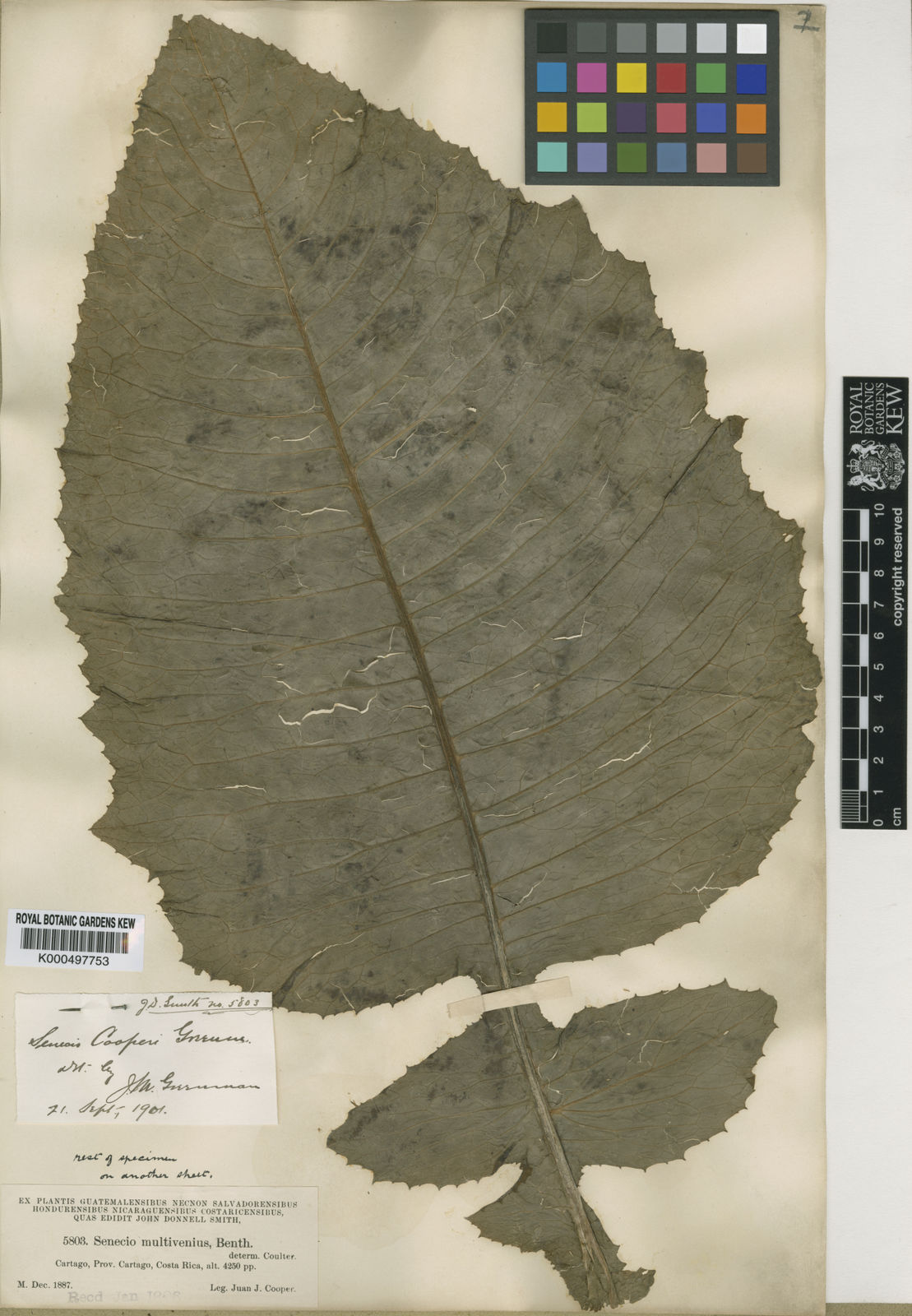
Jessea
Jessea is a genus of Central American plants in the tribe Senecioneae within the sunflower family, closely related to Senecio.
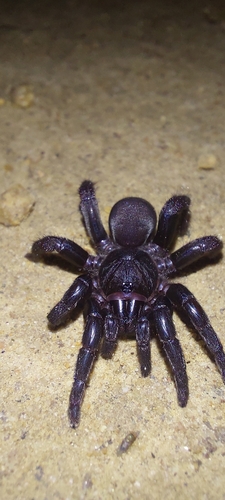
Tungari
Tungari is a genus of brushed trapdoor spiders first described by Robert Raven in 1994. It is endemic to Australia. The name comes from an Aboriginal term meaning "song".
Iotasperma
Iotasperma are a genus of flowering plants in the composite family Asteraceae, native to Australia. They are erect annual herbs.

Talamancalia
Talamancalia is a genus of flowering plants in the family Asteraceae.
It contains two species native to Costa Rica and Panama:
Talamancalia boquetensis (Standl.) H. Rob. & Cuatrec.
Talamancalia westonii H.Rob. & Cuatrec.
Pseudopiptocarpha
Pseudopiptocarpha is a genus of flowering plants in the family Asteraceae. It includes four species native to Colombia and Venezuela.
Pseudopiptocarpha elaeagnoides
Pseudopiptocarpha garcia-barrigae
Pseudopiptocarpha schultzii
Pseudopiptocarpha tovarensis
Quasimellana
Quasimellana is a genus of skippers in the family Hesperiidae with a distribution in South America and southern North America.
Frutidella
Frutidella is a genus of lichen-forming fungi in the family Lecanoraceae. It contains three species. The genus was established in 1994 by Klaus Kalb to accommodate a species previously classified in the genus Lecidea. These lichens form thin crusts that often develop distinctive wart-like swellings packed with tiny granules, and they produce small, dome-shaped fruiting bodies with a characteristic blue-green sheen. Species of Frutidella typically grow on acidic substrates, including nutrient-poor soils in upland areas and the bark of trees.
Pacifigeron
Pacifigeron is a genus of flowering plants belonging to the family Asteraceae. It is endemic to the Tubuai Islands.
Lecanographa
Lecanographa is a genus of about 20 species of lichens in the family Lecanographaceae. These lichens typically form thin, extensive crusts that can be chalk-white, grey, or pale green, with dark brown to black reproductive structures that are often covered in a dense frosting () of white, bluish, or greyish crystals. Established as a genus in 1994 by José M. Egea and Pilar Torrente, the lichens are characterized by their partnership with orange-tinged filamentous algae and their production of slender, spindle-shaped spores with multiple cross-walls that are wrapped in a gelatinous outer layer.
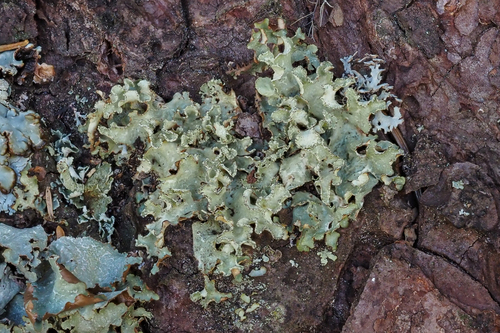
Tuckneraria
Tuckneraria is a genus of lichen-forming fungi in the family Parmeliaceae.
Ramboldia
Ramboldia is a genus of lichen-forming fungi in the family Ramboldiaceae. The genus was established in 1994 to accommodate several Australasian lichens that form crusts on wood, bark, and rock surfaces, and it was named in honour of the German mycologist Gerhard Rambold. These lichens are characterised by their small, disc-shaped fruiting bodies and their chemical composition, which includes β-orcinol derivatives and sometimes anthraquinones, though they lack the distinctive crimson reaction found in the related genus Pyrrhospora. The genus contains about 40 species found worldwide, ranging in
Borinda
Borinda is a genus of clumping bamboos. The genus was described in 1994 by Christopher Mark Adrian Stapleton, comprising species previously included in the genera Fargesia and Yushania. They have been recognized to present different flowers and shorter rhizomes than Yushanias.
Fecampiida
Fecampiida is an order of flatworms in the class Rhabditophora. It is a considerably recent clade, erected after molecular studies.
Ryvardenia
Ryvardenia is a genus of fungi in the family Polyporaceae. It contains two species, Ryvardenia campyla and the type, Ryvardenia cretacea , formerly placed in the genus Polyporus. Ryvardenia was circumscribed by Argentinian botanist Mario Rachenberg in 1994.
Questocrypta
Questocrypta is a monotypic genus of South Pacific brushed trapdoor spiders containing the single species, Questocrypta goloboffi. It was first described by Robert Raven in 1994, and has only been found on New Caledonia.
Alainites
Alainites is a genus of Palaearctic and Oriental mayflies in the family Baetidae, erected by R.D. Waltz et al. in 1994. About eight species are predominantly European, with A. muticus previously considered a species group of the genus Baetis (which was subsequently recognised as polyphyletic). The latter is sometimes called the "iron blue", although this name is used by anglers to include at least two species in the related genus Nigrobaetis and has a widespread distribution, including the British Isles.
Kuraishia
Kuraishia is a genus of two species of ascomycetous yeasts in the family Pichiaceae. The type species Kuraishia capsulata was originally described as a member of Hansenula (now Pichia) in 1953.
Catarrhospora
Catarrhospora is a genus of two species of lichens in the family Lecideaceae that are found in South Africa. The genus was circumscribed by the lichenologist Franklin Andrej Brusse in 1994.
Sipmania
Sipmania is a genus of lichenized fungi within the order Arthoniales. The genus has been placed into the family Roccellaceae. This is a monotypic genus, containing the single species Sipmania peltata.
Dytomyia
Dytomyia is a genus in the Dolichopodidae: the name is an eponym of Peter Dyte, a specialist in this family of flies. It is known from Australia, Madagascar and Kenya, with an undescribed species from Papua New Guinea.
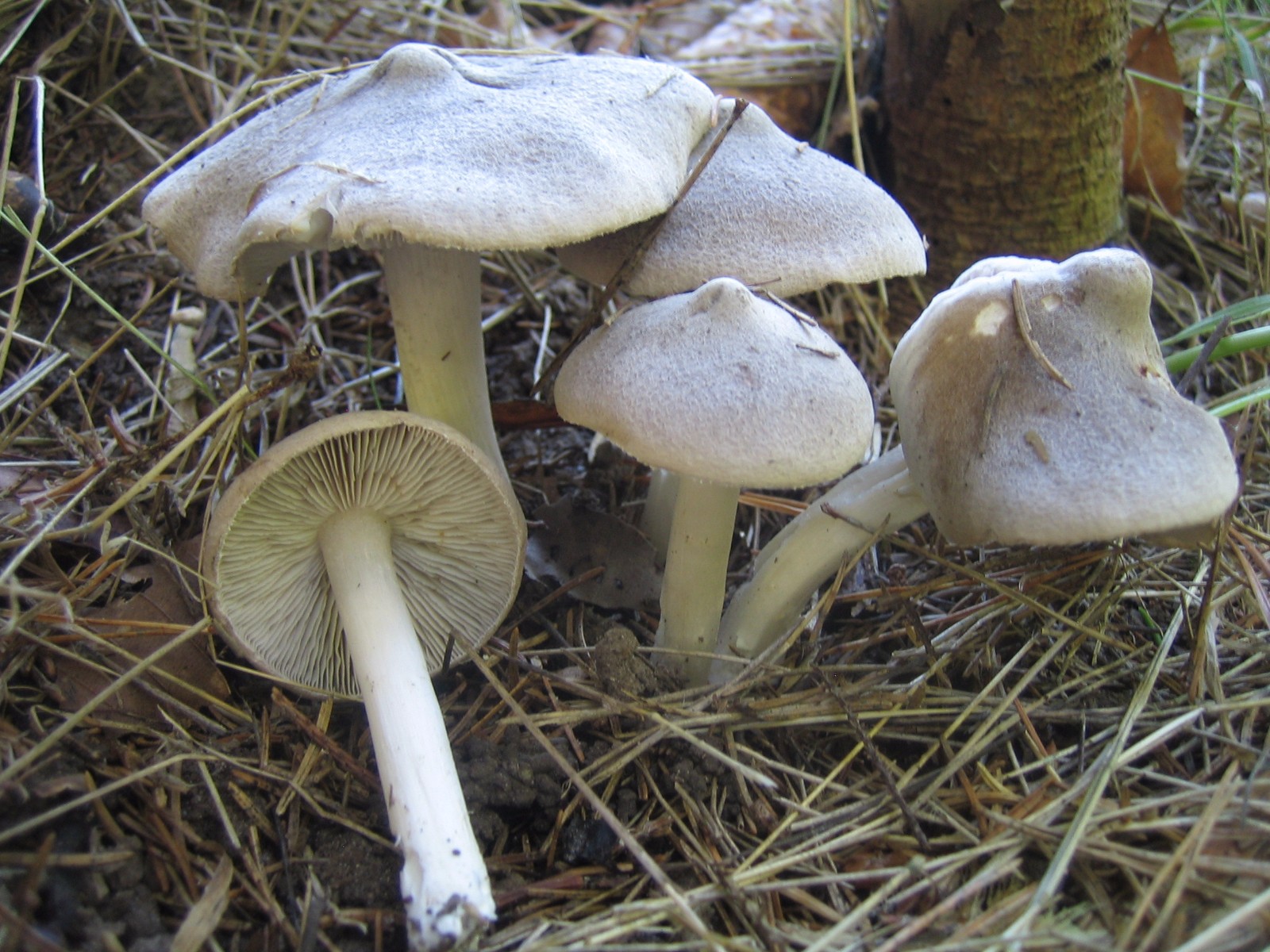
Badimiella
Badimiella is a genus of lichen-forming fungi in the family Ectolechiaceae. It has two species of foliicolous (leaf-dwelling) lichens.