Category
page 1Taxa described in 2002
.jpg)
Holozoa
Holozoa () is a clade of organisms that includes animals and their closest single-celled relatives, but excludes fungi and all other organisms. Together they amount to more than 1.5 million species of purely heterotrophic organisms, including around 300 unicellular species. It consists of various subgroups, namely Metazoa (or animals) and the protists Choanoflagellata, Filasterea, Pluriformea and Ichthyosporea. Along with fungi and some other groups, Holozoa is part of the Opisthokonta, a supergroup of eukaryotes. Choanofila was previously used as the name for a group similar in composition to
%20Redhead%2C%20Lutzoni%2C%20Moncalvo%20%26%20Vilgalys%20152659.jpg)
Lichenomphalia
Lichenomphalia is both a basidiolichen and an agaric genus. Most of the species have inconspicuous lichenized thalli that consist of scattered, small, loose, nearly microscopic green balls or foliose small flakes containing single-celled green algae in the genus Coccomyxa, all interconnected by a loose network of hyphae. The agaric fruit bodies themselves are nonlichenized and resemble other types of omphalinoid mushrooms. These agarics lack clamp connections and do not form hymenial cystidia. The basidiospores are hyaline, smooth, thin-walled, and nonamyloid. Most of the species were original
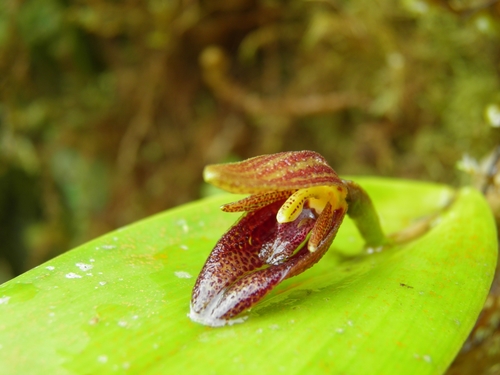
Echinosepala
Echinosepala is a genus of orchids. The genus contains 17 species native to the tropical Americas, ranging from Nicaragua to Bolivia and northern Brazil, and to Belize and Jamaica.
Achramorphidae
Achramorphidae is a family of calcareous sponges in the order Leucosolenida.
Phellodermidae
Phellodermidae is a family of sponges belonging to the order Poecilosclerida, first described by Rob van Soest and Eduardo Hajdu in 2002.
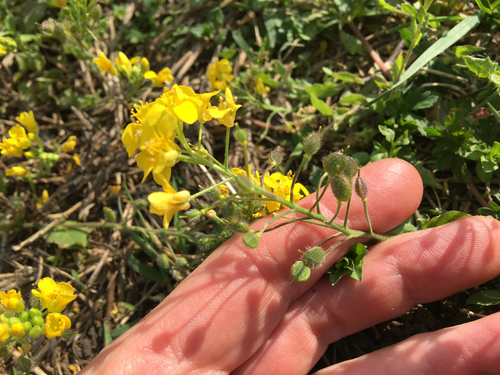
Paysonia
Paysonia is a genus of flowering plants in the family Brassicaceae. They are generally referred to by the common name bladderpod or mustard. The genus is found in southern North America, ranging from the southeastern and south-central United States to northeastern Mexico. Until 2002 it was considered to be part of the genus Lesquerella but was separated based on genetic and morphological features.
Teichosporaceae
The Teichosporaceae are a family of fungi in the order Pleosporales.
Svenzea
Svenzea is a genus of sponges belonging to the family Scopalinidae, first described in 2002.

Cetradonia linearis
Cetradonia is a lichen genus in the family Cladoniaceae. A monotypic genus, Cetradonia contains the single species Cetradonia linearis (formerly known as Cladonia linearis and as Gymnoderma lineare). The genus was circumscribed in 2002 by Jiang-Chun Wei and Teuvo Ahti. The genus was once placed in the family Cetradoniaceae (created in 2002) until that family was subsumed into the Cladoniaceae in 2006.

Carbacanthographis
Carbacanthographis is a genus of corticolous (bark-dwelling) lichens in the family Graphidaceae. The genus was circumscribed by the German lichenologists Bettina Staiger and Klaus Kalb in 2002. An updated worldwide key to the genus was published in 2022 that added 17 new species. This revision allowed for further identification of undescribed species from other collections, and subsequently, 14 species were added in 2023 from the Amazonian lowland forests of Brazil and the Guianas.
Rubroporus
Rubroporus is a small genus of neotropical fungi in the family Polyporaceae. The type species, R. carneoporis, is found in Brazil where it causes a white rot on Alchornea triplinervia. Rubroporus aurantiaca, found in Belize, was added to the genus in 2007.
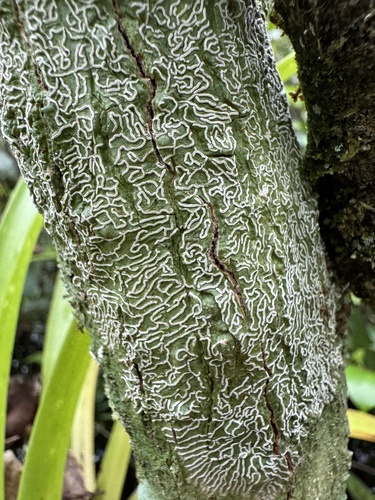
Platythecium
Platythecium is a genus of lichen-forming fungi in the family Graphidaceae. It comprises 25 species. Described in 2002 by the German lichenologist Bettina Staiger, these bark-dwelling lichens are found in humid, shaded forests across tropical and warm temperate regions worldwide. They are characterized by their flattened, plate-like fruiting structures with completely blackened walls and are sensitive to forest disturbance, making their presence an indicator of long-established woodland conditions.

Atlantisella
Atlantisella is a genus of glass sponges (Hexactinellids) belonging to the family Euplectellidae, first described in 2002 by Konstantin Tabachnick.
Bulleribasidium
Bulleribasidium is a genus of fungi in the family Bulleribasidiaceae. The genus currently contains some eleven species. The type species is a parasite of other fungi (Cladosporium sp.), its teleomorph having septate basidia and haustorial cells on its hyphae that connect to the host hyphae. Most species are, however, only known from their yeast states.
Heterorepetobasidium
Heterorepetobasidium is a genus of fungi of uncertain familial placement (incertae sedis) in the order Auriculariales. The genus is widespread, especially in tropical regions, and contains two Taiwanese species, H. ellipsoideum and H. subglobosum.
Australicium
Australicium is a genus of corticioid fungi in the family Phanerochaetaceae. The genus was circumscribed by mycologists Kurt Hjortstam and Leif Ryvarden in 2002 to contain the type species, A. singulare, which is found in New Zealand. The Venezuelan species A. cylindrosporum was added to the genus in 2005.
Indagator
Indagator is a genus of flowering plants belonging to the family Malvaceae.
Kroswia
Kroswia is a genus of lichens in the family Pannariaceae. It consists of four paleotropical species: K. epispora, K. gemmascens, K. polydactyla, and the type, K. crystallifera. Species in the genus are characterized by their gelatinous, homoiomerous (uniform in structure, without differentiation into distinct tissues), and ecorticate (without a cortex) thallus. The ascocarps contain terpenoids and fatty acids. The genus was circumscribed by Norwegian lichenologist Per Magnus Jørgensen in 2002.
Citronia
Citronia is a genus of sea sponges in the family Dysideidae. It consists of one species, Citronia vasiformis (Bergquist, 1995), which Bergquist originally described as Euryspongia vasiformis, from a specimen found in the Baie de Citrons, New Caledonia at a depth of 8 to10 m.
Calopadiopsis
Calopadiopsis is a genus of lichen-forming fungi in the family Ectolechiaceae. It was circumscribed in 2002 by the lichenologists Robert Lücking and Rolf Santesson. It has two species:
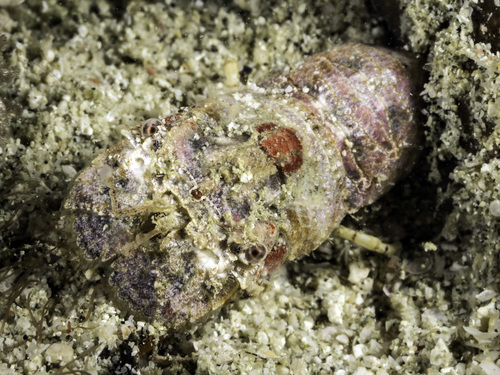
Chelarctus
Chelarctus is a genus of slipper lobsters belonging to the family Scyllaridae.
Intralichen
Intralichen is a genus of lichenicolous fungi of uncertain classification in the class Ascomycota. It has four species. The genus was circumscribed by David Leslie Hawksworth and Mariette S. Cole in 2002, with Intralichen christiansenii as the type species.