Category
page 1Taxa described in 2005
Pattonomys
Pattonomys is a genus of rodent in the family Echimyidae, named after American mammalogist James L. Patton.
It contains the following species:
Bare-tailed armored tree-rat (Pattonomys occasius)
Speckled spiny tree-rat (Pattonomys semivillosus)
Titaniloricus inexpectatovus
Titaniloricus is a genus of small marine animal in the phylum Loricifera. It contains a single species, Titaniloricus inexpectatovus, described by Gunnar Gad in 2005. It has been collected from the abyssal plain in Angolan waters of the Atlantic Ocean.

Sphaerorrhiza
Sphaerorrhiza is a genus of flowering plants belonging to the family Gesneriaceae.
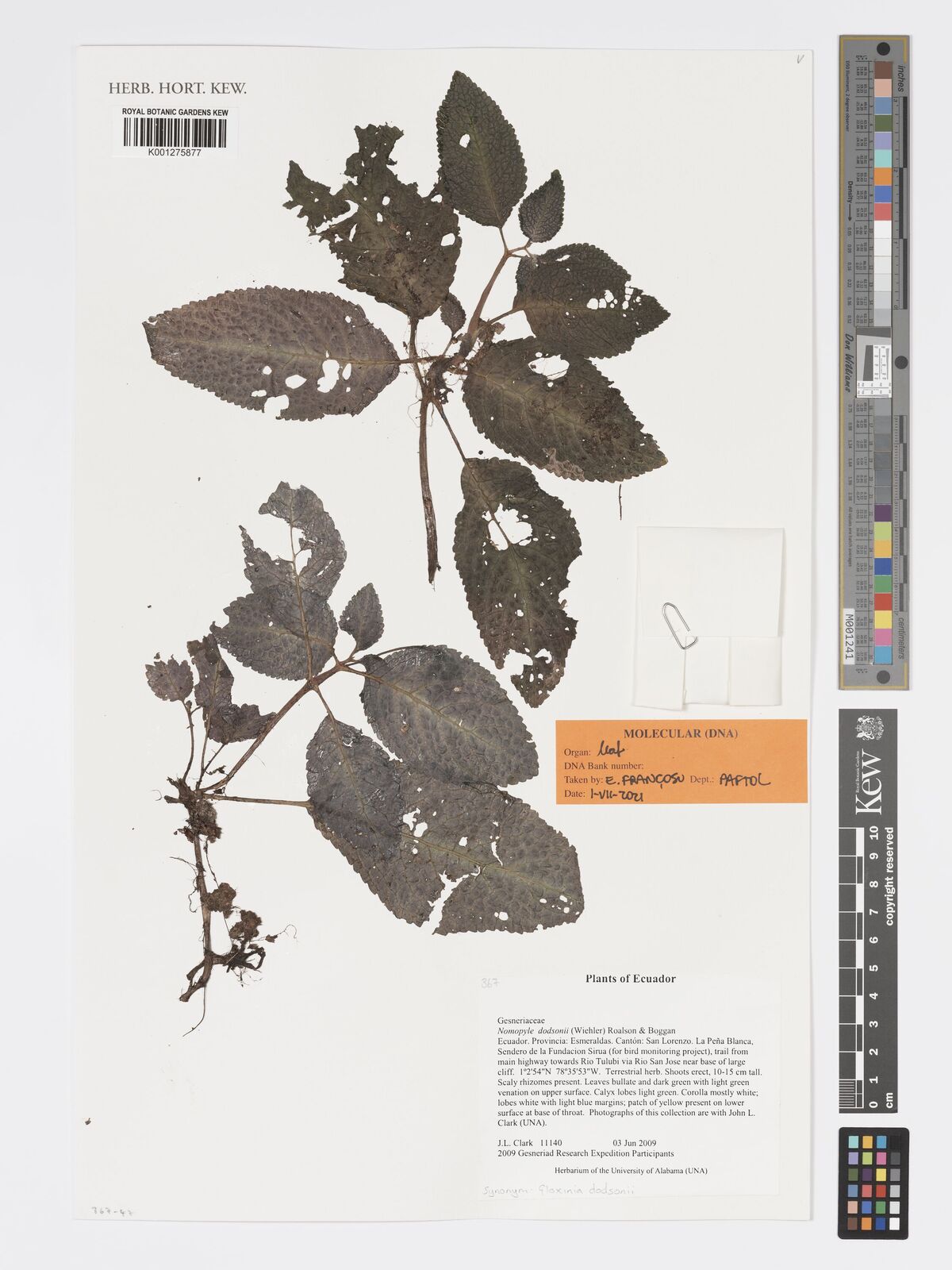
Nomopyle
Nomopyle is a genus of flowering plants belonging to the family Gesneriaceae.
Annulohypoxylon
Annulohypoxylon, sometimes called cramp balls, is a genus of fungi in the family Xylariaceae. The 27 species in the genus have a collectively widespread distribution.
Jamesiella
Jamesiella is a genus of lichen-forming fungi in the family Gomphillaceae. Members of Jamesiella form thin, delicate crusts on tree bark, rocks, and mosses in humid tropical and temperate forests, distributed across North and South America and Europe. The genus is distinguished from its close relative Gyalideopsis by a unique type of asexual reproductive structure called , which are specialized stalks containing both fungal filaments and algal cells that detach and disperse as complete units capable of establishing new lichens.
Tuiharpalus
Tuiharpalus is a genus of beetle in the family Carabidae. It is endemic to New Zealand, where it occurs only in Northland and on the Three Kings Islands.
Erastia
Erastia is a fungal genus in the family Polyporaceae. It is a monotypic genus, containing the single European species Erastia salmonicolor, or the salmon bracket. Erastia was circumscribed by Finnish mycologists Tuomo Niemelä and Juha Kinnunen in 2005. It is named in honour of the Estonian mycologist Erast Parmasto, "the eminent researcher of fungal taxonomy and cladistics".
Elizabethkingia
Elizabethkingia is a genus of bacterium in the order of Flavobacteriales. It was established in 2005 from a branch in of the genus Chryseobacterium, and named after Elizabeth O. King, the discoverer of the type species. Elizabethkingia has been found in soil, rivers, and reservoirs worldwide. The genus contains several pathogenic species, such as E. meningoseptica and E. anophelis.
Pseudobangia
Pseudobangia is a genus of filamentous red algae of the family Bangiaceae.
Rhodonia
Rhodonia is a genus of fungal crust fungi in the family Fomitopsidaceae. The species in the genus are species of brown rot, found in China, Europe, and North America, where it grows on decaying conifer wood.
Natronolimnobius
Natronolimnobius (common abbreviation Nln.) is a genus of archaeans in the family Natrialbaceae.
Pusillimonas
thumb | right | Pusillimonas thiosulfatoxidans
Pusillimonas is a genus of Gram-negative oxidase-positive bacteria of the family Oscillospiraceae. It was formerly included in the family Alcaligenaceae.
Myriolimon
Myriolimon is a genus of flowering plants in the plumbago family, Plumbaginaceae. It includes two species native to the western and central Mediterranean Basin, including Algeria, Morocco, Portugal, Spain, Sicily, Tunisia, and former Yugoslavia.
Myriolimon diffusum – France, Portugal, and Spain
Myriolimon ferulaceum – Algeria, Balearic Islands, France, Morocco, Portugal, Sicily, Spain, Tunisia, and former Yugoslavia
Claytosmunda
Claytosmunda is a genus of fern. It has only one extant species, Claytosmunda claytoniana (synonym Osmunda claytoniana), the interrupted fern, native to Eastern Asia, Eastern United States, and Eastern Canada.
Amphilogia
Amphilogia is a genus of fungi within the family Cryphonectriaceae. It was established in 2005. The fungi cause orange cankers on branches of Elaeocarpus trees in Sri Lanka and New Zealand. While the type species of this genus (Amphilogia gyrosa) has been confused with the type species of Endothia (Endothia gyrosa), these fungi are distinct and both are accepted names.