Category
page 1Taxa described in 2011

Archaeorhizomycetes
thumb | right | alt=Black and white scan of fungi with small pea-like nodules and stringy material | Archaeorhizomycetes under electron microscope
Archaeorhizomycetes is a class of fungi in the subdivision Taphrinomycotina of the Ascomycota. So far, the class has only one described order, Archaeorhizomycetales, family, Archaeorhizomycetaceae, and genus, Archaeorhizomyces. The class was first described by a team led by Anna Rosling in 2011. Species in the class are globally distributed, and grow in soil and around roots. Specific known host trees of various Archaeorhizomyces species include he

Austroderia
Austroderia is a genus of five species of tall grasses native to New Zealand, commonly known as toetoe (from Māori). The species are A. toetoe, A. fulvida, A. splendens, A. richardii and A. turbaria. They were recently reclassified in 2011 from the genus Cortaderia.
Glomerellales
Glomerellales is an order of ascomycetous fungi within the subclass Hypocreomycetidae (Sordariomycetes). The order includes saprobes, endophytes and pathogens on plants, animals and other fungi with representatives found all over the world in varying habitats.
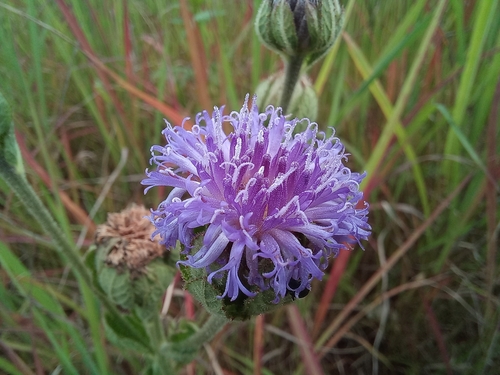
Nothovernonia
Nothovernonia is a genus of flowering plants in the family Asteraceae. It includes two species native to tropical Africa and the Arabian Peninsula.
Nothovernonia amblyolepis
Nothovernonia purpurea
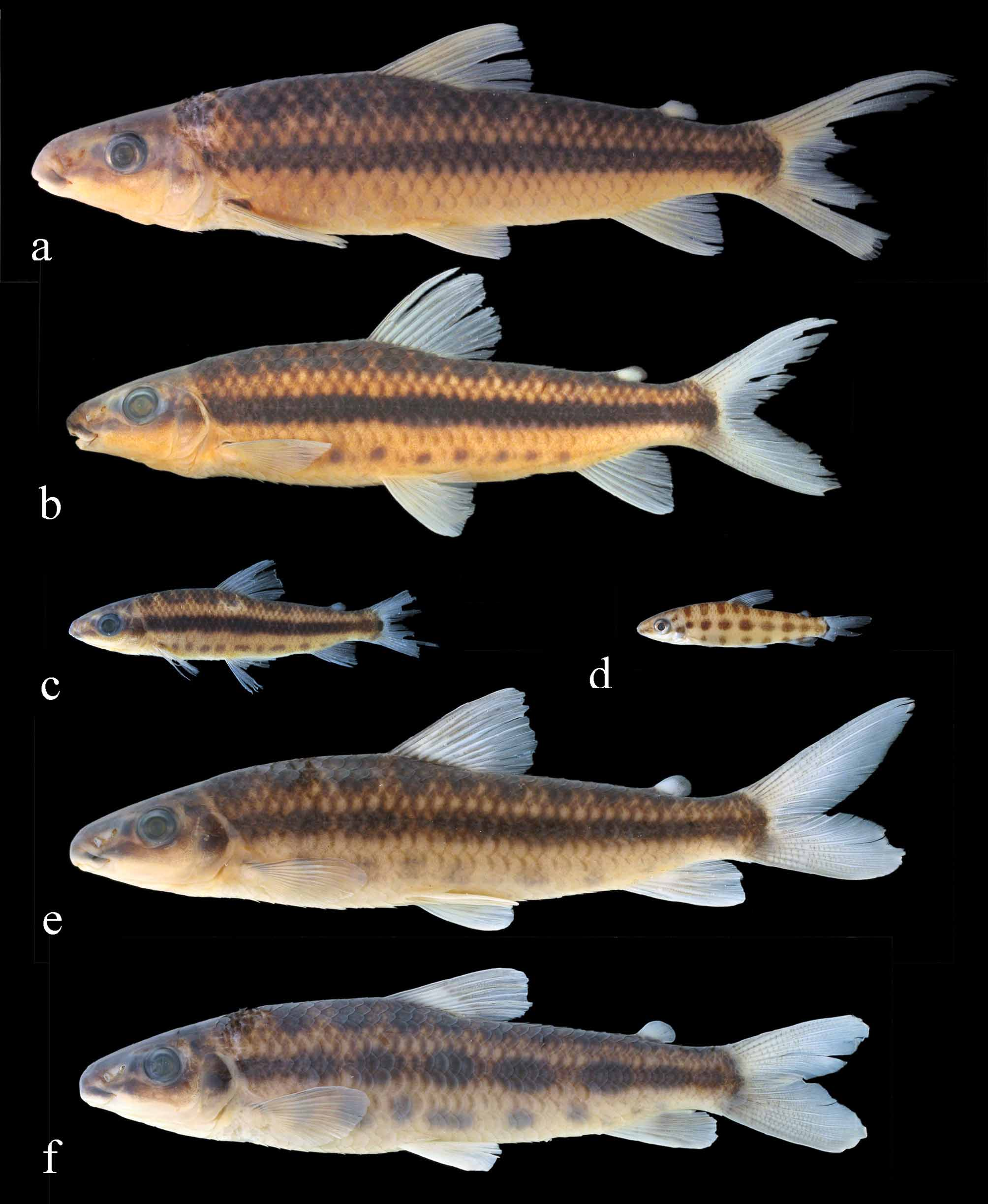
Leporinus britskii
species of fish
Malmideaceae
Malmideaceae is a family of crustose and corticolous lichens in the order Lecanorales. It contains eight genera and about 70 species.
Purpureocillium
Purpureocillium is a fungal genus in the Ophiocordycipitaceae family. The genus now contains at least 5 species with the type species Purpureocillium lilacinum, a common soil mold. It has been isolated from a wide range of habitats, including cultivated and uncultivated soils, forests, grassland, deserts, estuarine sediments and sewage sludge, and insects. It has also been found in nematode eggs, and occasionally from females of root-knot and cyst nematodes. In addition, it has frequently been detected in the rhizosphere of many crops. The species can grow at a wide range of temperatures – fro
Halobellus
Halobellus (common abbreviation: Hbs.) is a genus of halophilic archaea.

Microchirita
thumb|Microchirita hamosa in Silent Valley

Malmidea
Malmidea is a genus of crustose lichens and the type genus of the family Malmideaceae. It was established in 2011 to contain a phylogenetically distinct group of species formerly placed in the genus Malcolmiella. The crust-like thallus of Malmidea lichens has a surface that varies from smooth to rough, featuring textures such as (wart-like), (grainy), or (pimpled). These textures are often formed by , which are spherical clusters of green algal cells from the family Chlorococcaceae, encased in fungal hyphae. Malmidea comprises nearly 70 mostly tropical species that grow on bark, although a few
Venturiales
The Venturiales is an order in the fungal class Dothideomycetes.
Turanecio
thumb | right | alt=Turanecio taraxacifolius. | Turanecio taraxacifolius.
Turanecio is a genus of flowering plants belonging to the family Asteraceae. It includes 14 species native to Turkey, the Caucasus, Iran, and northern Iraq.

Drymoreomys
Drymoreomys is a rodent genus in the tribe Oryzomyini that lives in the Atlantic Forest of Brazil. The single species, D. albimaculatus, is known only from the states of São Paulo and Santa Catarina and was not named until 2011. It lives in the humid forest on the eastern slopes of the Serra do Mar and perhaps reproduces year-round. Although its range is relatively large and includes some protected areas, it is patchy and threatened, and the discoverers recommend that the animal be considered "Near Threatened" on the IUCN Red List. Within Oryzomyini, Drymoreomys appears to be most closely

Violella
Violella is a genus of two species of crustose lichens in the family Tephromelataceae. The genus is characterized by its brownish inner ascospore walls, brilliant violet hymenial pigment (called Fucatus-violet), and thallus chemistry. The type species, Violella fucata, was originally placed in genus Mycoblastus, but molecular phylogenetic analysis showed that this species as well as the Asian species V. wangii formed a phylogenetically distinct clade and warranted placement in a new genus. The generic name Violella, a diminutive form of the Latin viola, refers to the characteristic hymeni
Neobrachyactis
Neobrachyactis is a genus of flowering plants in the family Asteraceae. It includes four species native to Asia, ranging from Iraq to Central Asia, the Himalayas, and Xinjiang.
Halorientalis
Halorientalis is a genus of archaeans in the family Haloarculaceae.
Aldersladum
Aldersladum is a genus of the Alcyoniidae family. Aldersladum are Octocorallia found from the Philippine Sea to the Indian Ocean. The genus was created from previously described corals with similar properties in 2011.
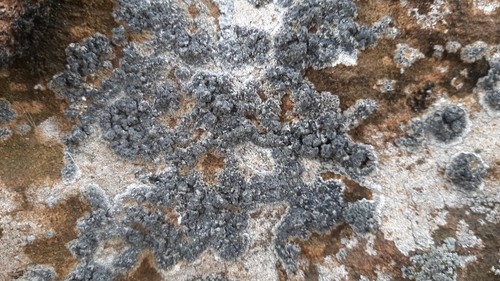
Paralecanographa
Paralecanographa is a single-species fungal genus in the family Roccellaceae. The genus was established in 2011 when genetic studies revealed that its single species does not belong where it had been previously classified and needed its own separate genus. This unusual lichen begins life as a parasite on other coastal lichens before eventually taking over and replacing its host, producing small black fruiting bodies that can appear as either tiny slits or rounded discs.