Category
page 1Taxa described in 2013
Aaaaba
Aaaaba is a genus of beetles from the Buprestidae family. It inhabits locations along the east coast of Australia. It was described in 1864 by Achille Deyrolle as "Alcinous", a junior homonym of a genus of pycnogonids. In 2002, Charles Bellamy gave it the replacement name "Aaaba", but this proved to be another junior homonym, of a genus of sponges. In 2013, it was given a further replacement name, becoming Aaaaba.

Sciaphylax
Sciaphylax is a genus of passerine birds in the family Thamnophilidae.
Hafferia
Hafferia is a genus of insectivorous passerine birds in the antbird family, Thamnophilidae, containing three species: the blue-lored antbird (H. immaculata), the sooty antbird (H. fortis), and Zeledon's antbird (H. zeledoni).
Metschnikowiaceae
The Metschnikowiaceae are a family of yeasts in the order Saccharomycetales that reproduce by budding. The family comprises sixteen genera including the type genus Metschnikowia, which is commonly found in floral nectar and dispersed by pollinators on all continents except Antarctica. Originally proposed in 1900 but not validly published until 2013, the family has undergone significant taxonomic revision based on genome-scale studies, leading to the establishment of thirteen new genera in 2024 to better reflect evolutionary relationships. Members are characterized by multilateral budding, ofte
Biemnida
Biemnida is an order of demosponges in the subclass Heteroscleromorpha.
Lepidostromatales
Lepidostromatales is an order of fungi in the class Agaricomycetes. It is the only known order of basidiomycete fungi composed entirely of lichenized members. Morphologically, the fruiting bodies of all species are clavarioid. Six species are known, five of which were described within the span of 2007–2013. Due to its morphological similarity to the genus Multiclavula, its isolated phylogenetic position (distinct from all other orders based on molecular data) was not understood until quite recently. The photobionts that have been found in association with members of this group are not known to
Sporastatiaceae
Sporastatiaceae is a small family of crustose lichens in the order Rhizocarpales. It contains two genera, Sporastatia and Toensbergia, with a total of five species. Sporastatiaceae was circumscribed in 2013 by Mika Bendiksby and Ernst Timdal.

Xylopsora
Xylopsora is a genus of lichen-forming fungi, belonging to the family Umbilicariaceae. The genus was established in 2013 when genetic studies showed that several scale-forming () lichens previously grouped together were not actually closely related. Species of Xylopsora typically grow on wood, especially old or fire-scarred timber, in forests of the Northern Hemisphere. The genus includes four recognized species, some of which were only recently discovered growing high in tree canopies or detected through environmental DNA techniques.
Glutinoglossum
Glutinoglossum is a genus of six species of earth-tongue fungi in the family Geoglossaceae. The widespread type species, G. glutinosum, is commonly known as the "glutinous earth tongue". G. heptaseptatum is known only from the Czech Republic. Four additional species were described in 2015.
Aphroditeola
Aphroditeola is an agaric fungal monotypic genus that produces pink cantharelloid fruit bodies on coniferous forest floors. The lamellae are forked and typically the fruit bodies have a fragrant odor described as candy-like, cinnamon-like or pink bubble gum-like. It contains the one species Aphroditeola olida, which is commonly known as the pink bubblegum mushroom.
Kriegeriales
The Kriegeriales are an order of fungi in the subdivision Pucciniomycotina. Most species are known only from their yeast states and can be found in a variety of habitats, ranging from arctic waters to tropical ferns. Hyphal states produce auricularioid (laterally septate) basidia.

Athallia
Athallia is a genus of lichen-forming fungi in the family Teloschistaceae. Most species have a poorly developed or almost invisible thallus, with the fruiting bodies often appearing to sit directly on the substrate. The genus occurs on bark, wood, and rock, and is found mainly in temperate regions of the Northern Hemisphere. All species share a characteristic set of orange anthraquinone pigments known as A.
Bryoplaca
Bryoplaca is a small genus of lichen-forming fungi belonging to the family Teloschistaceae. Established in 2013 by Ulrik Søchting, Patrik Frödén and Ulf Arup, this small genus comprises just three species that specialise in growing on moss-covered substrates in cold regions of the Northern Hemisphere. These lichens are distinguished by their bright orange fruiting that stand out like tiny sunbursts against the mossy cushions they inhabit, earning the genus its name which literally means 'moss-plate'.
Flavoplaca
Flavoplaca is a genus of crust-like or scaly lichens in the family Teloschistaceae. It has about 30 species with a mostly Northern Hemisphere distribution. The genus was established in 2013 when genetic studies revealed that these species formed their own distinct evolutionary group, separate from other lichen classifications where they were previously placed. These lichens typically grow on limestone and other calcium-rich rocks, forming distinctive orange to yellow crusty patches that are particularly common in coastal environments and sunny locations. Most species grow directly on rock surf
Austrographa
Austrographa is a genus of lichen-forming fungi in the family Roccellaceae. It has three species. The genus was circumscribed in 2013 by lichenologists Laurens Sparrius, John Elix, and Alan Archer, with Austrographa kurriminensis assigned as the type species. The genus had been published invalidly on two separate occasions. All three species in the genus were found in a mangrove stand in Queensland, Australia. The genus was discovered in Australia, and the name Austrographa reflects this.
Melainabacteria
Vampirovibrionophyceae is a class of non-photosynthetic cyanobacteria.
Redonographa
Redonographa is a genus of lichen-forming fungi in the monogeneric family Redonographaceae. It has five species.
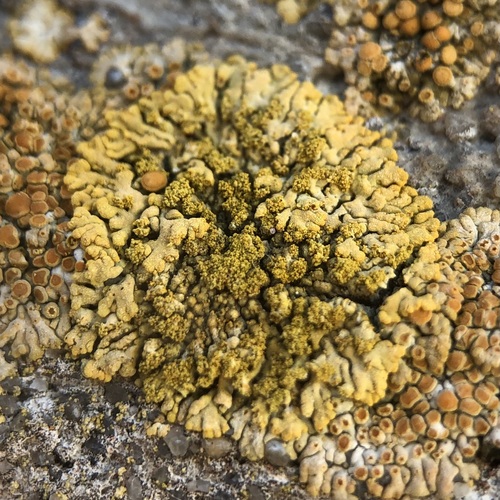
Calogaya
Calogaya is a genus of lichen-forming fungi belonging to the family Teloschistaceae. It has 19 species. The genus was circumscribed in 2013 by Ulf Arup, Ulrik Søchting, and Patrik Frödén.
The generic name Calogaya ("spectacular Gaya") honours Dr. Ester Gaya (fl. 2001), a Spanish botanist from the University of Barcelona.
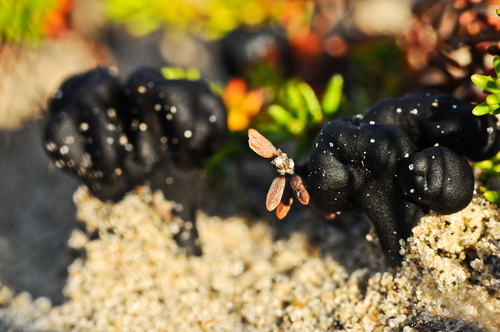
Sabuloglossum
Sabuloglossum is a fungal genus in the earth tongue family Geoglossaceae. Circumscribed in 2013, it contains the single widely distributed species Sabuloglossum arenarium, which has previously been placed in the genera Microglossum, Corynetes, Geoglossum, and Thuemenidium. The generic name derives from the Latin word sabulum and refers to its preference for sandy habitats.
Leprocaulaceae
Leprocaulaceae is a family of mostly lichen-forming fungi. It is the single family in the monotypic order Leprocaulales. Leprocaulaceae contains three genera and about 33 species.

Rufoplaca
Rufoplaca is a genus of lichen-forming fungi in the family Teloschistaceae. The genus is found primarily across the Northern Hemisphere, with most species occurring in Europe and additional records from North America and Asia. These lichens typically grow as thin crusts with orange-red colouration on sun-exposed rocks and other surfaces. The genus was established in 2013 to group together several previously scattered species that genetic studies showed formed a natural evolutionary lineage.

Carbonicola
genus of fungi
Variospora
Variospora is a genus of crustose lichens belonging to the family Teloschistaceae. The genus was established in 2013 when DNA studies revealed that many species previously grouped under the traditional large genus Caloplaca actually belonged to distinct evolutionary lineages. These bright orange lichens are distinguished by their variable ascospore shapes—which can be lemon-shaped, hourglass-shaped, or simply divided by a straight partition—and their distinctive purple reaction when tested with potassium hydroxide solution.