Category
page 1Taxa named by Irwin Brodo
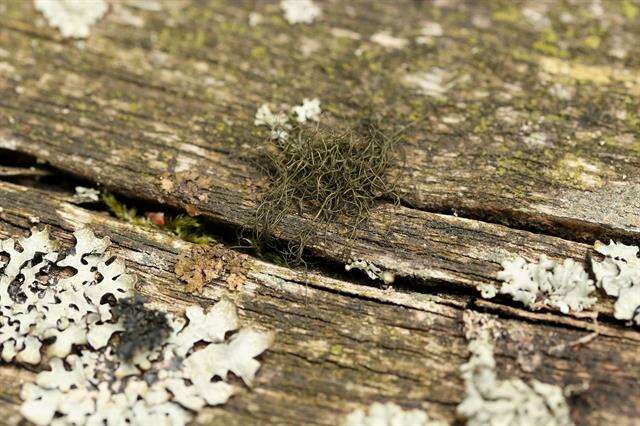
Bryoria
Bryoria is a genus of lichenized fungi in the family Parmeliaceae. Many members of this genus are known as horsehair lichens. The genus has a widespread distribution, especially in boreal and cool temperate areas. These lichens typically grow as slender, hair-like strands that hang from conifer trees or form small bushes, ranging in colour from dark brown to pale grey. They play important ecological roles, particularly as winter food for caribou in northern forests, where some species can accumulate in large quantities in the forest canopy. The genus contains about 35 species found worldwide,
Sulcaria isidiifera
species of fungus
Alectoria imshaugii
species of fungus
Ochrolechia gowardii
species of fungus
Nodobryoria
Nodobryoria is a genus of medium to large, reddish-brown lichens that are hair-like to shrubby (fruticose) in shape and grow on conifer trees. The genus contains three species, distributed in North America and Greenland, which were previously included in the genus Bryoria. Nodobryoria is similar in appearance to Bryoria, but is differentiated because it does not contain the polysaccharide lichenin (which is present in high quantities in Bryoria), and it has a unique cortex composed of interlocking cells that look like pieces of a jigsaw puzzle when viewed under a light microscope.
==Taxonomy==
Cladonia albonigra
species of lichenized fungus