Category
page 1Taxa named by Rolf Singer
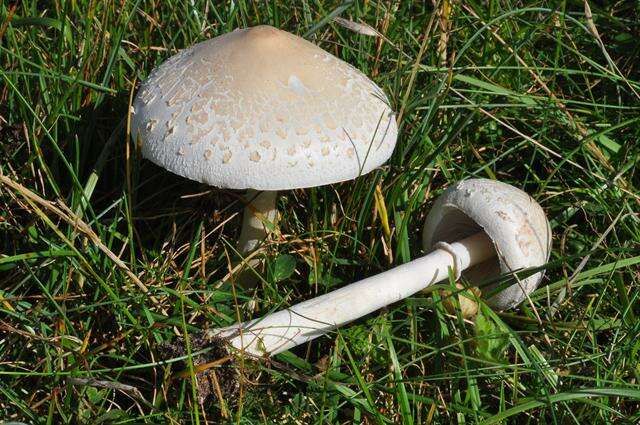
Macrolepiota
Macrolepiota is a genus of white spored, gilled mushrooms of the family Agaricaceae. The best-known member is the parasol mushroom (M. procera). The widespread genus contains about 40 species.
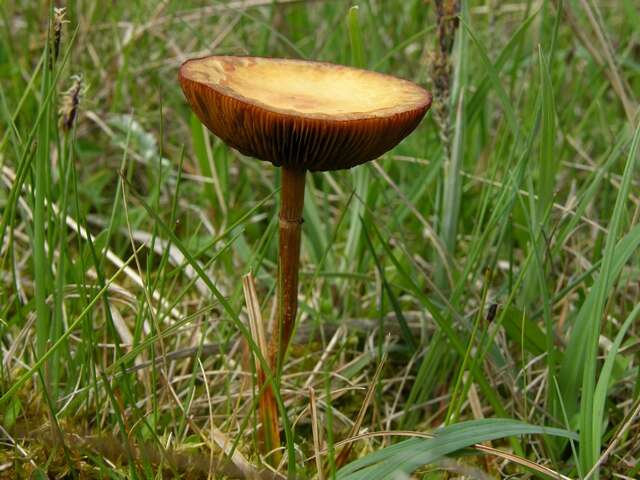
Strophariaceae
The Strophariaceae are a family of fungi in the order Agaricales. Under an older classification, the family covered 18 genera and 1316 species. The species of Strophariaceae have red-brown to dark brown spore prints, while the spores themselves are smooth and have an apical germ pore. These agarics are also characterized by having a cutis-type pileipellis. Ecologically, all species in this group are saprotrophs, growing on various kinds of decaying organic matter. The family was circumscribed in 1946 by mycologists Rolf Singer and Alexander H. Smith.
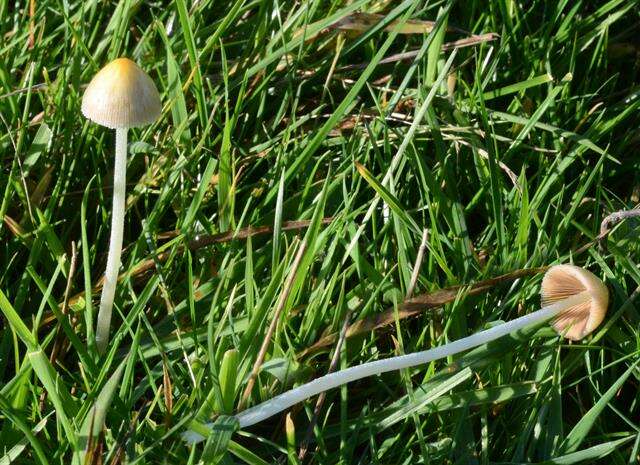
Bolbitiaceae
The Bolbitiaceae are a family of mushroom-forming basidiomycete fungi. A 2008 estimate placed 17 genera and 287 species in the family. Bolbitiaceae was circumscribed by mycologist Rolf Singer in 1948.
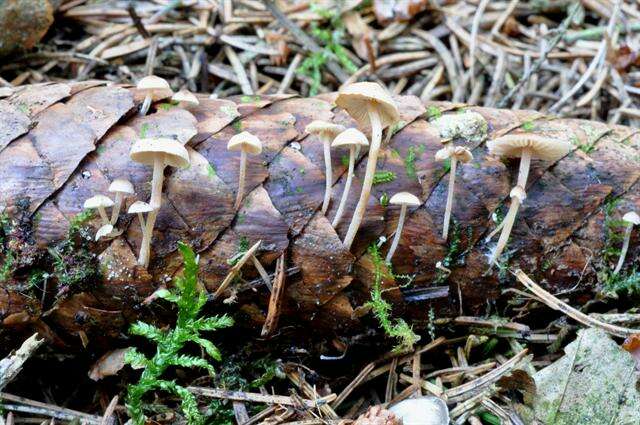
Strobilurus
genus of fungi

Leucocoprinus birnbaumii
species of fungus

Leucoagaricus
thumb|Leucoagaricus leucothites
alt=Leucoagaricus nympharum|thumb|Leucoagaricus nympharum

Cystolepiota
Cystolepiota is a genus of mushroom-forming fungi in the family Agaricaceae.

Chroogomphus
Chroogomphus is a genus of fungi commonly known as pine-spikes or spike-caps, based on the shape of the mushrooms and because they often grow in association with pines. The genus is distributed throughout the Northern Hemisphere, including North America and Eurasia.
Cantharellula
Cantharellula is a genus of mushroom-forming fungi in the family Hygrophoraceae. The genus was described by mycologist Rolf Singer in 1936.

Kuehneromyces
Kuehneromyces is a genus of agaric fungi in the family Strophariaceae. The genus was circumscribed by mycologists Rolf Singer and Alexander H. Smith in 1946.

Hemimycena
Hemimycena is a genus of fungi in the family Mycenaceae. The genus has a widespread distribution, and according to a 2008 estimate, contains about 50 species. The genus was described by mycologist Rolf Singer in 1938. They lack amyloid reaction in the spores.
Cystoagaricus
Cystoagaricus is a genus of fungi in the family Psathyrellaceae. The genus contains four species found in subtropical America. The genus was circumscribed by mycologist Rolf Singer in 1947, with Cystoagaricus strobilomyces as the type species.
Tricholomopsis
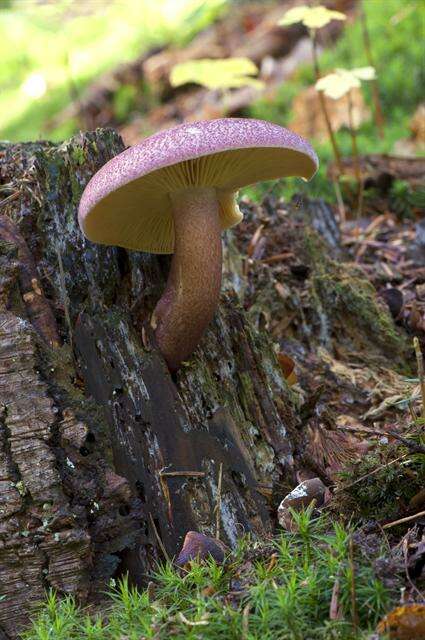
Tricholomopsis is a genus of fungi in the family Phyllotopsidaceae. Its best known member and type species is Tricholomopsis rutilans. The name means appearing like Tricholoma. The genus has a widespread distribution, and contains about 30 species. Tricholomopsis was described in 1939 by German mycologist Rolf Singer.
Suillus sibiricus
species of fungus
Hypsizygus
Hypsizygus is a small genus of fungi that are widely distributed in north temperate regions. The genus was circumscribed by Rolf Singer in 1947. The common name for Hypsizygus ulmarius is the elm oyster mushroom.
Baeospora
Baeospora is a genus of fungi in the family Cyphellaceae. Basidiocarps (fruit bodies) are agarics. The genus was circumscribed by mycologist Rolf Singer in 1938. The most recently described species, B. occidentalis, is a snowbank fungus that was discovered in montane coniferous forests of the western USA.

Bondarzewia
Bondarzewia is a widely distributed genus of fungi in the family Bondarzewiaceae. The genus was circumscribed by mycologist Rolf Singer in 1940.
Gerronema
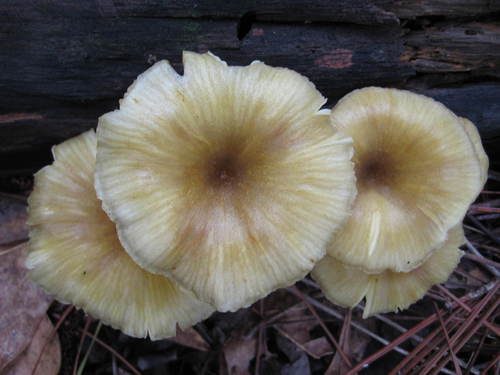
Gerronema is a genus of over 50 fungi species that form agaric fruit bodies. They are of small to medium size, with a centrally depressed cap. They are similar to Omphalina species.
Amylocystis
Amylocystis is a genus of two species of fungi in the family Fomitopsidaceae. The genus was described in 1944 by mycologists Appollinaris Semenovich Bondartsev and Rolf Singer to contain the type, and at that time, sole species, A. lapponicus. A. unicolor was transferred to the genus (from Tyromyces) in 2003. The generic name Amylocystis is derived from the Ancient Greek words ("starch") and ("bladder").
%20Singer%20635704%202016-07-13.jpg)
Xanthoconium
Xanthoconium is a genus of bolete fungi in the family Boletaceae. It was circumscribed by mycologist Rolf Singer in 1944, who included Boletus affinis and what was then known as Gyroporus stramineus as the type species. These two species were part of the "strange group of species described by Murrill and Snell as white-spored Gyropori, and separated by the latter under the new generic name Leucogyroporus." C.B. Wolfe described three species from the United States in 1987: X. chattoogaense, Xanthoconium montaltoense, and X. montanum. , the nomenclatural database Index Fungorum list se
Cheimonophyllum
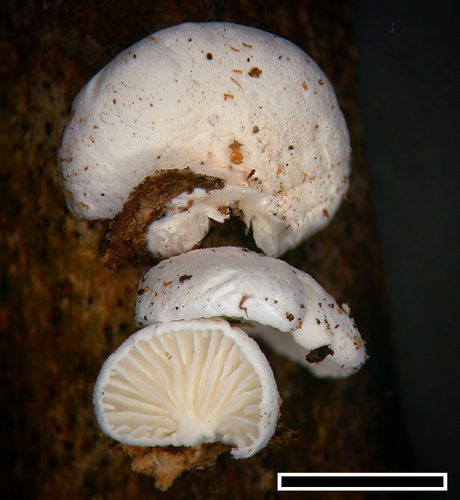
Cheimonophyllum is a genus of fungi in the family Cyphellaceae. The widely distributed genus contains three species.
Callistosporium
Callistosporium is a genus of fungi in the order Agaricales. Basidiocarps (fruit bodies) are agarics (gilled mushrooms), either with a central stipe (stalk) or pleurotoid (with a lateral stipe). The latter group were formerly referred to Pleurocollybia. Recent molecular research, based on cladistic analysis of DNA sequences, has shown that the genus is a natural, monophyletic grouping, though not all species have yet been sequenced. Species are saprotrophic, typically growing on wood, and the genus is found worldwide.

Suillus bresadolae
species of fungus
Pleurocybella
Pleurocybella is a genus of fungi in the family Phyllotopsidaceae.
Boletochaete
Boletochaete is a genus of fungi in the family Boletaceae. The genus contains three species found in Africa and southeast Asia. American mycologist Rolf Singer circumscribed the genus in 1944.
==Species==
{| class="wikitable sortable"
!Image !!Scientific name !! Taxon author !! Year !! Distribution
|-
| ||Boletochaete bicolor || Singer || 1986||
|-
| ||Boletochaete hastulifera || (Corner) E. Horak || 2011||Malaysia
|-
| ||Boletochaete mirans || (Corner) E. Horak || 2011||Malaysia
|-
| ||Boletochaete setulosa || M. Zang || 1986||
|-
| ||Boletochaete spinifera || (Pat. & C.F. Baker) Singer || 19
Zelleromyces
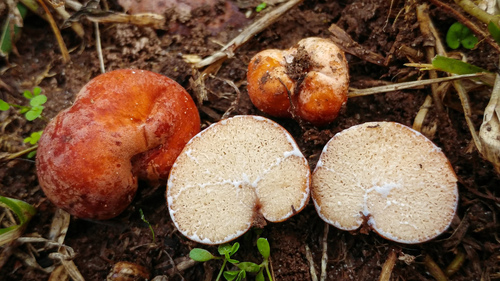
Zelleromyces is a genus of fungi in the family Russulaceae. It was first described by mycologists Rolf Singer and Alexander H. Smith in 1960 to contain hypogeous (underground) fungi with gasteroid fruit bodies that "bleed" latex when they are cut.
Hydropus
Hydropus is a genus of fungi in the family Porotheleaceae. The widespread genus contains about 100 species, especially in tropical areas, but is not well represented in temperate regions. About 15 taxa are found in Europe; H. floccipus has the widest distribution in western Europe. Hydropus was circumscribed by Rolf Singer in 1948. Species in the genus have fruit bodies with caps that are mycenoid, collybioid, or omphaloid in form. Most species occur in tropical and subtropical regions, where they grow as saprobes on rotting wood, forest litter, and mosses. Generally, most Hydropus specie
Pseudoarmillariella
Pseudoarmillariella is a genus of fungi in the family Hygrophoraceae. The genus contains three species found in Central America, North America, and Asia. Pseudoarmillariella was described by mycologist Rolf Singer in 1956.
Veloporphyrellus
Veloporphyrellus is a genus of fungi in the family Boletaceae. Species are characterized by having a pinkish to pinkish-gray hymenophore, a membrane-like partial veil that hangs from the cap margin, smooth spores, and a trichoderm-like cap cuticle.
Suillellus caucasicus
mushroom
Cyptotrama
Cyptotrama is a genus of mushrooms in the family Physalacriaceae.
Psilocybe strictipes
species of fungus
Lulesia
Lulesia is a genus of fungi in the family Tricholomataceae. The genus contains several species found in tropical regions.
Resinomycena
Resinomycena is a genus of fungi in the mushroom family Mycenaceae. The genus contains at least eight species found in North America, Europe (including the United Kingdom and the Canary Islands) and eastern Asia (including Japan). This genus of small white to tan colored agarics is saprophytic and colonizes leaf litter, bark, small twigs and decaying monocot vegetation. The fruitbodies are small and resemble Mycena or Marasmius or Hemimycena and are distinguished by amyloid spores, poorly dextrinoid tissues, and the abundant oily, resinous cystidia on the pileus, lamellae edges and stipes. One
Roridomyces austrororidus
species of fungus
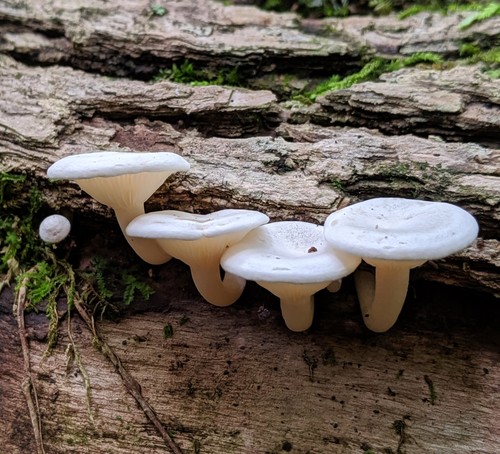
Nothopanus
thumb | 220x124px | right
Nothopanus is a genus of fungus in the family Marasmiaceae. The genus was circumscribed by American mycologist Rolf Singer in 1944.
Epicnaphus
Epicnaphus is a genus of mushroom-forming fungi in the family Marasmiaceae. The genus, circumscribed by mycologist Rolf Singer in 1960, contains two species found in South America. Fruitbodies of Epicnaphus species are similar in appearance to those in Marasmius section Sicci, but have a smooth hymenium and broom cells of the Rotalis-type. Singer initially included only the type species, E. phalaropus, which was originally collected from fallen branches in a Bolivian rainforest. The Argentinian species E. longispora was added to the genus by Jörg Raithelhuber in 1973.
Suillus cothurnatus
species of fungus
Hemipholiota
Hemipholiota is a genus of agaric fungi in the order Agaricales. It was originally proposed by Rolf Singer in 1962 as a subgenus of Pholiota to contain species with absent or sparse pleurocystidia and absent chrysocystidia. Henri Romagnesi raised it to generic status in 1980, but this naming was invalid as it did not meet the requirements of the International Code of Nomenclature for algae, fungi, and plants. Marcel Bon published the genus validly in 1986.
Hiatulopsis
Hiatulopsis is a genus of two species of fungi in the family Agaricaceae. The genus was circumscribed in 1967 by mycologists K. Grinling and Rolf Singer with H. amara as the type species. H. aureoflava was added to the genus by Singer in 1989.
Smithiomyces
Smithiomyces is a genus of fungi in the family Agaricaceae. It was circumscribed by Rolf Singer in 1944. The type species, S. mexicanus, was formerly placed in Amanita, as well as the now obsolete genera Leucomyces and Venenarius. The genus was named to honor American mycologist Alexander H. Smith.
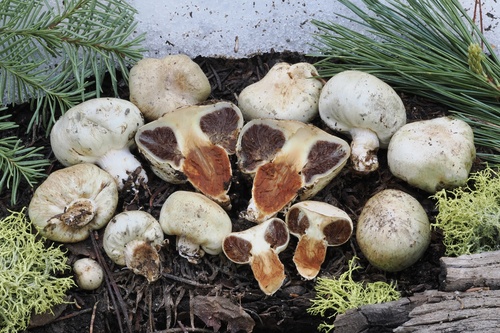
Nivatogastrium
Nivatogastrium is a genus of secotioid fungi in the family Strophariaceae. The genus has contained four species found in North America and New Zealand, but the type species, Nivatogastrium nubigenum, is now considered to be a gasteroid species of Pholiota, and was transferred to that genus in 2014.
Pachylepyrium
Pachylepyrium is a genus of fungi in the family Tubariaceae. The genus was circumscribed by Rolf Singer in 1958. The genus Pachylepyrium is widespread in northern temperate areas. Some species of Pachylepyrium have been moved to the genus Crassisporium.
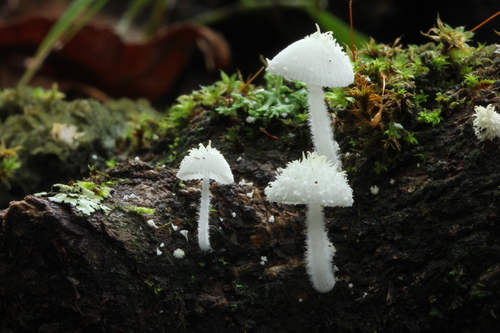
Amparoina spinosissima
species of fungus
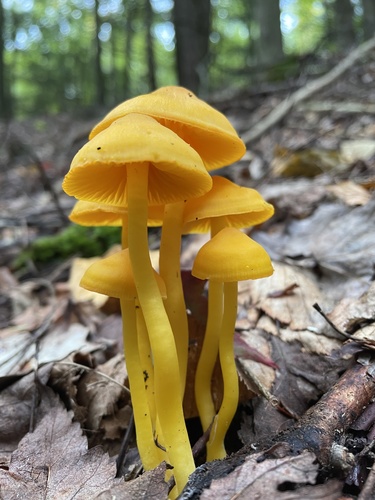
Humidicutis
Humidicutis is a small genus of brightly coloured agarics, the majority of which are found in Eastern Australia. They were previously described as members of Hygrocybe. The genus Porpolomopsis is closely related, and the species in it were once placed in Humidicutis. The genus was described by mycologist Rolf Singer in 1959.
Panaeolopsis
Panaeolopsis is a genus of fungi in the family Agaricaceae. The genus has a widespread distribution and contains four species. Panaeolopsis was circumscribed by Rolf Singer in 1969 with P. sanmartiniana as the type species.
Weraroa
thumb|right|A cross-section of the type species Weraroa novae-zelandiae (Psilocybe weraroa).
Descolea
Descolea is a genus of fungi in the family Bolbitiaceae. Described by mycologist Rolf Singer in 1952, the widespread genus contains about 15 species. It was formerly placed in the family Cortinariaceae because of its limoniform basidiospores and its ectomycorrhizal lifestyle. A 2013 molecular phylogenetics study by Tóth et al. found it to be closely related to the genus Pholiotina The genus Pseudodescolea, erected for the single Descolea-like species Pseudodescolea lepiotiformis, was formerly considered distinct until a 1990 study found it to be a synonym of Descolea antarctica.
Porpoloma
Porpoloma is a genus of fungi in the family Tricholomataceae. The genus contains about 12 species found predominantly in South America. Porpoloma was described by mycologist Rolf Singer in 1952 with P. sejunctum as the type species.
Amyloflagellula
Amyloflagellula is a genus of fungi in the family Marasmiaceae.
Amanita aestivalis
species of fungus
Hygroaster
Hygroaster is a genus of mushroom-forming fungi in the family Hygrophoraceae. The genus was described by mycologist Rolf Singer in 1955.
Psilocybe yungensis
species of fungus
Neopaxillus
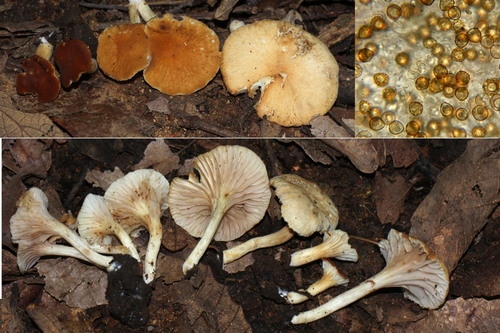
Neopaxillus is a genus of fungi in the family Crepidotaceae. According to the Dictionary of the Fungi (10th edition, 2008), the family contains five species found in Central and South America; a sixth, N. dominicanus, was reported in 2011. It was formerly considered to belong in the family Serpulaceae in the order Boletales, but molecular analysis showed that Neopaxillus is better placed in the Agaricales as a sister group to Crepidotus (of the family Crepidotaceae).
Dennisiomyces
Dennisiomyces is a genus of fungi in the family Tricholomataceae. Described by mycologist Rolf Singer in 1955, the genus contains five species found in South America.
Pegleromyces collybioides
Pegleromyces is a genus of fungi in the family Tricholomataceae. It is a monotypic genus, containing the single species Pegleromyces collybioides, found in Brazil, and described as new to science by mycologist Rolf Singer in 1981.
Pseudoomphalina
Pseudoomphalina is a genus of fungi placed in the family Tricholomataceae for convenience. The genus contains six species that are widespread in northern temperate areas. Pseudoomphalina was circumscribed by Rolf Singer in 1956. Pseudoomphalina was found to be paraphyletic to Neohygrophorus in a molecular phylogenetics study and since Pseudoomphalina is an older name, Neohygrophyorus was synonymized with it. The type species of Neohygrophorus was Neohygrophorus angelesianus, now Pseudoomphalina angelesiana. In earlier classifications based on anatomy prior to DNA sequence-based classifications
Neosecotium
Neosecotium is a genus of fungi in the family Agaricaceae. The genus was circumscribed in 1960 by American mycologists Rolf Singer and Alexander H. Smith. The type species, N. macrosporum, previously only known from the US, was recorded in Mexico in 2012.
Haploporus
genus of fungi
Lactocollybia
Lactocollybia is a genus of agaric fungi in the family Marasmiaceae. The widespread genus contains 17 species, many of which are found in tropical areas.