Category
page 12Taxonbars without primary Wikidata taxon IDs
Enzootic nasal tumor virus
species of virus
Sparrmannia angola
species of beetle
Capnethinius
Capnethinius is a genus of disteniid beetles.
Mahuidacursor
Mahuidacursor (meaning "mountain runner", meaning "mountain" in Mapudungun) is a genus of basal ornithopod dinosaur from the Santonian Bajo de la Carpa Formation of the Neuquén Basin in northern Patagonia, Argentina. The type and only species is M. lipanglef.
jackal–dog hybrid
canid hybrid resulting from a mating between a dog and a golden jackal
Anapisa sjoestedti
species of insect
Noctuelia simillella
species of insect
Deuteropoda
Deuteropoda is a proposed clade of arthropods whose members are distinguished from more basal stem-group arthropods like radiodonts by an anatomical reorganization of the head region, namely the appearance of a differentiated first appendage pair (the 'deutocerebral' pair), a multisegmented head, a hypostome/labrum complex, and by bearing pairs of segmented biramous (two branched) limbs.
Sekhmetops
Sekhmetops (meaning "Sekhmet face") is an extinct genus of carnivorous hyaenodont mammals from the Early Oligocene Jebel Qatrani Formation of Egypt. The genus contains two species, S. africanus and S. phiomensis, both of which were originally assigned to the genus Pterodon.
Tamga hamulifera
extinct species of Cambrian organism
Salticoida
Salticoida is an unranked clade of the jumping spider family Salticidae. It is the larger and more widespread of the two subdivisions of the "typical" jumping spiders (subfamily Salticinae), occurring effectively world-wide. Its sister clade is Amycoida, which is also very diverse ecologically but has a mostly South American distribution.
Banta linnei
species of insect
Q138779970
Cryptarcus is a genus of ceratopsid dinosaur found in the Dinosaur Park Formation of Alberta, dating to the middle Campanian age of the Late Cretaceous.
Aphthoroblattina
Apthoroblattina is an extinct genus of primitive cockroaches from the Carboniferous period. Fossils of the genus have been found in England, Wales, the United States, and Russia. The paratype specimen for the species A. johnsoni is recorded to have a total length of and a width of , while the type specimen of A. sulcata is noted to have been up to in length and in width if complete.
Chienkosaurus
Chienkosaurus ("lizard of Jiange County") is a dubious genus of carnivorous theropod dinosaur from the Late Jurassic Kuangyuan Series of China. It was probably related to Szechuanosaurus.
Rickettsia akari
species of bacterium
Sisoroidea
Sisoroidea is a superfamily of catfishes (order Siluriformes). It contains the four families Amblycipitidae, Akysidae, Sisoridae, and Erethistidae; many sources also include Aspredinidae. With Aspredinidae, this superfamily includes about 42 genera and 230 species.
Sabera metallica
butterfly of the family Hesperiidae
Influenza A virus subtype H5N3
virus subtype
Parashorea smythiesii
species of plant
Huashanosaurus
Huashanosaurus (meaning "Huashan Mountain lizard") is an extinct genus of eusauropod sauropod dinosaurs known from the Early–Middle Jurassic Wangmen Formation of China. The genus contains a single species, Huashanosaurus qini, known from a fragmentary partial skeleton.
Dahira rebeccae
species of insect
Meliorchis
Meliorchis caribea is an extinct, early to middle Miocene orchid known only from a packet of pollen attached to the wing of a stingless bee, Proplebeia dominicana, trapped in Dominican amber. It was the first fossil orchid ever described, and allowed for a revised estimate of the time of origin of the Orchidaceae to the Mesozoic. Morphology of the pollinium suggests that M. caribea is closely related to the modern genus Ligeophila.
Hieraves
Hieraves is a clade of telluravian birds named by Wu et al. (2024) that includes the orders Strigiformes (owls) and Accipitriformes (hawks and their relatives). The Cathartidae (New World vultures) are usually included in Accipitriformes, but some authors treat them as a third order Cathartiformes in the Hieraves. In the past, either owls, New World vultures, and hawks were found to be basal outgroups with respect to Coraciimorphae inside Afroaves, or Accipitriformes and Cathartiformes were recovered as a basal clade in respect to the rest of the members of Telluraves. Houde et al. (2019) foun
Cutosea
Cutosea () is a small group of marine amoeboid protists proposed in 2016. It is a monotypic class of Amoebozoa containing the order Squamocutida (). Cutosean organisms are characterized by a cell coat of microscales separated from the cell membrane. Four genera, Armaparvus, Idionectes, Sapocribrum and Squamamoeba, belong to this group, distributed in three families.

Idioctis parilarilao
species of arachnid
Plesionectes
Plesionectes (meaning "near swimmer") is an extinct genus of basal plesiosauroid plesiosaurs known from the Early Jurassic (Toarcian age) Posidonia Shale of Germany. The genus contains a single species, Plesionectes longicollum, known from a well-preserved, nearly complete skeleton.
Lintneria porioni
species of insect
Q136805961
Pujatopouli () is an extinct genus of neoavian birds from the Late Cretaceous (Maastrichtian stage) Lopez de Bertodano Formation of Seymour Island (Marambio Island), Antarctica. The genus contains a single species, Pujatopouli soberana, known from a partially preserved skull and several associated postcranial elements, representing one of the most complete Neornithes (crown group bird) from the Mesozoic era.
Bakiribu
Bakiribu () is an extinct genus of ctenochasmatid pterosaurs known from the Early Cretaceous (Aptian–Albian age) Romualdo Formation of Brazil. The genus contains a single species, Bakiribu waridza, known from the fragment remains of two individuals preserved in a regurgitalite. This indicates the pair may have been consumed by a spinosaurid theropod dinosaur. It represents the first member of the broader clade Archaeopterodactyloidea described from the Romualdo Formation. Bakiribu has a unique pattern of closely-packed comblike teeth in the upper and lower jaws that may have been used for filt
Edolisoma erythropygium
species of bird
Myocastorini
Myocastorini is a tribe of echimyid rodents, proposed in 2017, and containing the five extant genera Callistomys, Hoplomys, Myocastor, Proechimys, and Thrichomys.
Tetraneuralia
Tetraneuralia is a proposed clade of spiralian bilaterians uniting the phyla Mollusca and Entoprocta. belonging to Lophotrochozoa that groups mollusks, entoprocts and the extinct family Cupithecidae. The clade is supported by several morphological similarities between the two and has turned out to be important for evolution of mollusks.
Taliger
A tiliger or taliger is a second generation hybrid from a male tiger (Panthera tigris) and a ligress (which is the hybrid offspring of a lion and a tigress). The world's first tiligers were born on 16 August 2007 at Greater Wynnewood Exotic Animal Park in Wynnewood, Oklahoma.
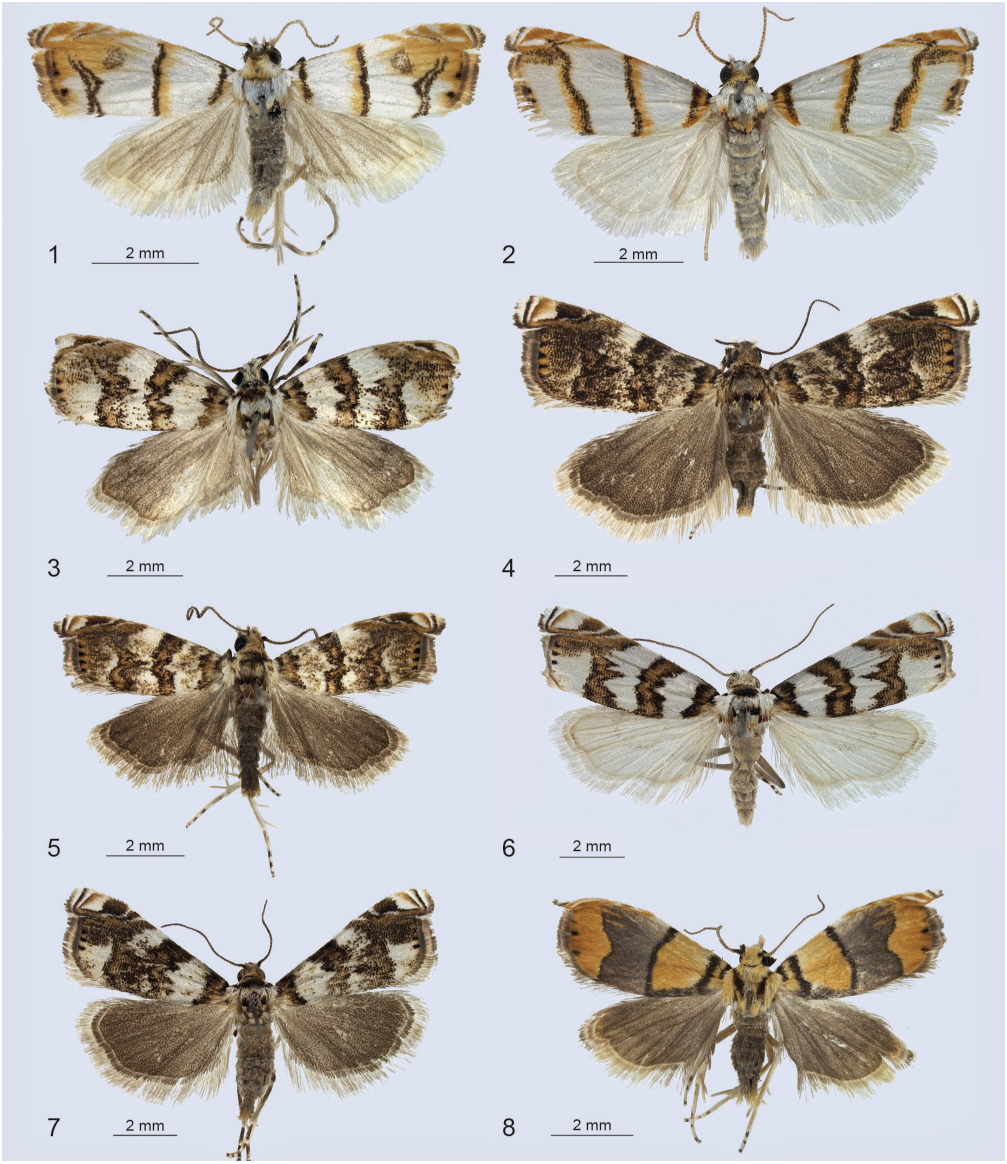
Diptychophora galvani
species of moths
Mattirolomyces
Mattirolomyces is a genus of fungi within the Pezizaceae family.
Diploderma yongshengense
Species of reptile
Kischinskinia
Kischinskinia is an extinct genus of passerine bird from late Miocene deposits of Russia. The type, and only species is Kischinskinia scandens.
Willema carsoni
species of insect
Guanshancaris
Guanshancaris is an extinct genus of amplectobeluid radiodont known from the Cambrian Stage 4 Guanshan Biota of southern China. It is only known from a single species. G. kunmingensis which was described in 2013 as a species of Anomalocaris before being placed in a new genus in 2023. Like many other radiodonts, it is only known from fragmentary remains, including its frontal appendages and the oral cone. It has been suggested to have been durophagous. Based on the proportions of Anomalocaris, it is estimated to have been long.
Microtini
Microtini is a tribe of voles in the subfamily Arvicolinae.
Kwanasaurus
Kwanasaurus is an extinct genus of silesaurid dinosauromorph reptiles from the Late Triassic of Colorado. It is known from a single species, Kwanasaurus williamparkeri. Kwanasaurus had a deeper, stronger skull and greater specialization for herbivory compared to other silesaurids. It also possessed many unique characteristics of the snout, ilium, and lower part of the femur. It was described along with new specimens of Dromomeron from the Eagle Basin, the northernmost extent of the Chinle Formation.
Saratovia
Saratovia is a genus of targaryendraconian pterosaurs that lived during the Late Cretaceous in what is now Russia. The genus contains a single species, S. glickmani, known from a partial lower jawbone, and is named after the city of Saratov, where the specimen was found, and its discover Leonid S. Glickman. The fossil comes from sedimentary rocks of the Melovatka Formation. Uncovered in the 1940s, the only specimen was assigned to various genera such as Ornithocheirus, Anhanguera and Coloborhynchus before being recognized as a new taxon and named in 2025. Likewise, though long thought to belon
Cepora wui
species of insect
Gobiazhdarcho
Gobiazhdarcho () is an extinct genus of azhdarchid pterosaurs known from the Late Cretaceous Bayanshiree Formation of Mongolia. The genus contains a single species, Gobiazhdarcho tsogtbaatari, known from a three cervical (neck) vertebrae. It was closely related to Quetzalcoatlus and coexisted with Tsogtopteryx, another azhdarchid more closely related to Hatzegopteryx.
Anania profusalis
species of insect
Mambawakale
Mambawakale is a genus of large sized basal paracrocodylomorph, possibly a poposauroid, from the Manda Beds of Tanzania. It was informally named Pallisteria before being officially published under its current name almost 60 years after its discovery. It contains a single species, Mambawakale ruhuhu.
crAssphage
CrAss-like phages (crassviruses) are an order of bacterial viruses (bacteriophages) that represent the most abundant viruses in the human gut, discovered in 2014 by cross assembling reads in human fecal metagenomes. In silico comparative genomics and taxonomic analysis have found that crAss-like phages represent a highly abundant and diverse family of viruses. CrAss-like phage were predicted to infect bacteria of the Bacteroidota phylum and the prediction was later confirmed when the first crAss-like phage (crAss001) was isolated on a Bacteroidota host (Bacteroides intestinalis) in 2018. Crass
Setaphyta
The Setaphyta are a clade within the division Bryophyta sensu lato which includes Marchantiophytina (liverworts) and Bryophytina (mosses). Excluded are the Anthocerotophytina (hornworts). A 2018 study found through molecular sequencing that liverworts are more closely related to mosses than hornworts, with the implication that liverworts were not among the first species to colonize land.
Casandria daunus
species of insect
Blynx
A blynx is the hybrid offspring of a bobcat and a Canada lynx, two closely related species in the genus Lynx.
UTC clade
clade of Chlorophyta
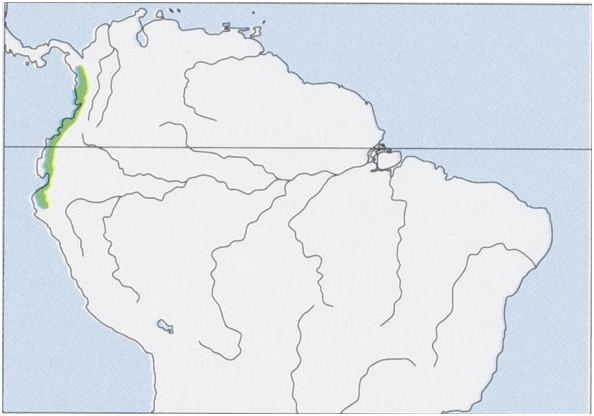
Lophostoma occidentale
species of mammal
Myloplus sauron
species of fish
Lloviu viruses
taxon containing Lloviu cuevavirus
Cissinae
Cissinae is one of six subfamilies in the crow family (Corvidae). It comprises 9 species, which are spread over two genera. The members of Cissinae as a whole are sometimes referred to as blue/green magpies, and are described as some of the most colourful members of the Corvidae family.
Agapornis longipes
species of bird (fossil)