Category
page 2Taxonbars without primary Wikidata taxon IDs

Jaekelopterus
Jaekelopterus is an extinct genus of eurypterid, a group of extinct aquatic arthropods. Fossils of Jaekelopterus have been discovered in deposits of Middle Silurian to Early Devonian age, from the Wenlock epoch to Emsian stage.' There are three known species:' the type species J. rhenaniae from Devonian brackish to fresh water strata in the Rhineland, J. howelli from Devonian estuarine strata in Wyoming, and J. marylandicus from Silurian deposits in Maryland. The generic name combines the name of German paleontologist Otto Jaekel, who described the type species, and the Greek word () mean
.png)
Murrayglossus hacketti
Murrayglossus is an extinct genus of echidna from the Pleistocene of Western Australia. It contains a single species, Murrayglossus hacketti, also called '''Hackett's giant echidna'. Though only from a few bones, researchers suggest that Murrayglossus was the largest monotreme to have ever lived, measuring around long and weighing around . Historically treated as a species of long-beaked echidnas, it was separated into its own genus Murrayglossus in 2022. The generic name combines the last name of paleontologist Peter Murray and glossus'', the Greek word for "tongue".
double-stranded RNA virus
type of virus according to Baltimore
Ferungulata
Ferungulata ("wild beasts and ungulates") is a grandorder of placental mammals that groups together mirorder Ferae and clade Pan-Euungulata. It has existed in two guises, a traditional one based on morphological analysis and a revised one taking into account more recent molecular analyses. The Ferungulata is a sister group to the order Chiroptera (bats) and together they make clade Scrotifera.
Asian straight-tusked elephant
species of mammal

virophage
thumb|upright=1.8| (A) When the host cell is only infected by a giant virus, the latter establishes a cytoplasmic virus factory to replicate and generates new virions, and the host cell is most likely [[lysed at the end of its replication cycle.(B) When the host cell is co-infected with a giant virus and its virophage, the latter parasitizes the giant virus's virus factory. The presence of virophages could seriously impact the infectivity of the giant virus by decreasing its replication efficiency and increasing the survival of the host cell.(C) When the giant virus genome is parasitized by a

Protoreaster lincki
species of echinoderm

ParaHoxozoa
ParaHoxozoa (or Parahoxozoa) is a clade of animals that consists of Bilateria, Placozoa, and Cnidaria.
%20white%20background.jpg)
Eufalconimorphae
Eufalconimorphae is a clade of birds, consisting of passerines, parrots, falcons, caracaras, and forest falcons (but not other raptors). It has whole-genome DNA support. This clade was defined in the PhyloCode by George Sangster and colleagues in 2022 as "the least inclusive crown clade containing Falco subbuteo and Passer domesticus". Eufalconimorphae birds are characterized by their strong and hooked beaks, sharp talons, and powerful wings. They have excellent eyesight, which allows them to spot their prey from great distances. The Eufalconimorphae is noted to produce aerodynamic force durin
Pegasoferae
Pegasoferae ("winged beast") is a proposed clade of mammals based on genomic research in molecular systematics by Nishihara, Hasegawa and Okada (2006).
feline viral rhinotracheitis
upper respiratory or pulmonary infection of cats
Kellas cat
cat
positive-sense single-stranded RNA virus
type of virus according to Baltimore: RNA viruses that have their genetic material encoded in the form of single-stranded, positive-sense RNA
.jpg)
Eumetabola
Eumetabola is an unranked clade of Neoptera. Two large unities known as the Eumetabola and Paurometabola are probably from the adelphotaxa of the Neoptera after exclusion of the Plecoptera. The monophyly of these unities appears to be weakly justified.
Influenza A virus subtype H2N2
subtype of Influenza A virus

Arini
tribe of parrots
Malagasy hippopotamus
species of hippopotamus on the island of Madagascar
Cavitaves
Cavitaves is a clade that contains the order Leptosomiformes (cuckoo roller) and the clade Eucavitaves (a large assemblage of birds that includes woodpeckers, kingfishers and trogons). This group was defined in the PhyloCode by George Sangster and colleagues in 2022 as "the least inclusive crown clade containing Leptosomus discolor and Picus viridis". The name refers to the fact that the majority of them nest in cavities.
Eurypygimorphae
Eurypygimorphae or Phaethontimorphae is a clade of birds that contains the orders Phaethontiformes (tropicbirds) and Eurypygiformes (kagu and sunbittern) recovered by genome analysis. The relationship was first identified in 2013 based on their nuclear genes. This group was defined in the PhyloCode by George Sangster and colleagues in 2022 as "the least inclusive crown clade containing Phaethon aethereus, Eurypyga helias, and Rhynochetos jubatus". Historically these birds were placed at different parts of the tree, with tropicbirds in Pelecaniformes and the kagu and sunbittern in Gruiformes. S
liliger
The liliger is the hybrid offspring of a male lion (Panthera leo) and a female liger (Panthera leo♂ × Panthera tigris♀). Thus, it is a second generation hybrid. In accordance with Haldane's rule, male tigons and ligers are sterile, but female ligers and tigons can produce cubs. The first such hybrid was born in 1943, at the Hellabrunn Zoo.
Tactopoda
Tactopoda or Arthropodoidea is a proposed clade of ecdysozoan animals that includes the phyla Tardigrada and Euarthropoda, supported by various morphological observations. The cladogram below shows the relationships implied by this hypothesis.
Influenza A virus subtype H5N8
bovine virus diarrhea
significant economic disease of cattle caused by two species of Pestivirus

Cervus canadensis hanglu
subspecies of deer

chipmunk
Chipmunks are small, striped squirrels of subtribe Tamiina. Chipmunks are found in North America, with the exception of the Siberian chipmunk, which is found primarily in Asia. The name "chipmunk" originated in the 19th century, and other names for this group of squirrels include chitmunk, chipmuck, chipping squirrel, and ground squirrel, though the last name can refer to squirrels of other genera.
Oropouche fever
Human disease
hybrid camel
hybrid between a Bactrian camel and dromedary
.jpg)
Euphoniinae
Euphoniinae is a subfamily of finches endemic to the Neotropics. It contains two genera, Euphonia and Chlorophonia.
Notopalaeognathae
Notopalaeognathae is a clade that contains the order Rheiformes (rheas), the clade Novaeratitae (which includes the cassowaries and emus, the kiwis, and the extinct elephant birds), and the clade Dinocrypturi (comprising the tinamous and the extinct moas). Notopalaeognathae was named by Yuri et al. (2013) and defined in the PhyloCode by Sangster et al. (2022) as "the least inclusive crown clade containing Rhea americana, Tinamus major, and Apteryx australis". The exact relationships of this group, including its recently extinct members, have only recently been uncovered. The two lineages endem
Psittrichasiidae
Psittrichasiidae is a family of birds belonging to the superfamily of the true parrots (Psittacoidea). It is a very small family, the smallest of the three families of the true parrots. It is divided into two subfamilies: Psittrichasinae and Coracopsinae, that contain a single genus each. The first contains a single species, native to New Guinea, and the second contains four living species distributed throughout Madagascar and other islands of the Indian Ocean.

Veterupristisaurus
Veterupristisaurus is an extinct genus of carcharodontosaurid theropod dinosaur known from the Jurassic of Tendaguru, Lindi Region of southeastern Tanzania.
.jpg)
Otidimorphae
Otidimorphae is a clade of birds that contains the orders Cuculiformes (cuckoos, and roadrunners), Musophagiformes (turacos), and Otidiformes (bustards) identified in 2014 by genome analysis. George Sangster and colleagues in 2022 named the clade uniting turacos and bustards as Musophagotides, defining it in the PhyloCode as "the least inclusive crown clade containing Otis tarda and Musophaga violacea, but not Grus grus or Mesitornis variegatus".

Ornithoscelida
Ornithoscelida () is a proposed clade that includes various major groupings of dinosaurs. An order Ornithoscelida was originally proposed by Thomas Henry Huxley but later abandoned in favor of Harry Govier Seeley's division of Dinosauria into Saurischia and Ornithischia. The term was revived in 2017 after a new cladistic analysis by Baron et al.

Proteoarchaeota
Thermoproteati is a kingdom of archaea. Its synonym, "TACK", is an acronym for "Thaumarchaeota" (now Nitrososphaerota), "Aigarchaeota", "Crenarchaeota (now Thermoproteota), and "Korarchaeota", the first groups discovered. They are found in different environments ranging from acidophilic thermophiles to mesophiles and psychrophiles and with different types of metabolism, predominantly anaerobic and chemosynthetic. Thermoproteati is a kingdom that is sister to the "Asgard" branch that gave rise to the eukaryotes. It has been proposed that the Thermoproteati kingdom be classified as "Crenarchaeot

coywolf
thumb|Captive-bred F1 hybrid|F1 gray wolf × coyote hybrids, Wildlife Science Center in [[Forest Lake, Minnesota]]
Megavirus
Megavirus is a viral genus, phylogenetically related to Acanthamoeba polyphaga mimivirus (APMV). In colloquial speech, Megavirus chilense is more commonly referred to as just "Megavirus". Until the discovery of pandoraviruses in 2013, it had the largest capsid diameter of all known viruses, as well as the largest and most complex genome among all known viruses.
Atelocerata
Atelocerata is a proposed clade of arthropods that includes Hexapoda (insects and a few related taxa) and Myriapoda (millipedes, centipedes, and similar taxa), but excludes Crustacea (such as shrimp and lobsters) and Chelicerata (such as spiders and horseshoe crabs). The name is currently used interchangeably with Tracheata. or Uniramia sensu stricto. It is an extensive division of arthropods comprising all those that breathe by tracheae, as distinguished from Crustacea, which breathe by means of gills.

Shansitherium
Schansitherium ("beast of Shanxi") is an extinct genus of superficially moose-like or antelope-like giraffids from the late Miocene epoch of Shanxi Province, China. They are closely related to the genus Samotherium.
Panthera tigris soloensis
subspecies of mammal

bandicoot
Bandicoots are a group of more than 20 species of small to medium-sized, terrestrial, largely nocturnal omnivorous marsupials in the order Peramelemorphia. They are endemic to the Australia–New Guinea region, including the Bismarck Archipelago to the east and Seram and Halmahera to the west.

Hydrachnidiae
thumb|upright=1.11| Water mites in a mat of floating algae
thumb|upright=1.11| Two water mites feeding on the larva of a Chironomidae|chironomid
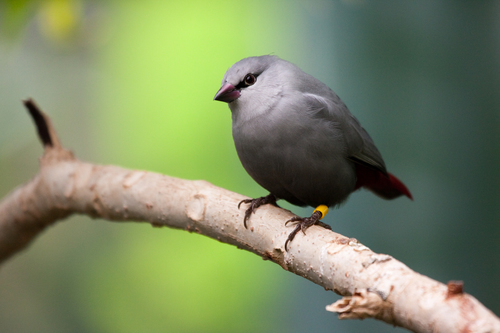
Glaucestrilda
Glaucestrilda is a genus of estrildid finch in the family Estrildidae. The three species in the genus are found in Africa.
Nematophyta
The Nematophyta or nematophytes were a paraphyletic group of land organisms, probably including some plants as well as algae known only from the fossil record, from the Silurian period until the early Devonian Rhynie chert. The type genus Nematothallus, which typifies the group, was first described by Lang in 1937, who envisioned it being a thallose plant with tubular features and sporophytes, covered by a cuticle which preserved impressions of the underlying cells. He had found abundant disaggregated remains of all three features, none of which were connected to another, leaving his reconstru
.JPG)
Herpestoidea
Herpestoidea is a superfamily of Mammalia carnivores which includes mongooses, Malagasy carnivorans and the hyenas.
Qinlingosaurus
Qinlingosaurus is a genus of herbivorous sauropod dinosaur from the Late Cretaceous of Asia.

Acanthomorpha
Acanthomorpha (meaning "thorn-shaped") is an extraordinarily diverse taxon of teleost fishes with spiny fin rays. The clade contains about one-third of the world's modern species of vertebrates: over 14,000 species.
Picodynastornithes
Picodynastornithes is a clade that contains the orders Coraciiformes (rollers and kingfishers) and Piciformes (woodpeckers and toucans). This grouping also has current and historical support from molecular and morphological studies. This group was defined in the PhyloCode by George Sangster and colleagues in 2022 as "the least inclusive crown clade containing Coracias garrulus, Alcedo atthis, and Picus viridis".

Ahvaytum
Ahvaytum ( ; ) is an extinct genus of probable basal sauropodomorph saurischian dinosaurs from the Late Triassic Popo Agie Formation of Wyoming, United States. The genus contains a single species, A. bahndooiveche, known from fragmentary hindlimb bones. Ahvaytum represents the oldest known named dinosaur of the ancient Laurasian landmass.
Borna disease
horse disease
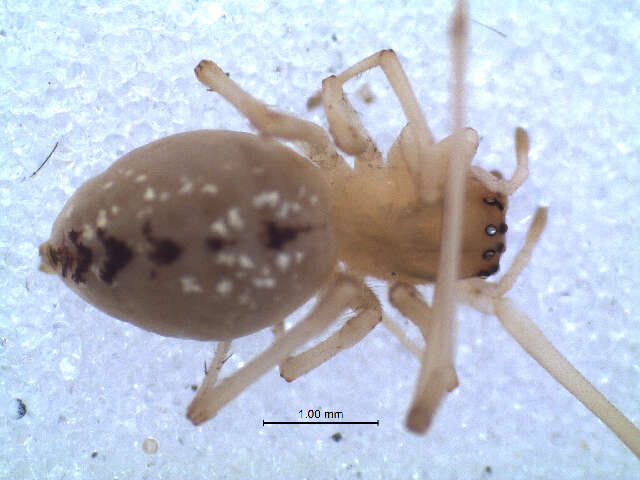
Cheiramiona
Cheiramiona is a genus of sac spiders in the family Cheiracanthiidae. The genus was described by Lotz & Dippenaar-Schoeman in 1999. It is an African genus with 50 known species, of which 35 have been recorded from South Africa.
.jpg)
Phaeodarea
Phaeodarea or Phaeodaria is a group of amoeboid cercozoan organisms. They are traditionally considered radiolarians, but in molecular trees do not appear to be close relatives of the other groups, and are instead placed among the Cercozoa. They are distinguished by the structure of their central capsule and by the presence of a phaeodium, an aggregate of waste particles within the cell.
Verticillium wilt
plant wilt disease
Accipitrimorphae
Accipitrimorphae is a clade of birds of prey that include the orders Cathartiformes (New World vultures) and Accipitriformes (diurnal birds of prey such as eagles, hawks, osprey and secretarybird). However, this group might be a junior synonym (or at least a subjective one) of Accipitriformes. The DNA-based proposal and the NACC and IOC classifications include the New World vultures in the Accipitriformes, but the SACC classifies the New World vultures as a separate order, the Cathartiformes which has been adopted here. The placement of the New World vultures has been unclear since the early 1
Eurylaimides
Eurylaimides (Old World suboscines) is a clade of passerine birds that are distributed in tropical regions around the Indian Ocean and a single American species, the sapayoa. This group is divided into five families and three superfamilies. The families listed here are those recognised by the International Ornithologists' Union (IOC).
Sapayooidea
Sapayoidae: broad-billed sapayoa
Eurylaimoidea
Eurylaimidae: typical broadbills
Calyptomenidae: African and green broadbills
Pittoidea
Pittidae: pittas
Philepittidae: asities

Archaeamphora longicervia
Archaeamphora longicervia is a fossil plant species, the only member of the hypothetical genus Archaeamphora. Fossil material assigned to this taxon originates from the Yixian Formation of northeastern China, dated to the Early Cretaceous (around ).

Newtonsaurus
Newtonsaurus is an extinct genus of possibly coelophysoid theropod dinosaur from the Late Triassic (Rhaetian) Lilstock Formation of South Wales, Great Britain. The genus contains a single species, Newtonsaurus cambrensis, originally named as a species of Zanclodon, known from an external mould of the front half of a lower jaw. With an estimated total length of , it is suggested to have been one of the largest theropods known from the Triassic.

Atlas wild ass
subspecies of mammal
influenza A virus subtype H1N2
virus subtype

birdwing
Birdwings are butterflies in the swallowtail family, that belong to the genera Trogonoptera, Troides, and Ornithoptera. Most recent authorities recognise 36 species, however, this is debated, and some authorities include additional genera. Birdwings are named for their exceptional size, angular wings, and birdlike flight. They are found across tropical Asia, mainland and archipelagic Southeast Asia, and Australasia.

Protathlitis
Protathlitis (meaning "champion") is a potentially dubious and chimeric genus of theropod dinosaur from the Early Cretaceous (Barremian) Arcillas de Morella Formation of Castellón, Spain. The type and only species is Protathlitis cinctorrensis, known from a partial skeleton. It was originally identified as a basal member of the Baryonychinae. If a spinosaurid identity of the material is correct, its discovery, as well as those of the spinosaurids Camarillasaurus, Iberospinus, Riojavenatrix, and the contemporary Vallibonavenatrix shows that the Iberian Peninsula held a diverse assemblage of the