Category
page 4Taxonbars without primary Wikidata taxon IDs
.jpg)
Maleriraptor
Maleriraptor is an extinct genus of herrerasaurian saurischian dinosaurs from the Late Triassic (Norian) Upper Maleri Formation of India. The genus contains a single species, M. kuttyi, known from a partial skeleton.
.png)
Archaeocursor
Archaeocursor (meaning "old runner") is an extinct genus of basal ornithischian dinosaurs from the Early Jurassic Ziliujing Formation of China. The genus contains a single species, A. asiaticus, known from a single femur. Archaeocursor represents the oldest and most basal ornithischian described from Asia.

Qianjiangsaurus
Qianjiangsaurus (meaning "Qianjiang lizard") is an extinct genus of hadrosauroidean ornithopod dinosaurs from the Late Cretaceous Zhengyang Formation of China. The genus contains a single species, Q. changshengi, known from a partial skeleton. Qianjiangsaurus is one of the few hadrosauroids named from south China, and it indicates important fauna connections between similarly aged formations in Mongolia.
European Ice Age leopard
subspecies of mammal

Paraxenisaurus
Paraxenisaurus (, meaning "strange lizard") is an extinct genus of ornithomimosaurian theropod from the Late Cretaceous Cerro del Pueblo Formation of Coahuila in Mexico. The genus contains a single species, P. normalensis, which is known from a few bones of tail, hips, hands, and feet. The specific epithet was given in honor of the Benemérita Normal School of Coahuila, a teacher training institution, where the fossils were reposited. It is a member of the family Deinocheiridae and is the only member of that clade known from Laramidia.

Príncipe Kingfisher
subspecies of bird
Boar–pig hybrid
hybridised offspring

Yuanyanglong
Yuanyanglong (meaning "lovebird dragon") is an extinct genus of oviraptorosaurian theropod dinosaurs from the Early Cretaceous Miaogou Formation of China. The genus contains a single species, Yuanyanglong bainian, known from two partial skeletons.
Influenzavirus D
Virus of influenza type D
Dandakosaurus
Dandakosaurus (meaning "Dandakaranya lizard") is a dubious genus of theropod dinosaur from the Kota Formation, Andhra Pradesh, India. It lived 183 to 175 million years ago from the latest Pliensbachian to the late Toarcian stages of the Early Jurassic. Little is known about the genus, and some paleontologists consider it to be a nomen dubium.
Giant Malleefowl
species of bird (fossil)
Embasaurus minax
Embasaurus (meaning "Emba lizard") is a dubious genus of tetanuran theropod dinosaur from the Early Cretaceous period. It is known from two vertebrae found in the Neocomian Sands of Kazakhstan. As it is known only from fragmentary remains, Embasaurus is considered by some to be a possible nomen dubium. It was named after the Emba River, and it is believed to have lived during the Berriasian stage, around 140 million years ago. According to the Theropod Database, a personal website designed by Mickey Mortimer, further research may suggest that Embasaurus may be a basal tyrannosauroid. George Ol
influenza A virus subtype H7N7
virus subtype
Kiyacursor
Kiyacursor (meaning "Kiya River runner") is an extinct genus of noasaurid theropod dinosaur from the Early Cretaceous Ilek Formation of Russia. The genus contains a single species, K. longipes, known from a partial skeleton. Kiyacursor represents the first Early Cretaceous ceratosaur discovered in Asia, as well as the second non-avian theropod named from Russia, after Kileskus in 2010.
Q132242371
Baminornis (meaning "Fujian Province bird") is an extinct genus of basal avialans from the Late Jurassic (Tithonian age) Nanyuan Formation of China. The genus contains a single species, Baminornis zhenghensis, known from a partial skeleton. Baminornis was initially identified as the oldest known avialan to bear a fused pygostyle, but later research cast doubt on the identification of this structure, claiming it could instead be part of the synsacrum.
Ferenceratops
Ferenceratops is an extinct genus of ceratopsian dinosaurs known from the Late Cretaceous (Maastrichtian) Sânpetru and Densuș-Ciula formations of Romania. The genus contains a single species, Ferenceratops shqiperorum, known from a partial skeleton and pelvis. These fossils, in addition to many other isolated or associated remains, were originally referred to the ornithopod Zalmoxes. Phylogenetic analyses based on new remains of Ajkaceratops suggest Ferenceratops was a close relative of this genus, as part of a distinct lineage of previously unrecognized European ceratopsians.
Jianianhualong
Jianianhualong (meaning "Jianianhua dragon") is a genus of troodontid theropod dinosaur from the Early Cretaceous of China. It contains a single species, Jianianhualong tengi, named in 2017 by Xu Xing and colleagues based on an articulated skeleton preserving feathers. The feathers at the middle of the tail of Jianianhualong are asymmetric, being the first record of asymmetrical feathers among the troodontids. Despite aerodynamic differences from the flight feathers of modern birds, the feathers in the tail vane of Jianianhualong could have functioned in drag reduction whilst the animal was mo
Influenza A virus subtype H5N6
virus subtype
Dinodocus mackesoni
Dinodocus (meaning "terrible beam") is a genus of sauropod dinosaur, named by Richard Owen in 1884, with the type species, Dinodocus mackesoni. The name is now usually considered a nomen dubium. The name was given to some fossil bones from the Lower Greensand Group (Lower Cretaceous) of Hythe, Kent, England, were formerly placed in the genus Pelorosaurus (Mantell, 1850), but a review by Upchurch et al. (2004) concluded that Dinodocus is a nomen dubium.
Antilles monkey
Xenotrichini (the Antilles monkeys) is a tribe of extinct primates, which lived on the Greater Antilles as recently as the last few thousand years.
Xenovenator
Xenovenator () is an extinct genus of troodontid theropod dinosaurs known from the Late Cretaceous (Campanian age) of North America. The type species of the genus, Xenovenator espinosai, is known from fragmentary skull bones found in the Cerro del Pueblo Formation of Mexico. It is characterized by an unusually expanded and rugose skull roof, somewhat comparable to that seen in pachycephalosaurs. This may imply Xenovenator individuals engaged in combat with other members of their species, a behavior for which adaptations had not been previously observed in non-avian paravians.
Citharognathus tongmianensis
species of arachnid
Picides
Picides is an infraorder of the order Piciformes that includes woodpeckers and honeyguides. The honeyguides were thought to be closely related to the barbets, as their aerial displays and vocalizations are more similar to each other than either are to woodpeckers. However, phylogenetic analysis has shown that honeyguides and woodpeckers are indeed sister taxa.
Phragmoplastophyta
The Phragmoplastophyta (Lecointre & Guyader 2006) are a proposed sister clade of the Klebsormidiaceae in the Streptophyte/Charophyte clade. The Phragmoplastophyta consist of the Charophyceae and another unnamed clade which contains the Coleochaetophyceae, Zygnematophyceae, Mesotaeniaceae, and Embryophytes (land plants). It is an important step in the emergence of land plants within the green algae. It is equivalent to the ZCC clade/grade, cladistically granting the Embryophyta.
Scarabaeus erichsoni
species of insect
Istiorachis
Istiorachis (meaning "sail spine") is an extinct genus of iguanodontian ornithopod dinosaur from the Early Cretaceous (Barremian age) Wessex Formation of the Isle of Wight, England. The genus contains a single species, Istiorachis macarthurae, known from a partial postcranial skeleton including several vertebrae, incomplete ribs, and part of the pelvis. Its vertebral are notably elongated, giving the animal a 'sail-backed' appearance.
Mongolostegus
Mongolostegus (meaning "Mongolian roof") is an extinct genus of stegosaurian dinosaurs from the Early Cretaceous (Aptian–Albian ages) Dzunbain Formation of Mongolia. The genus contains a single species, Mongolostegus exspectabilis, known from a fragmentary single specimen representing the first stegosaur named from Mongolia. It is one of the youngest known stegosaurs, along with Yanbeilong and an unnamed species from the Hekou Group of China. In contrast to these taxa, which are members of the late-diverging stegosaur subfamily Stegosaurinae, Mongolostegus may have affinities to more basal tax
Bekisar
The Bekisar, or Ayam Bekisar, is the first-generation hybrid offspring of the green junglefowl (Gallus varius) and domesticated red junglefowl from Java (Gallus gallus bankiva). The roosters have a glossy blackish-green plumage and are highly prized for their loud clear calls and striking colouration, while the hens are usually dull and infertile.
Arctic reindeer
subspecies of deer
Tiamat valdecii
Extinct species of dinosaur
Kansu red deer
subspecies of mammal
Yuanmouraptor
Yuanmouraptor (meaning "Yuanmou County robber") is an extinct genus of metriacanthosaurid theropod dinosaurs from the Middle Jurassic Zhanghe Formation of China. The genus contains a single species, Yuanmouraptor jinshajiangensis, known from a partial skull and several consecutive vertebrae.
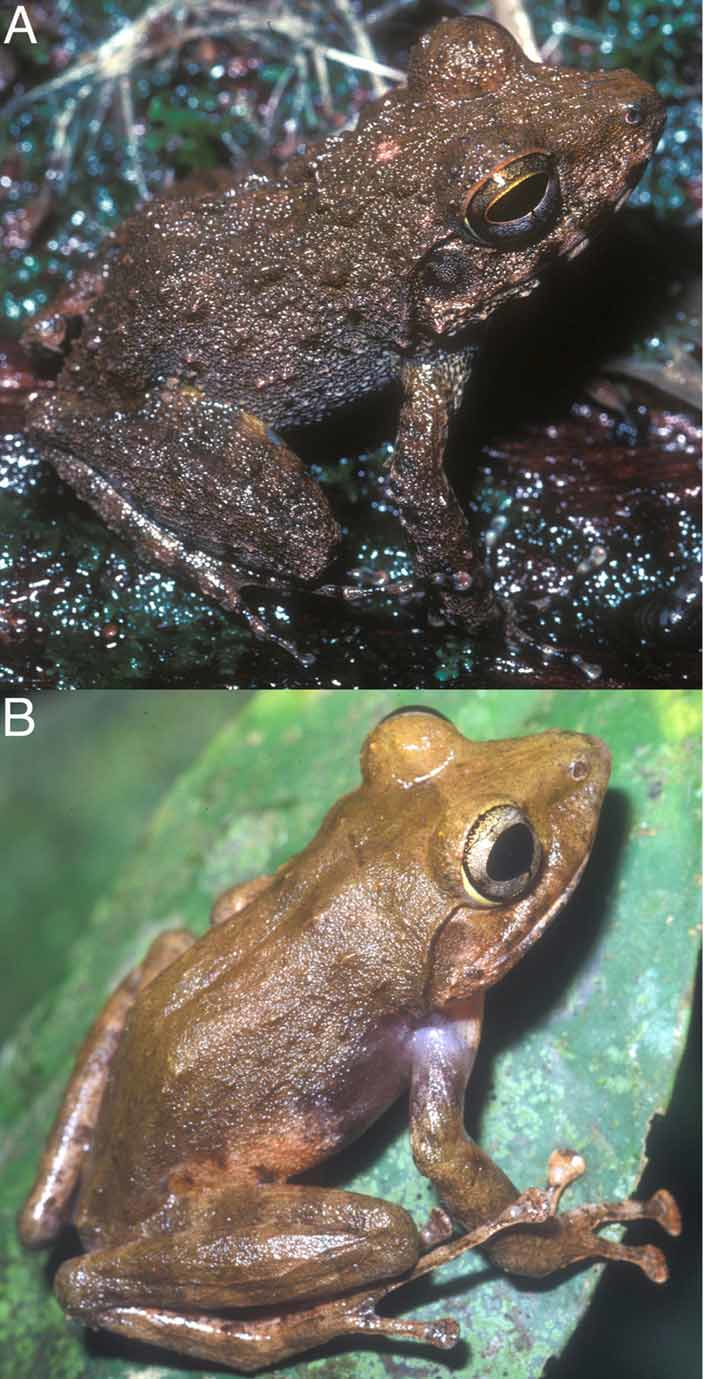
Platymantis parilis
species of amphibian
Lophocyonidae
Lophocyonidae is an extinct family of feliform carnivorans from the Miocene of Europe.
Nhandumirim
Nhandumirim (meaning "small rhea" in the Tupi language) is a genus of basal sauropodomorph dinosaur from the Carnian age of Late Triassic Brazil. It is currently considered a saturnaliid sauropodomorph. The type and only species, Nhandumirim waldsangae, is known from a single immature specimen including vertebrae, a , pelvic material, and a hindlimb found in the Santa Maria Formation in Rio Grande do Sul.
Merriam's elk
extinct subspecies of mammal
Pavoninae
REDIRECTPhasianinae
Priodontognathus phillipsii
Priodontognathus (meaning "saw tooth jaw") is a genus of ankylosaurian dinosaur possibly from the Late Jurassic (Oxfordian-aged) Lower Calcareous Grit of Yorkshire, England. It is a dubious genus based on a maxilla, and has been erroneously mixed up with iguanodonts and stegosaurs.
Vectipelta
Vectipelta (meaning "Isle of Wight shield") is an extinct genus of ankylosaurian dinosaur recovered from the Early Cretaceous Wessex Formation of England. The genus contains a single species, V. barretti, known from a partial skeleton including several osteoderms. It was historically known as the "Spearpoint ankylosaur" prior to its description.
Rhizomyini
tribe of rodents
Doolysaurus
Doolysaurus is an extinct genus of thescelosaurid ornithischian dinosaur known from the Cretaceous (Albian–lower Cenomanian) Ilseongsan Formation of South Korea. The genus contains a single species, Doolysaurus huhmini, known from the partial skeleton of a small juvenile individual. It is the first named South Korean dinosaur with diagnostic cranial material, providing important insight into the early evolution of thescelosaurid ornithischians in East Asia, and the second named basal neornithischian from South Korea after Koreanosaurus.
Influenza A virus subtype H5N2
virus subtype
Garumbatitan
Garumbatitan (meaning "Garumba giant") is an extinct genus of somphospondylan sauropod dinosaur from the Early Cretaceous Arcillas de Morella Formation of Spain. The genus contains a single species, G. morellensis, known from multiple partial skeletons.
Mayaro virus disease
infectious disease
Navaornis
Navaornis is an extinct genus of enantiornithean birds from the Late Cretaceous Adamantina Formation of Brazil. The genus contains a single species, N. hestiae, known from a well preserved skull and skeleton.
Scarabaeus sanctus
species of insect
Irisosaurus
Irisosaurus (meaning "iridescent lizard" after the iridescent clouds of Yunnan Province, China) is an extinct genus of sauropodiform sauropodomorph dinosaur, from the Fengjiahe Formation of China. The type species, Irisosaurus yimenensis was formally described in 2020. It was the sister taxon to Mussaurus.
banana passionfruit
fruit
Influenza A virus subtype H3N8
virus subtype
Nyctomyini
Nyctomyini is a tribe of New World rats and mice in the subfamily Tylomyinae which includes two genera, Nyctomys and Otonyctomys, each with a single species. Both are medium-sized rats with tawny to brownish fur and a hairy tail.
Vectaerovenator
Vectaerovenator (meaning "Isle of Wight air-filled hunter" due to the pneumaticity of the vertebrae) is a genus of tetanuran theropod from the Early Cretaceous period of what is now England (Lower Greensand Group; Ferruginous Sands). It contains one species, Vectaerovenator inopinatus; its holotype, consisting of the specimens IWCMS 2020.400, 2020.407, and 2019.84, comprises two anterior dorsal vertebrae, a cervical vertebra and a mid‐caudal vertebra from the late Aptian Ferruginous Sands of the Isle of Wight in southern England, discovered in 2019. Comparative anatomical analysis shows that t
Zhongjianichthys
thumb|Restoration
Zhongjianichthys is an extinct genus of primitive jawless fish that lived in the Cambrian Period, approximately 518 million years ago, in what is now Southwest China. As a myllokunmingiid, it is considered one of the earliest known vertebrates in the fossil record alongside the other two identified genera, Haikouichthys and Myllokunmingia. Like its confamilials, its fossils were found in the Maotianshan Shales in Yunnan province.
Cyprus Mouflon
subspecies of mammal
SFTS virus
species of virus
Coahuilasaurus
Coahuilasaurus (meaning "Coahuila lizard") is an extinct genus of kritosaurin ornithopod dinosaur from the Late Cretaceous (Campanian) Cerro del Pueblo Formation of Coahuila, Mexico. The genus contains a single species, C. lipani, known from the associated tips of the upper and lower jaw and other fragmentary skull bones. It is a large kritosaurin with an estimated body length of and body mass of over .

Hemipenthes maura
species of insect
Ornithoctoninae
Ornithoctoninae is a subfamily of tarantulas found in Southeast Asia. It was first erected in 1895 by Reginald Innes Pocock based on the type specimen Ornithoctonus andersoni.
Pleurocera ampla
species of mollusc
influenza A virus subtype H9N2
subtype of influenza A
Mycobacterium avium complex
nontuberculous bacteria in dust, water, soil; may infect lungs in immunocompromised people