Category
page 1Technology in society

podcast
thumb|An episode of a podcast playing on a smartphone
A podcast is a program episode made available in digital format for download over the Internet. Podcasts are primarily an audio medium, which is reflected in the term itself, a portmanteau of "iPod" and "broadcast" coined in 2004. The term used to refer to an episodic series of digital audio files that users can download to a personal device or stream to listen to at a time of their choosing. In the mid-2020s, however, video podcasts, either as primary content included in the feed, or as an external supplement to audio, have been popularize

crowdfunding
Crowdfunding is the practice of funding a project or venture by raising money from a large number of people, typically via the internet. Crowdfunding is a form of crowdsourcing and alternative finance, to fund projects "without standard financial intermediaries". In 2015, over was raised worldwide by crowdfunding.

vlog
A vlog, also known as a video blog or video log, is a form of blog for which the medium is video. Vlog entries often combine embedded video (or a video link) with supporting text, images, and other metadata. Entries can be recorded in one take or cut into multiple parts. Like traditional blogging, video blogging (or vlogging) focuses on personal topics centering on the creator. For example, makeup routines, book recommendations, and recipe videos.

Voyager Golden Record
two phonograph records included on both Voyager spaceprobes launched in August and September 1977

educational technology
use of technology in education to improve learning and teaching; not restricted to high technology

Arecibo message
1974 message into space

Pioneer plaque
plaque attached to the Pioneer 10 and Pioneer 11 spacecraft in case extraterrestrial life finds them

telemedicine
thumb|Telehealth
Telehealth is the use of electronic information and telecommunication technologies to support long-distance clinical health care, patient and professional health-related education, health administration, and public health.This includes data sharing by way of patient portals and electronic medical records. Telehealth encompasses a broad range of technologies and services used to provide patient care, health education, public health services, and health administration remotely using telecommunications technologies.

Neil Postman
American writer and academic (1931-2003)

fintech
innovative technologies and systems that improve, automate, or disrupt the delivery of financial services across sectors including payments, lending, investments, insurance and digital assets
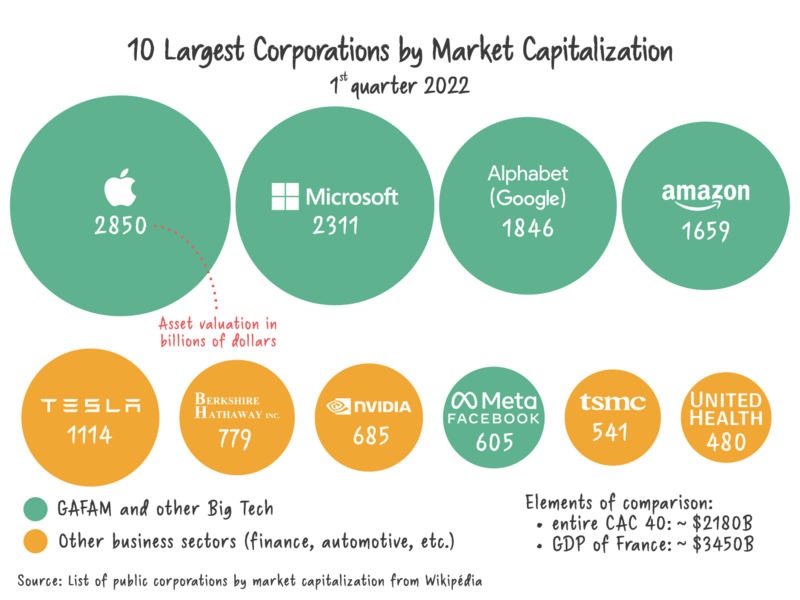
Big Tech
label for large technology companies

technophobia
thumb|240x240px|Computers, among many other technologies, are feared by technophobes.
Technophobia (from Greek τέχνη technē, "art, skill, craft" and φόβος phobos, "fear"), also known as technofear, is the fear or dislike of, or discomfort with, advanced technology or complex devices, especially personal computers, smartphones, and tablet computers. A 2018 study proposed a new conceptual and empirical definition of technophobia based on a critical literature review and data analysis results:
social credit system
national reputation system being developed by the Chinese government
digital journalism
an occupation for journalists publishing content digitally
science and technology studies
field of study in which society, politics and culture are studied in how scientific research and technological innovation affect them
dead Internet theory
conspiracy theory about the World Wide Web
social system
patterned series of interrelationships existing between individuals, groups, and institutions
AI boom
rapid progress in generative AI since mid-2010s
social innovation
new practices aimed at solving social challenges
Internet activism
use of electronic communication technologies for various forms of activism
neo-Luddism
Neo-Luddism or new Luddism is a philosophy opposing many forms of modern technology. The term Luddite is generally used as a pejorative applied to people showing technophobic leanings. The name is based on the historical legacy of the English Luddites, who were active between 1811 and 1817. While the original Luddites were mostly concerned with the economic implications of improving technology in regard to industrialization, neo-Luddites tend to have a broader and more holistic distrust of technological improvement.

Future Shock
non-fiction work by Alvin Toffler

Change.org
Change.org is a website which allows users to create and sign petitions in an attempt to advance various social causes by raising awareness and influencing decision-makers. The site is a US-based for-profit company and claims to have 570 million users as of January 2026. Petitions often focus on causes such as general justice, economic justice, criminal justice, human rights, education, environmental protection, animal rights, cyber bullying, health, religious freedom, and sustainable food.
hype cycle
graphical presentation of the maturity of specific technologies
digital media use and mental health
effect of digital media on the mental health of its users
digital anthropology
subdiscipline of anthropology
Social construction of technology
theory within the field of Science and Technology Studies
technology acceptance model
model
active SETI
attempt to send messages to intelligent extraterrestrials
proximity marketing
localized wireless distribution of advertising content associated with a particular place

Erewhon
thumb|right|400px|Map of part of New Zealand to illustrate Erewhon and Erewhon Revisited
Erewhon: or, Over the Range () is a utopian novel by English writer Samuel Butler, first published in 1872, set in a fictional country discovered and explored by the protagonist. The book is a satire on Victorian society.
technophilia
Technophilia (from Greek τέχνη - technē, "art, skill, craft" and φίλος - philos, "beloved, dear, friend") refers generally to a strong attraction for technology, especially new technologies such as personal computers, the Internet, mobile phones, and home cinema. The term is used in sociology to examine individuals' interactions with society and is contrasted with technophobia.

sousveillance
300px|thumb|Camera A is engaged in surveillance, while the person wearing camera B on their head is engaged in sousveillance.
thumb|Surveillance as compared with sousveillance|300pxSousveillance ( ) is the recording of an activity by a member of the public, rather than a person or organisation in authority, typically by way of small wearable or portable personal technologies. The term, coined by Steve Mann, stems from the contrasting French words sur, meaning "above", and sous, meaning "below", i.e. "surveillance" denotes the "eye in the sky" watching from above, whereas "sousveillance" denote

The Gutenberg Galaxy
essay by Marshall McLuhan
Technostress
Technostress has been defined as the negative psychological relationship between people and the introduction of new technologies. Where ergonomics is the study of how humans physically react to and fit into machines in their environment, technostress is a result of altered behaviors brought about by the use of modern technologies at office and home environments.
technological evolution
theory describing technology development
French Tech
Accreditation awarded to French cities recognized for their startup ecosystem. It is also a name used by technologically innovative French businesses throughout the world.
legal tech
technology and software to provide legal education/services knowledge
robotic lawn mower
autonomous robot used to cut lawn grass
agricultural technology
use of technology in agriculture, horticulture, and aquaculture with the aim of improving yield, efficiency, and profitability

Twitter trends
Twitter expression for a topic with high number of views in a time

The Third Wave
book by Alvin Toffler

technology adoption lifecycle
sociological model that describes the adoption or acceptance of a new product or innovation
reputation management
the act of influencing, controlling, enhancing, or concealing of an individual's or group's reputation
social technology
term of technology that enabled social interactions
reputation system
community rating algorithm
criticism of technology
overview about the criticism of technology
sociotechnology
Sociotechnology (short for "social technology") is the study of processes on the intersection of society and technology. Vojinović and Abbott define it as "the study of processes in which the social and the technical are indivisibly combined".
Sociotechnology is an important part of socio-technical design, which is defined as "designing things that participate in complex systems that have both social and technical aspects".
technology and society
interdisciplinary academic research area regarding influences & impacts of technologies
list of emerging technologies
Wikimedia list article
Urban Air Mobility
urban transportation systems that move people by air
cute cat theory of digital activism
technology life cycle
stages of research and development, ascent, maturity, and decline of new technological innovations
Neophile
Neophile or Neophiliac, a term popularised by author Robert Anton Wilson, is a personality type characterized by a strong affinity for novelty. The term was used earlier by Christopher Booker in his 1969 book The Neophiliacs, and by J. D. Salinger in his 1965 short story "Hapworth 16, 1924".
internet geography
subdiscipline of geography
cultural lag
phenomenon in which culture takes time to catch up with technological innovations, causing social problems

technological innovation
process having new developments implemented by the productive sector that increase efficiency or create/enhance a product
social journalism
media model

alt-tech
Alt-tech is a collection of social networking, online video, blogging and other platforms and services that provide alternatives to "Big Tech" platforms and services. The "alt-" prefix alludes to the alt-right movement.
Railtel Corporation of India
RailTel Corporation of India Ltd. is an Indian Navaratna Public Sector Undertaking (PSU) which provides broadband and VPN services. RailTel was formed in September 2000 with the objective of creating a nationwide broadband, telecom and multimedia network, and to modernise train control operation and safety system of Indian Railways. RailTel's network passes through around 5,000 stations across the country, covering all major commercial centres. Railtel became the 22nd company to achieve Navratna status on August 30, 2024.