Category
page 1Teloschistales

Xanthoria parietina
species of fungus

Xanthoria
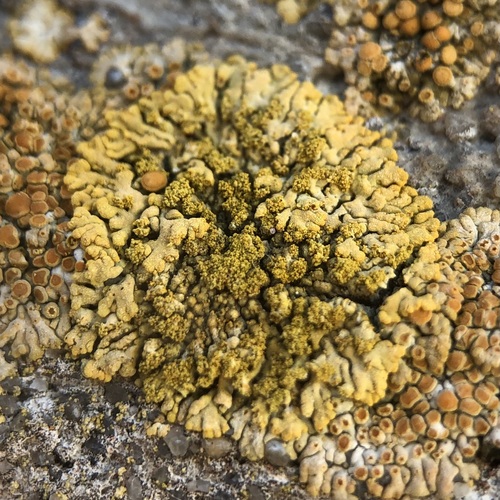
Xanthoria is a genus of lichenized fungi in the family Teloschistaceae. Common names include orange lichen, orange wall lichen, and sunburst lichen. They can be identified by their characteristic squamulose morphology with distinctive "fairy cups".
%20M%C3%BCll.%20Arg%20918275.jpg)
Teloschistaceae
The Teloschistaceae are a large family of mostly lichen-forming fungi belonging to the class Lecanoromycetes in the division Ascomycota. The family has a cosmopolitan distribution, although its members occur predominantly in temperate regions. Most members are lichens that either live on rock or on bark, but about 40 species are lichenicolousmeaning they are non-lichenised fungi that live on other lichens. Many members of the Teloschistaceae are readily identifiable by their vibrant orange to yellow hue, a result of their frequent anthraquinone content. The presence of these anthraquinone pigm
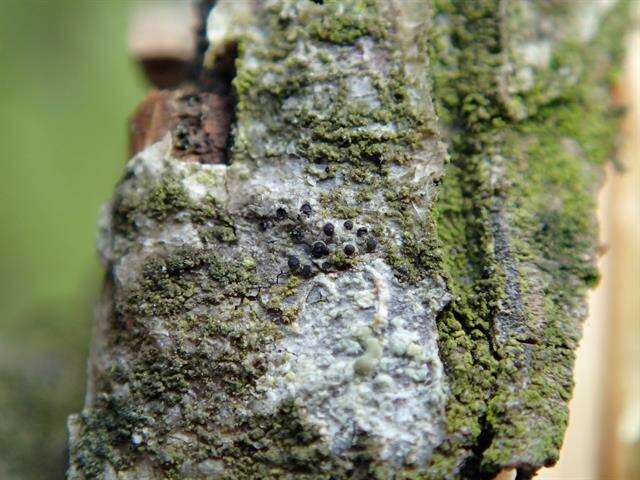
Teloschistales
The Teloschistales are an order of mostly lichen-forming fungi belonging to the class Lecanoromycetes in the division Ascomycota. According to one 2008 estimate, the order contains 5 families, 66 genera, and 1954 species. The predominant photobiont partners for the Teloschistales are green algae from the genera Trebouxia and Asterochloris.

Xanthomendoza
Xanthomendoza is a genus of small, bright orange foliose lichens with lecanorine apothecia. It is in the family Teloschistaceae. Members of the genus are commonly called sunburst lichens or orange lichens because of their bright orange color.

Xanthoria calcicola
species of fungus
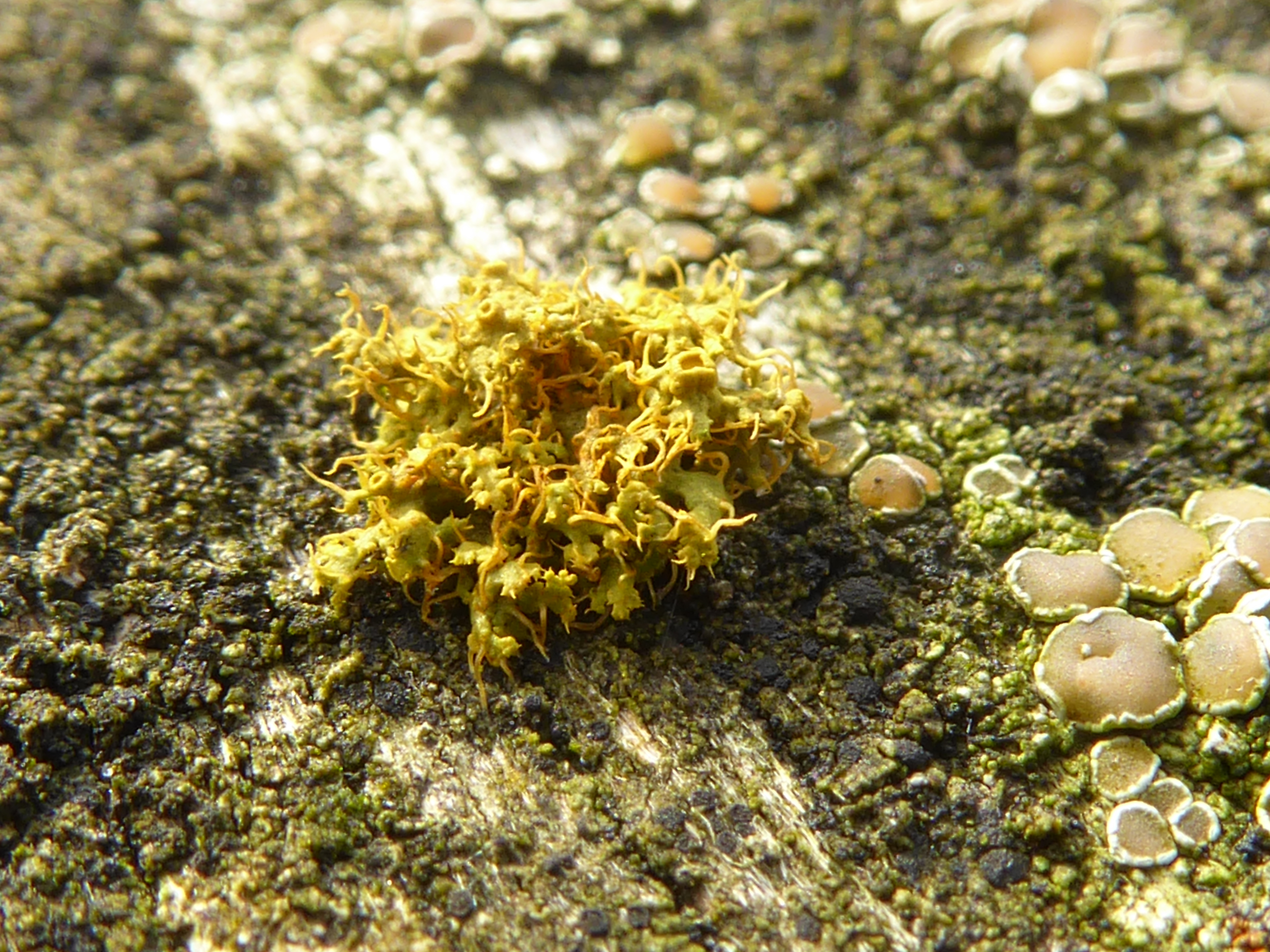
Teloschistes chrysophthalmus
species of fungus
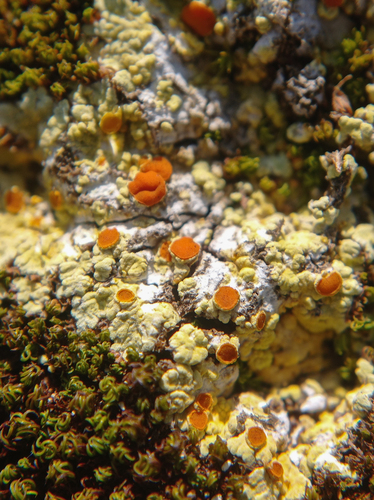
Fulgensia
Fulgensia is a fungal genus in the family Teloschistaceae. The genus was circumscribed by Abramo Bartolommeo Massalongo and Giuseppe De Notaris in 1853, with Fulgensia vulgaris assigned as the type species. Although the genus has had several species in it at times in its taxonomic history, it is now monotypic, as most of its former species have been transferred to Gyalolechia or other Teloschistaceae genera.
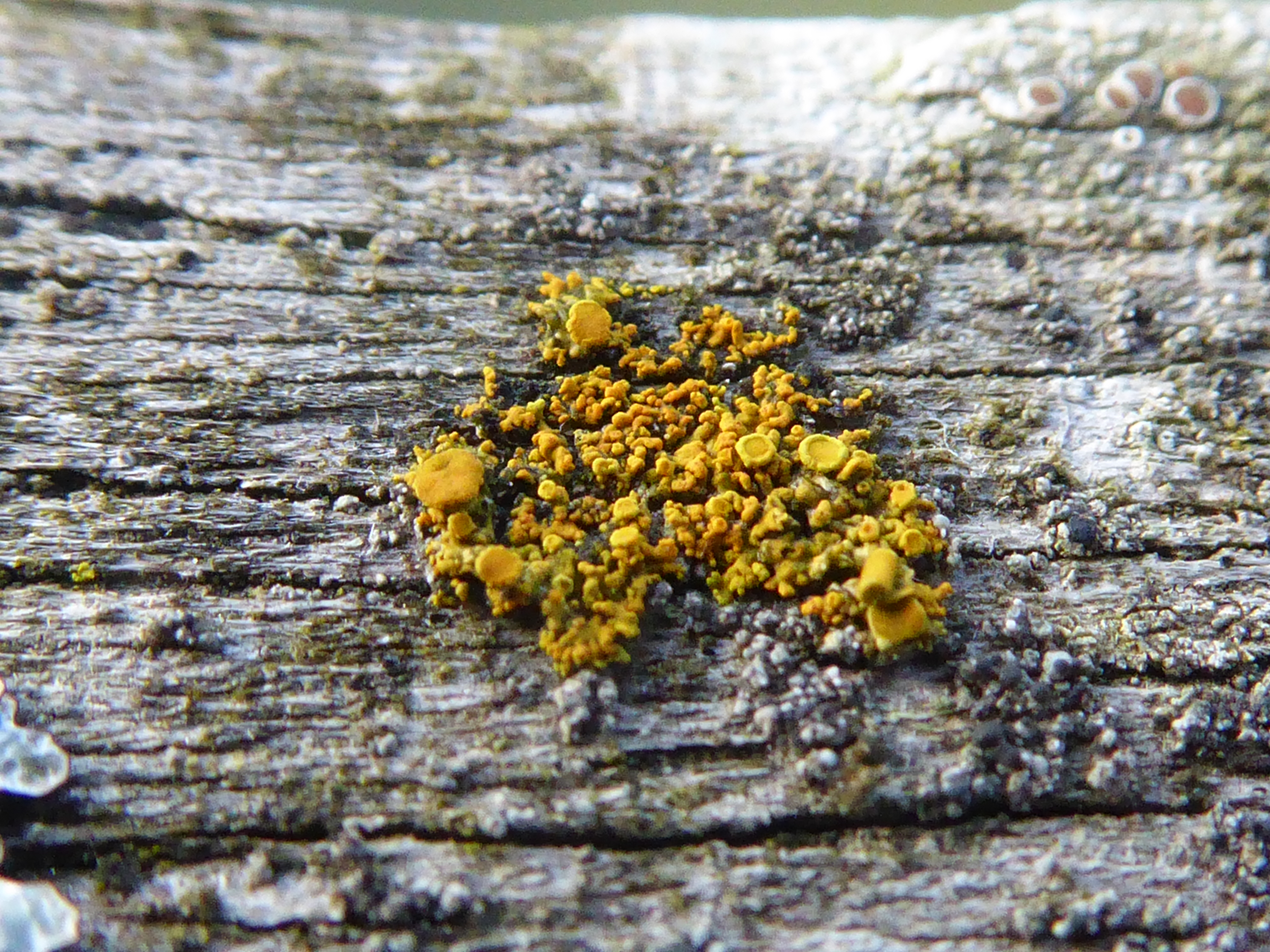
Polycauliona polycarpa
species of fungus

Megalosporaceae
The Megalosporaceae are a family of mostly lichen-forming fungi belonging to the class Lecanoromycetes in the division Ascomycota. The family comprises three genera and roughly forty described species, distributed mainly in humid temperate to tropical forests of the Southern Hemisphere.

Teloschistes flavicans
species of fungus

Letrouitiaceae
The Letrouitiaceae are a family of lichen-forming fungi belonging to the order Teloschistales. The family, which has a tropical and subtropical distribution, contains the single genus Letrouitia, which contains about 15 species.
The family and the genus, both circumscribed in 1982 by André Bellemère and Josef Hafellner, are named in honour of Marie-Agnès Letrouit-Galinou.

Megalospora
Megalospora is a genus of lichen-forming fungi in the family Megalosporaceae.
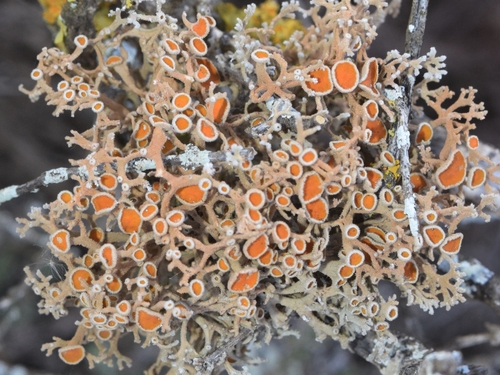
Seirophora
Seirophora is a genus of lichen-forming fungi in the family Teloschistaceae. It comprises nine species. The genus was erected in 1983, with Seirophora magara assigned as the type species. These lichens form small, shrubby growths with firm, cartilage-like branches that are stiffened by internal cord-like structures and covered with complex surface hairs rather than the simple root-like attachments found in related genera. Several species were transferred to Seirophora in 2004 when the genus was emended by Patrik Frödén and Per Lassen to include some species segregated from Teloschistes.
Sirenophila macquariensis
lichen taxon

Teloschistes
Teloschistes is a genus of lichen-forming fungi in the family Teloschistaceae, of which it is the namesake. Species of Teloschistes are among the most visually striking lichens, typically forming small, bushy, much-branched growths in vivid shades of yellow to orange, colours produced by anthraquinone pigments, particularly parietin. The genus has a worldwide distribution, with species occurring on twigs, bark, and rock surfaces in open, well-lit habitats ranging from coastal scrub and semi-arid shrublands to alpine zones.

Xanthoria aureola
species of fungus
Brigantiaeaceae
The Brigantiaeaceae are a family of fungi in the order Teloschistales. Species in this family are lichenized with green algae, and are usually found growing on bark.

Teloschistes capensis
species of fungus
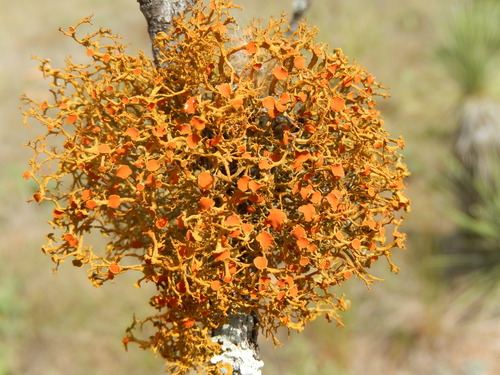
Teloschistes exilis
species of fungus

Gyalolechia
Gyalolechia is a genus of lichen-forming fungi belonging to the family Teloschistaceae. It contains about 20 species of crustose lichens.

Dufourea
genus of fungi
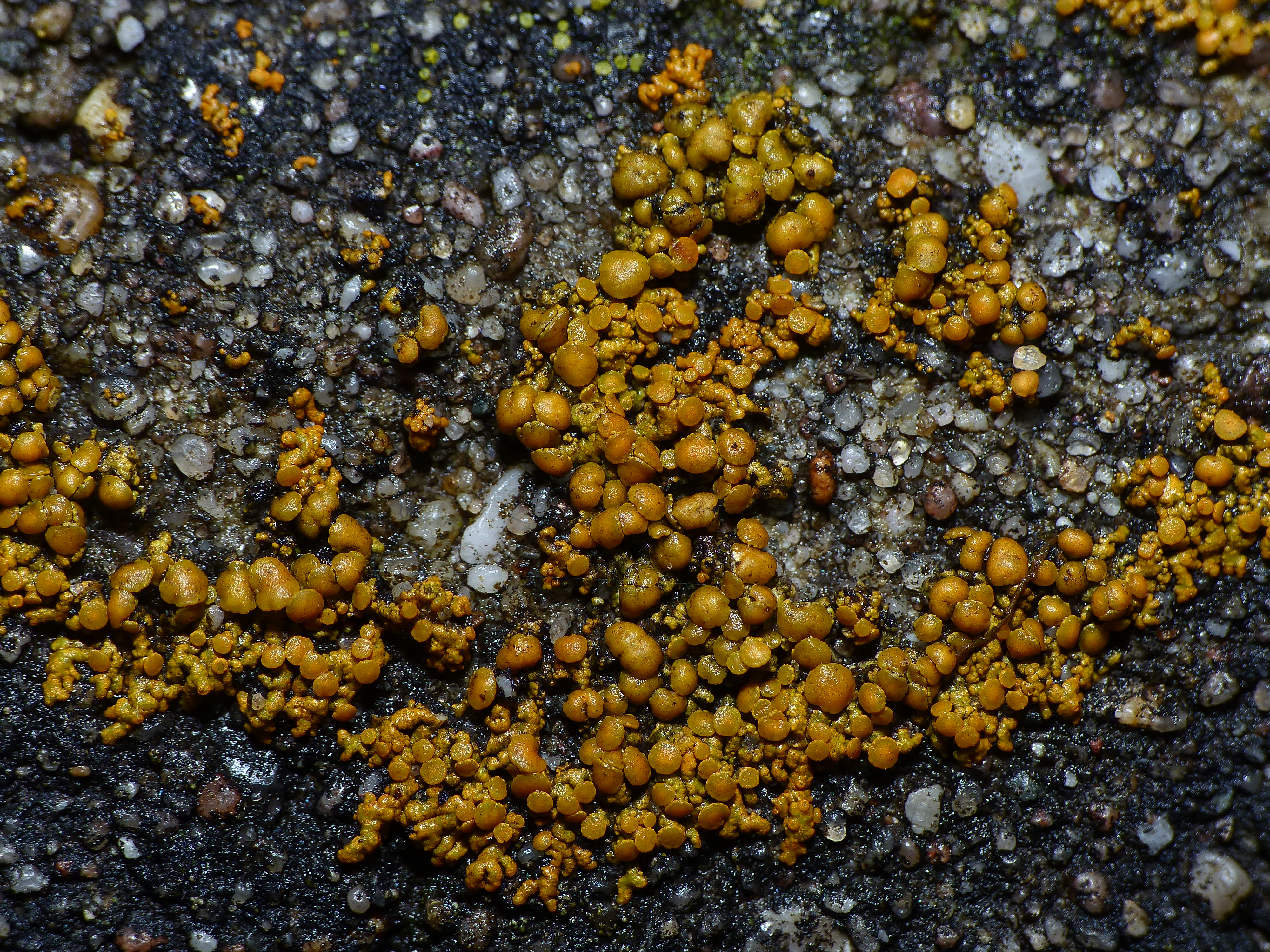
Rusavskia elegans
species of fungus
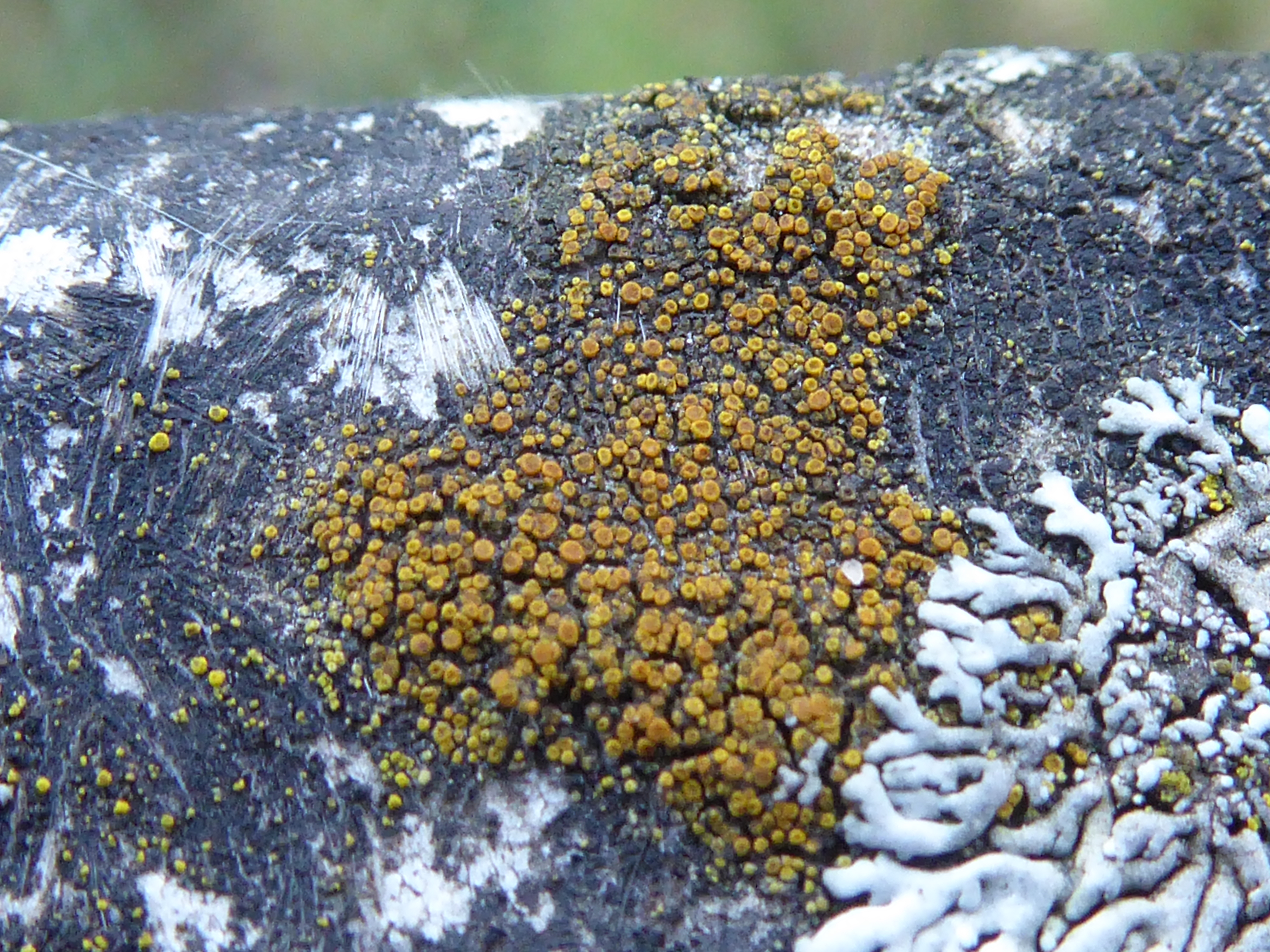
Athallia holocarpa
species of fungus
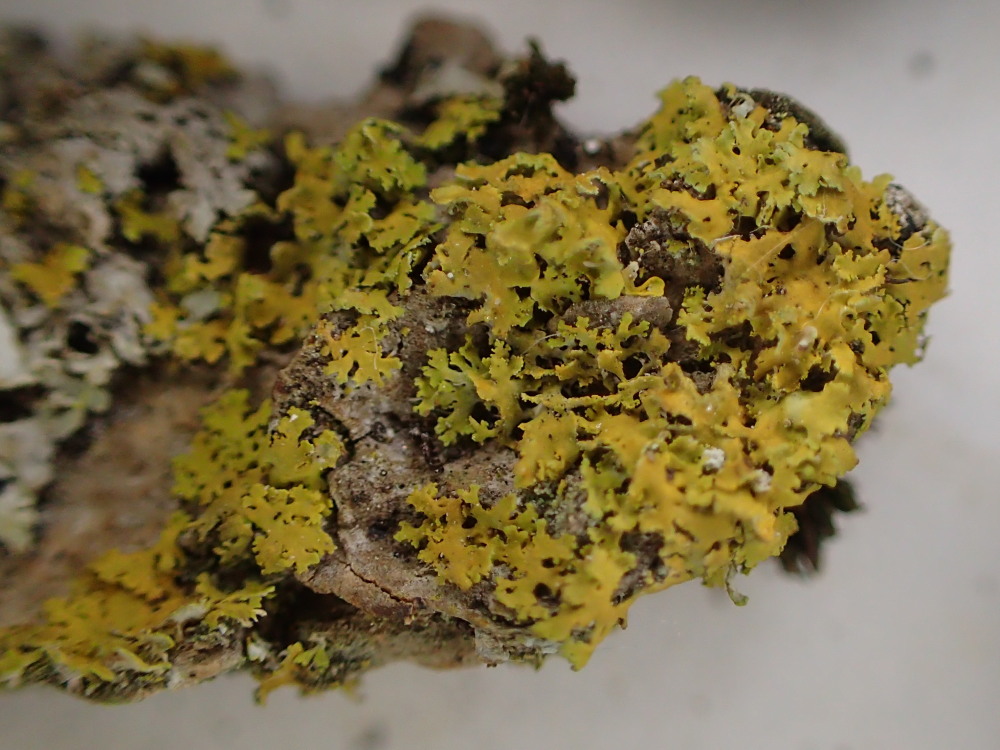
Xanthomendoza oregana
species of fungus

Athallia
Athallia is a genus of lichen-forming fungi in the family Teloschistaceae. Most species have a poorly developed or almost invisible thallus, with the fruiting bodies often appearing to sit directly on the substrate. The genus occurs on bark, wood, and rock, and is found mainly in temperate regions of the Northern Hemisphere. All species share a characteristic set of orange anthraquinone pigments known as A.
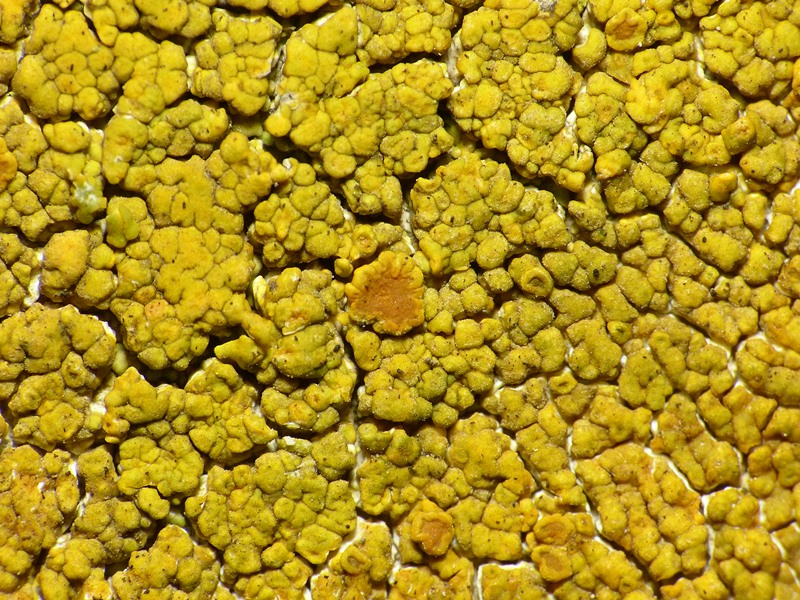
Variospora flavescens
species of Lecanoromycetes
Bryoplaca
Bryoplaca is a small genus of lichen-forming fungi belonging to the family Teloschistaceae. Established in 2013 by Ulrik Søchting, Patrik Frödén and Ulf Arup, this small genus comprises just three species that specialise in growing on moss-covered substrates in cold regions of the Northern Hemisphere. These lichens are distinguished by their bright orange fruiting that stand out like tiny sunbursts against the mossy cushions they inhabit, earning the genus its name which literally means 'moss-plate'.
Caloplaca digitaurea
species of fungus

Variospora aurantia
species of fungus
Ioplaca
Ioplaca is a genus of crustose lichens in the family Teloschistaceae. The genus was circumscribed in 1977 by Czech lichenologist Josef Poelt with Ioplaca sphalera assigned as the type species.
Marchantiana
Marchantiana is a genus of lichen-forming fungi in the family Teloschistaceae. It contains seven species of corticolous (bark-dwelling), crustose lichens, recorded mainly from Australia. Originally proposed in 2014, the genus underwent significant revision in 2024 when molecular studies showed it comprised two distinct evolutionary lineages. This led to the creation of the new genus Taedigera to accommodate the cool-temperate species from New Zealand and Patagonia, while Marchantiana was retained for the warmer-climate Australian species. Later DNA-based work has treated Streimanniella as a se
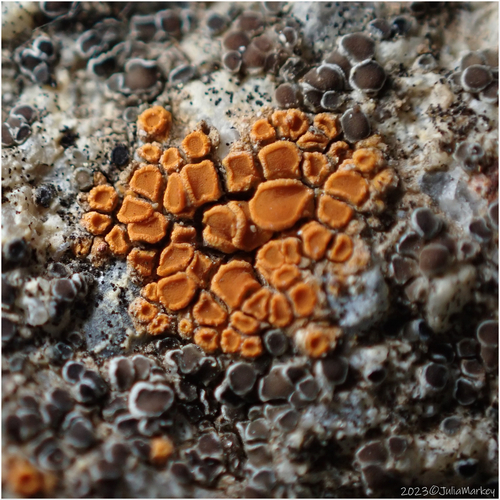
Squamulea subsoluta
species of Lecanoromycetes
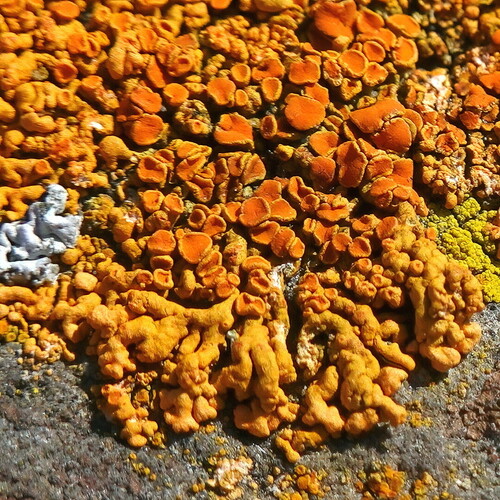
Rusavskia
Rusavskia is a genus of lichen-forming fungi in the family Teloschistaceae. It has 12 species. It is a member of the subfamily Xanthorioideae. The thallus of Rusavskia is characterised by its foliose (leaf-like) structure with distinct and typically narrow that curve outwards.
Xanthomendoza fallax
species of fungus
Xanthocarpia
Xanthocarpia is a genus of mostly crustose lichens in the family Teloschistaceae. It has 12 species with a largely Northern Hemisphere distribution.

Rufoplaca
Rufoplaca is a genus of lichen-forming fungi in the family Teloschistaceae. The genus is found primarily across the Northern Hemisphere, with most species occurring in Europe and additional records from North America and Asia. These lichens typically grow as thin crusts with orange-red colouration on sun-exposed rocks and other surfaces. The genus was established in 2013 to group together several previously scattered species that genetic studies showed formed a natural evolutionary lineage.

Kuettlingeria
Kuettlingeria is a genus of saxicolous (rock-dwelling), crustose lichens in the family Teloschistaceae. Species are characterized by a white or gray thallus and the presence of anthraquinones in the apothecial and , with the exception of Kuettlingeria diphyodes, which entirely lacks anthraquinones. First described by Italian botanist Trevisan in 1857, the genus includes 15 recognized species, although it is believed to be more diverse with additional unnamed species. These lichens are predominantly found in the Northern Hemisphere, particularly in the Mediterranean region, and grow on limeston

Pyrenodesmia
Pyrenodesmia is a genus of lichen-forming fungi in the family Teloschistaceae. The genus currently includes 23 recognized species but is believed to contain many more unnamed taxa. The genus was circumscribed in 1852 by Italian lichenologist Abramo Bartolommeo Massalongo. It is characterised by the complete absence of anthraquinones and the presence of Sedifolia-gray pigments in both the thallus and apothecia. These lichens are typically found in calcareous outcrops in the Northern Hemisphere, with biodiversity centres in the Mediterranean basin, Central Asia, and arid regions of western North
Calogaya
Calogaya is a genus of lichen-forming fungi belonging to the family Teloschistaceae. It has 19 species. The genus was circumscribed in 2013 by Ulf Arup, Ulrik Søchting, and Patrik Frödén.
The generic name Calogaya ("spectacular Gaya") honours Dr. Ester Gaya (fl. 2001), a Spanish botanist from the University of Barcelona.
Zeroviella
Zeroviella is a genus of lichen-forming fungi in the subfamily Xanthorioideae of the family Teloschistaceae. It has eight saxicolous (rock-dwelling) species. Zeroviella was segregated from Rusavskia, a closely related genus, in 2015.
Variospora
Variospora is a genus of crustose lichens belonging to the family Teloschistaceae. The genus was established in 2013 when DNA studies revealed that many species previously grouped under the traditional large genus Caloplaca actually belonged to distinct evolutionary lineages. These bright orange lichens are distinguished by their variable ascospore shapes—which can be lemon-shaped, hourglass-shaped, or simply divided by a straight partition—and their distinctive purple reaction when tested with potassium hydroxide solution.

Blastenia
Blastenia is a genus of lichen-forming fungi in the family Teloschistaceae. The genus was established in 1852 by the Italian botanist Abramo Massalongo, who brought together several species that had previously been scattered across different genera. These lichens are characterised by their rust-brown to orange-red fruiting bodies and a thin, crusty growth that often breaks into small plate-like sections. The genus includes around 40 recognised species found primarily in the Mediterranean region and Macaronesia, though some species have spread to other parts of the world.

Polycauliona
Polycauliona is a genus of lichen-forming fungi in the family Teloschistaceae.