Category
page 1Termite genera

Reticulitermes
thumb |Reticulitermes sp
Reticulitermes is a termite genus in the family Heterotermitidae. They are found in most temperate regions on Earth including much of Asia and Western Europe, and all of North America.
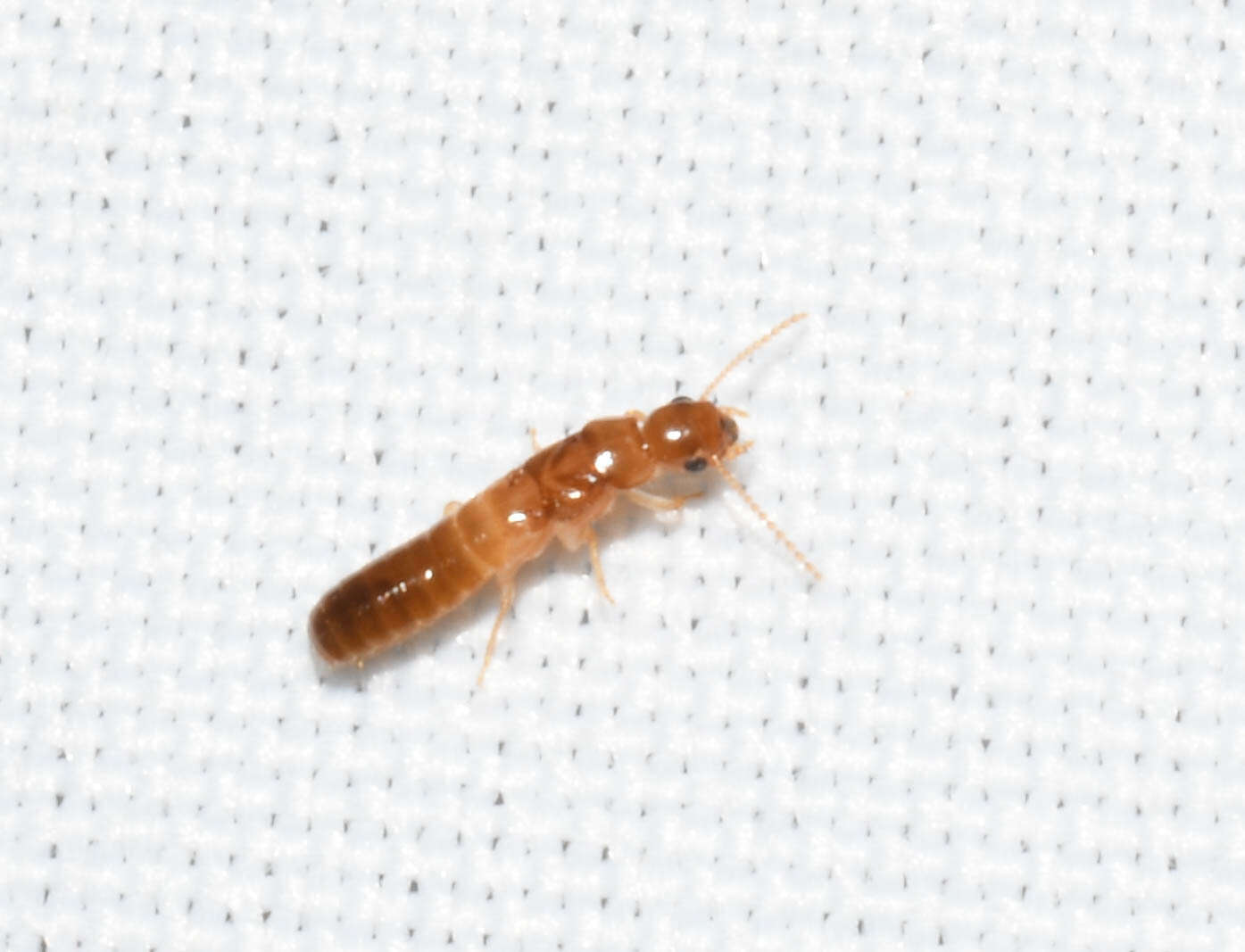
Cryptotermes
Cryptotermes is a genus of termites in the family Kalotermitidae. It is one of the economically most significant genera of drywood termites.
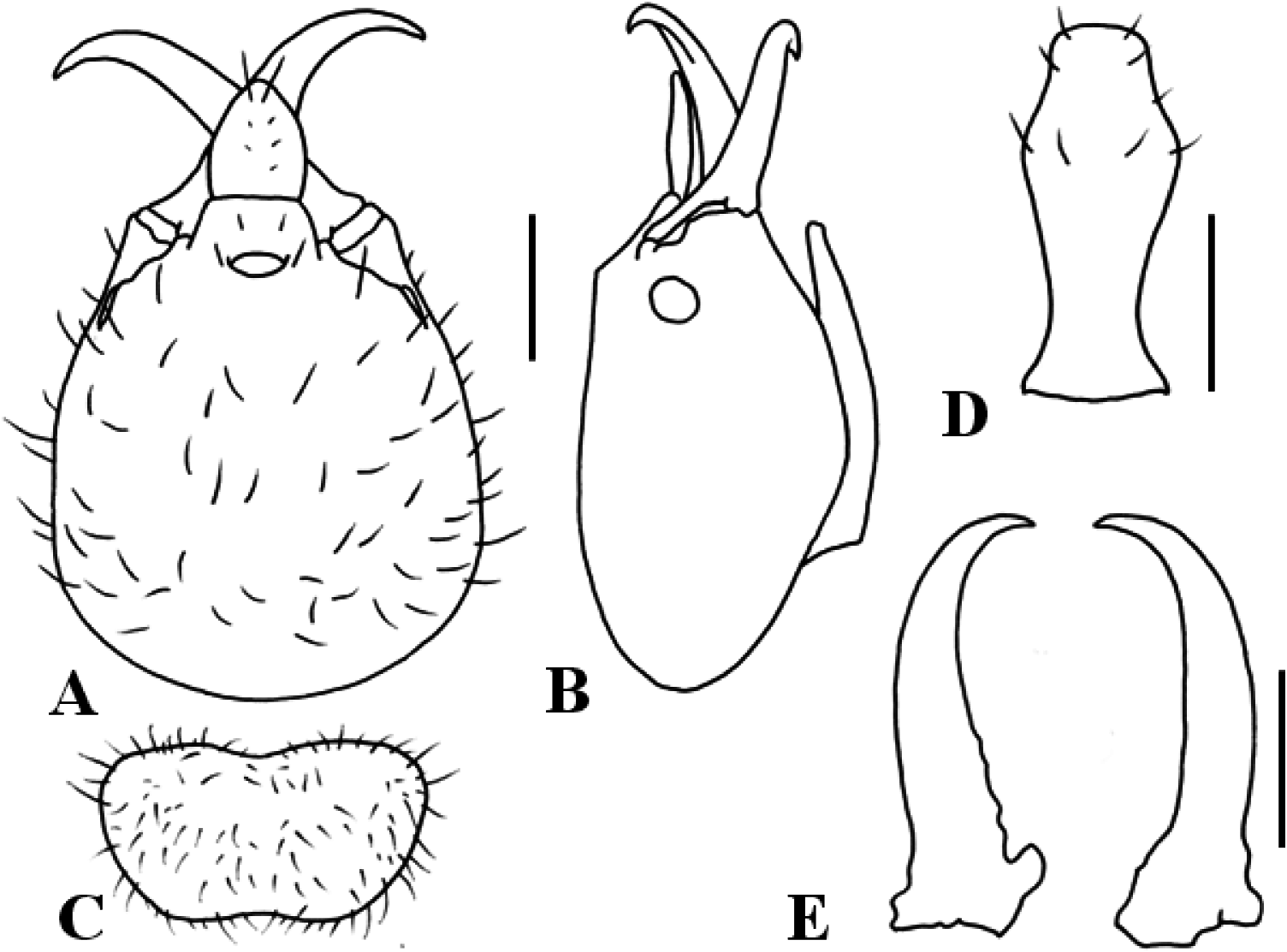
Coptotermes
Coptotermes is a genus of termites in the family Heterotermitidae. Many of the roughly 71 species are economically destructive pests. The genus is thought to have originated in Southeast Asia. Worker termites from this genus forage underground and move about in roofed tunnels that they build along the surface.
Kalotermes
Kalotermes is a genus of drywood termites belonging to the family Kalotermitidae, one of the most primitive families of termites.
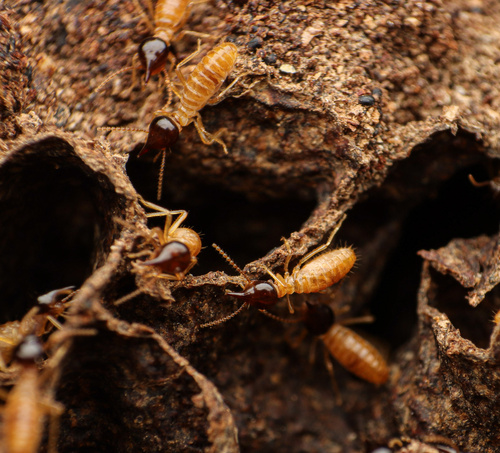
Nasutitermes
Nasutitermes is a genus of termites with a tropical distribution world-wide.

Odontotermes
Odontotermes is a termite genus belonging to subfamily Macrotermitinae (fungus-growing termites), which is native to the Old World. They are most destructive in wooden homes, and are agricultural pests in the tropics and subtropics of Africa and Asia. It is the most diverse termite genus in Africa, with 78 species recorded (as of 2002).
Macrotermes
Macrotermes is a genus of termites belonging to the subfamily Macrotermitinae and widely distributed throughout Africa and South-East Asia. Well-studied species include Macrotermes natalensis and M. bellicosus.
Amitermes
thumb|Amitermes hastatus (black mound termites) from the Western Cape region of South Africa repairing a section of their distinctive black mounds. Most of the termites are soldiers.
Neotermes
Neotermes is a genus of termites in the Kalotermitidae family. The genus was first described by Nils Holmgren in 1911 (as a subgenus), and the type species is Neotermes castaneus. All species are obligate nesters of wood.
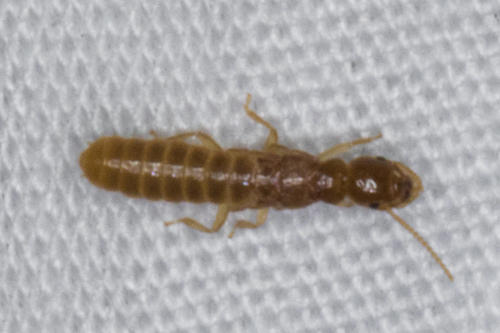
Heterotermes
Heterotermes is a genus of subterranean termites belonging to the family Heterotermitidae. The genus has an almost cosmopolitan distribution. One of their closest relatives is the Reticulitermes genus.
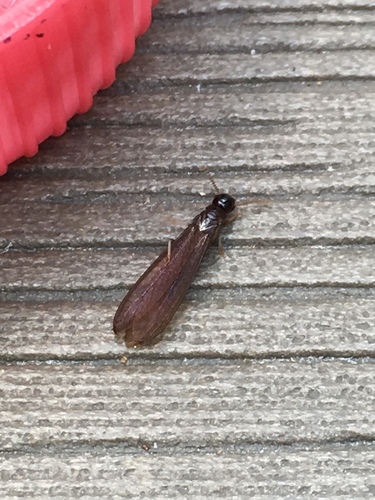
Calcaritermes
Calcaritermes is a genus of termites in the Kalotermitidae family.
Incisitermes
Incisitermes is a genus of termites in the family Kalotermitidae.
Hospitalitermes
Hospitalitermes is an Asian–Papuan genus of lichen-eating termite in the subfamily Nasutitermitinae. There are 37 species currently listed, of which most are recognized for their extensive surface foraging columns. Due to their conspicuous foraging activities, they are commonly known as processionary or marching termites. They often inhabit cavities inside of living trees excavated by other species of termite.
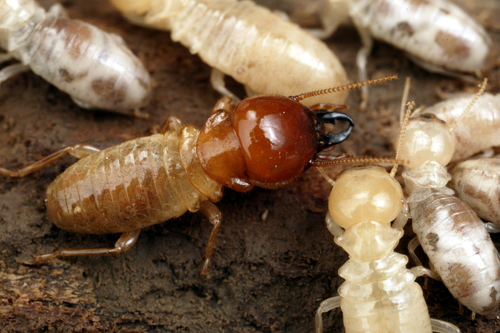
Mastotermes
Mastotermes is a genus of termites. The sole living species is Mastotermes darwiniensis, found only in northern Australia. A number of extinct taxa are known from fossils. It is a very peculiar insect, the most primitive termite alive. As such, it shows notable similarities to cockroaches in the family Cryptocercidae, the termites' closest relatives. These similarities include the anal lobe of the wing and the laying of eggs in bunches, rather than singly. The termites were traditionally placed in the Exopterygota, but such an indiscriminate treatment makes that group a paraphyletic grade of b
Zootermopsis
Zootermopsis is a genus of termites in the family Archotermopsidae. They are mostly found in western North America, ranging from Canada to Mexico, with the exception of Z. nevadensis, which has become established in Japan. They live in rotting wood, commonly inhabiting fallen or dead trees in North America's temperate rain forests, where they break down the wood's cellulose with the help of symbiotic protozoa and bacteria in their stomachs. The life and reproductive cycles of these termites are relatively normal compared to other members of its family. Species can be identified using the shape
Glyptotermes
Glyptotermes is a genus of termite in the family Kalotermitidae. With 127 species worldwide as of 2013, is the family's most speciose genus, and the second most speciose in the New World after Cryptotermes.
Trinervitermes
Trinervitermes is a termite genus belonging to family Termitidae. Members are native to the Old World. They inhabit grasslands and store grass in their nests or mounds, just below the ground surface. Their grass-collecting activities are mainly nocturnal. The soldier caste has atrophied mandibles and a fontanelle squirt gun on the frons. Diterpenes and monoterpenes are released to deter ants and smaller predators, but these are not effective against larger mammalian predators. Due to the snout on the head of soldiers and their grass-collecting habits, they are known as snouted harvester termit
Microhodotermes
Microhodotermes is a genus of southern African harvester termites in the Hodotermitidae. As with harvester termites in general, they have serrated inner edges to their mandibles, and all castes have functional compound eyes. Species of this genus are desert specialists of the Namib, Kalahari and Karoo, where their ranges overlap with Hodotermes.
Syntermes
Syntermes is a genus of large Neotropical higher termites within the subfamily Syntermitinae. The genus is found only in South America where members are distributed widely throughout the continent, being found from the tropical rainforests of Colombia to the savannas of Brazil and Northern Argentina.
Prorhinotermes
Prorhinotermes is a genus of termites belonging to the subfamily Prorhinotermitinae, which is nested in the family Psammotermitidae.
Psammotermes
Psammotermes is a genus of termites in the subfamily Psammotermitinae, nested within the family Psammotermitidae. It is found living in subterranean nests in arid parts of Africa.
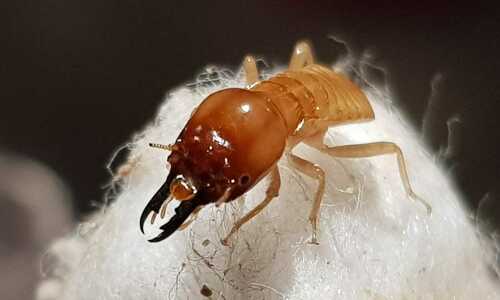
Anacanthotermes
Anacanthotermes is an Old World genus of termites in the Hodotermitidae. They are found in deserts and semideserts of North Africa, the Middle East and Southwest Asia, including Baluchistan and southern India. Wings of the alates are glabrous and lack the microstructures like micrasters, microsetae or rods found in more modern Isoptera. In the driest and most arid locations in Africa it is generally replaced by Psammotermes.
Gnathamitermes
Gnathamitermes is a genus of termites in the family Termitidae. There are about six described species in Gnathamitermes.