Category
page 1Theravada

Theravāda
Theravāda is Buddhism's oldest existing school. The school's adherents, termed Theravādins (anglicized from Pali theravādī), have preserved their version of the Buddha's teaching or Dhamma in the Pāli Canon for over two millennia. As of 2010, Theravada is the second largest branch of Buddhism with 36% Buddhists belonging to Theravada, compared to 53% to Mahayana.
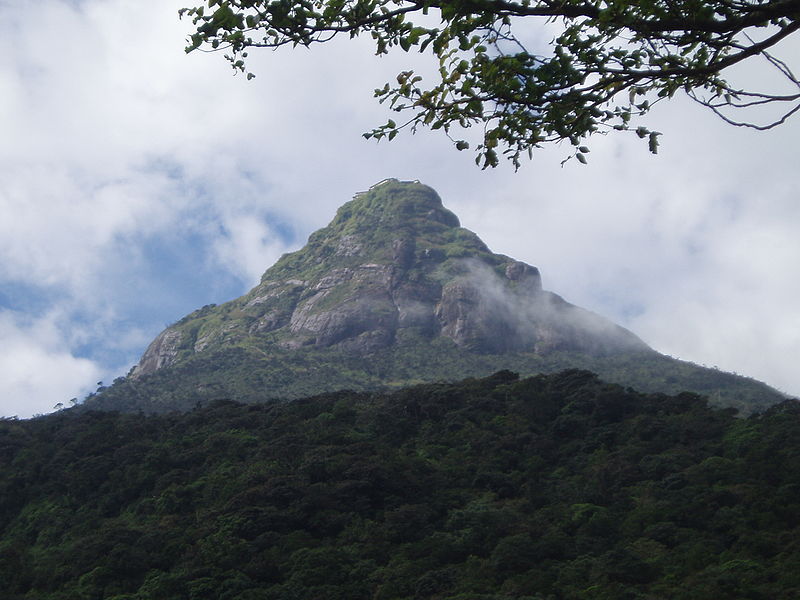
Adam's Peak
mountain in Sri Lanka

Abhidhamma Piṭaka
Pāli version of the advanced theology of Buddhism
Buddhism in Sri Lanka
history and demographics of Buddhism in Sri Lanka, formerly Ceylon
Buddhism in Thailand
Buddhism in Thailand is largely of the Theravada school, which is followed by 95% of the population
.jpg)
ānāpānassati
alt=Buddha statue doing anapanasati|thumb|Buddha statue doing anāpānasati

Vassa
alt=MONK AT VASSA|thumb|Monk at Vassa
Vassa (, , both "rain") is the three-month annual retreat observed by Theravada Buddhists. Taking place during the wet season, Vassa lasts for three lunar months, usually from July (the Burmese month of Waso, ) to October (the Burmese month of Thadingyut, ).
Asalha Puja
Theravada Buddhist festival celebrated in Southeast Asia and Sri Lanka
nikāya
Nikāya () is a Pāli word meaning "volume". It is often used like the Sanskrit word āgama () to mean "collection", "assemblage", "class" or "group" in both Pāḷi and Sanskrit. It is most commonly used in reference to the Pali Buddhist texts of the Tripitaka namely those found in the Sutta Piṭaka. It is also used to refer to monastic lineages, where it is sometimes translated as a 'monastic fraternity'.

Kathina
Kathina is a Buddhist festival which comes at the end of Vassa, the three-month rainy season retreat for Theravada Buddhists in Bangladesh (known as Kaṭhina Cībar Dān), Cambodia, Myanmar, Thailand, India, Sri Lanka, Vietnam, Laos, Malaysia, and Singapore. The season during which a monastery may hold Kathina is one month long, beginning after the full moon of the eleventh month in the Lunar calendar (usually October).
thero
Thero (commonly appearing in the masculine and feminine forms thera and therī respectively) is an honorific term in Pali for senior bhikkhus and bhikkhunis (Buddhist monks and nuns) in the Buddhist monastic order. The word literally means "elder". These terms, appearing at the end of a monastic's given name, are used to distinguish those who have at least 10 years since their upasampada (higher ordination). The name of an important collection of very early Buddhist poetry is called the Therigatha, "Verses of the Therīs".
.jpg)
Moggaliputta-Tissa
thumb|300px|Asoka|Aśoka and Moggaliputtatissa at the Third Council, at the Nava Jetavana, Shravasti
relic of the tooth of the Buddha
a cetiya "relic" of Gautama Buddha
bhāṇaka
Bhāṇaka (Pali: reciter) were Buddhist monks who specialized in the memorization and recitation of a specific collection of texts within the Buddhist canon. Lineages of bhāṇakas were responsible for preserving and transmitting the teachings of the Buddha until the canon was committed to writing in the 1st century BC, and declined as the oral transmission of early Buddhism was replaced by writing.
Vāsanā
Vāsanā () is a behavioural tendency or karmic imprint which influences the present behaviour of a person. It is a technical term in Indian philosophy, particularly Yoga, Buddhist philosophy, and Advaita Vedanta.

śrāvakayāna
thumb|Hanging scroll of an Indian Buddhist [[arhat by Japanese painter Shiba Kōkan]]
sangharaja
Sangharaja (Pāḷi: saṅgha religious community + rāja ruler, king, or prince) is the title given in many Theravada Buddhist countries to a senior monk who is the titular head either of a monastic fraternity (nikāya), or of the Sangha throughout the country. This term is often rendered in English as 'Patriarch' or 'Supreme Patriarch'.
Tamrashatiya
The Tāmraśāṭīya (Sanskrit: ताम्रशाटीय, ), also called Tāmraparṇīya (Sanskrit; Pali: Tambapaṇṇiya) or Theriya Nikāya (Pali), was one of the early schools of Buddhism and a Sri Lankan branch of the Vibhajyavāda (ancestor of the Theravāda) school based in Sri Lanka.
passaddhi
Passaddhi is a Pali noun (Sanskrit: prasrabhi, Tibetan: ཤིན་ཏུ་སྦྱང་བ་, Tibetan Wylie: shin tu sbyang ba) that has been translated as "calmness", "tranquillity", "repose" and "serenity." The associated verb is passambhati (to calm down, to be quiet).
Banishment of Buddhist monks from Nepal
persecution of Theravada Buddhism in Nepal in the early the 20th century
bhante
200px|thumb|Young Indian Buddhist monk with statues of the Buddha and [[B. R. Ambedkar in Indian vihara or monastery]]Bhante (Pali; , ; ), sometimes also Bhadanta, is a respectful title used to address Buddhist monks, nuns, and superiors, especially in the Theravada tradition. In English, the term is often translated as Venerable.
abhidhamma
Buddhist scholastic text and studies particular to the Theravāda school
mae ji
thumb|281x281px|Maechi Sansanee Sthirasuta|Sansanee, Thailand
Maechi, Maeji or Mae Chee (; ), "respected mother" (แม่ + honorific suffix "-ji"), are Theravada Buddhist Nuns in Thailand. As female monastics ordained under The Eight or Ten Precepts (i.e., more than the Five Precepts taken by laypersons), they formally occupy a position similar to sāmaṇerī and wear white robes, but are in practice resemblant of Theravāda bhikkhus - renunciants who have dedicated their life to Buddhist practice, meditation, vowing celibacy and ascetisicm.