Category
page 1Thermoproteota
Sulfolobus
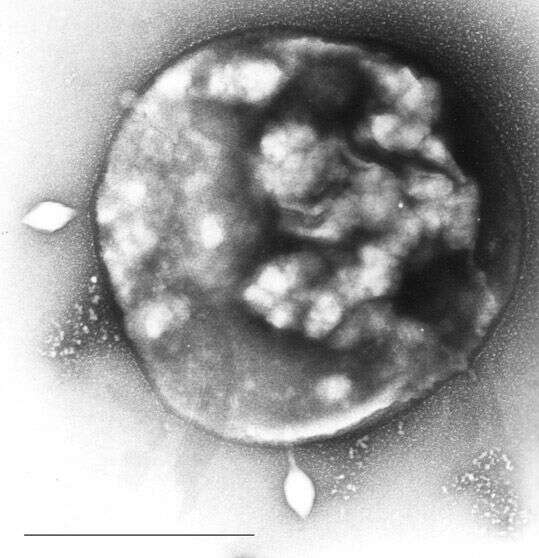
Sulfolobus is a genus of microorganism in the family Sulfolobaceae. It belongs to the kingdom Thermoproteati of the Archaea domain.
Ignicoccus
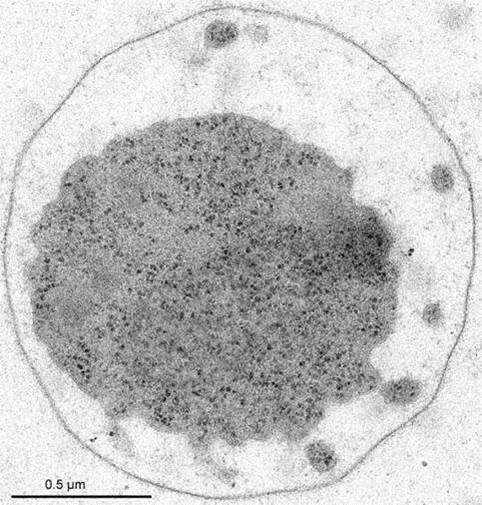
Ignicoccus is a genus of hyperthermophillic Archaea living in marine hydrothermal vents. They were discovered in samples taken at the Kolbeinsey Ridge north of Iceland, as well as at the East Pacific Rise (at 9 degrees N, 104 degrees W) in 2000.
Thermoproteus
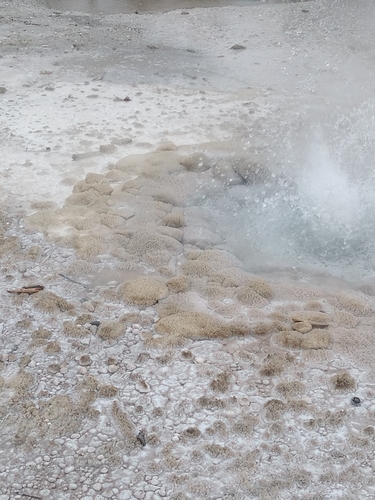
Thermoproteus is a genus of archaeans in the family Thermoproteaceae. These prokaryotes are thermophilic sulphur-dependent organisms related to the genera Sulfolobus, Pyrodictium and Desulfurococcus. They are hydrogen-sulphur autotrophs and can grow at temperatures of up to 95 °C.

Strain 121
species of prokaryote
Thermoprotei
The Thermoprotei is a class of the Thermoproteota.
Pyrodictium
Pyrodictium is a genus in the family Pyrodictiaceae. It is a genus of submarine hyperthermophilic Archaea whose optimal growth temperature range is 80 to 110°C. They have a unique cell structure involving a network of cannulae and flat, disk-shaped cells. Pyrodictium are found in the porous walls of deep-sea vents where the temperatures inside get as high as 400°C, while the outside marine environment is typically 3°C. Pyrodictium is apparently able to adapt morphologically to this type of hot–cold habitat.
Pyrolobus
Pyrolobus is a genus of archaeans in the family Pyrodictiaceae.
Pyrobaculum
Pyrobaculum is a genus of archaeans in the family Thermoproteaceae.
Desulfurococcales
The Desulfurococcales is an order of the Thermoprotei, part of the kingdom Archaea. The order encompasses some genera which are all thermophilic, autotrophs which utilise chemical energy, typically by reducing sulfur compounds using hydrogen. Desulfurococcales cells are either regular or irregular coccus in shape, with forms of either discs or dishes. These cells can be single, in pairs, in short chains, or in aciniform formation.
Sulfolobus acidocaldarius
species of prokaryote
Acidianus
Acidianus is a genus of archaeans in the family Sulfolobaceae.
Thermofilum
Thermofilum is a genus of archaea in the family Thermofilaceae.
Sulfolobus solfataricus
species of prokaryote
Pyrolobus fumarii
species of prokaryote
Thermoproteaceae
Thermoproteaceae is a family of archaeans in the order Thermoproteales.
Aeropyrum
Aeropyrum is a genus of archaea in the family Desulfurococcaceae.
Sulfurisphaera
Sulfurisphaera is a genus of the Sulfolobaceae.
Desulfurococcaceae
Desulfurococcaceae are a family of the disc-shaped anaerobic microorganisms belonging to the order Desulfurococcales, in the domain Archaea. Members of this family are distinguished from the other family (Pyrodictiaceae) in the order Desulfurococcales by having an optimal growth temperature below 100 °C, rather than above 100 °C, and by being more diverse. Several genera of the family have been identified.
Acidilobales
Acidilobales are an order of archaea in the class Thermoprotei.
Cenarchaeum symbiosum
candidate species of archaeon
Sulfolobales
Sulfolobales is an order of archaeans in the class Thermoprotei.
Sulfolobaceae
Sulfolobaceae are a family of the Sulfolobales belonging to the domain Archaea. The family consists of several genera adapted to survive environmental niches with extreme temperature and low pH conditions.
Pyrodictiaceae
The Pyrodictiaceae are a family of disc-shaped anaerobic microorganisms belonging to the order Desulfurococcales, in the domain Archaea. Members of this family are distinguished from the other family (Desulfurococcaceae) in the order Desulfurococcales by having an optimal growth temperature above 100 °C, rather than below 100 °C.
Caldisphaera
Caldisphaera is a genus of archaea in the family Caldisphaeraceae.
Staphylothermus
Staphylothermus is a genus of archaeans in the family Desulfurococcaceae.
Desulfurococcus
Desulfurococcus is a genus of archaeans in the family Desulfurococcaceae.
Metallosphaera
Metallosphaera is a genus of archaeans in the family Sulfolobaceae.
Vulcanisaeta
Vulcanisaeta is a genus of archaeans in the family Thermoproteaceae.
Thermofilaceae
Thermofilaceae are a family of archaea in the order Thermofilales.
Aeropyrum pernix
species of prokaryote
Thermoproteota
The Thermoproteota are archaea that have been classified as a phylum of the domain Archaea. Initially, the Thermoproteota were thought to be sulfur-dependent extremophiles but recent studies have identified characteristic Thermoproteota environmental rRNA indicating the organisms may be the most abundant archaea in the marine environment. Originally, they were separated from the other archaea based on rRNA sequences; other physiological features, such as lack of histones, have supported this division, although some crenarchaea were found to have histones. Until 2005 all cultured Thermoproteota
Stetteria
Stetteria is a genus of archaeans in the family Desulfurococcaceae. Up to now there is only one species of this genus known, Stetteria hydrogenophila.
Cenarchaeum
Cenarchaeum is a monotypic genus of archaeans in the family Nitrosopumilaceae. The marine archaean Cenarchaeum symbiosum is psychrophilic and is found inhabiting marine sponges. Cenarchaeum symbiosum was initially detected as a major symbiotic microorganism living within (it is an endosymbiont of) the sponge Axinella mexicana. It has been ubiquitously detected in the world oceans at lower abundances, while in some genera of marine sponges it is one of the most abundant microbiome members. Its genome sequence and diversity has been investigated in detail finding unique metabolic products and it
Thermocladium
Thermocladium is a genus of archaeans in the family Thermoproteaceae.
Stygiolobus
Stygiolobus is a genus in the family Sulfolobaceae.
Acidilobus
Acidilobus is a genus of archaea in the family Acidilobaceae.
Ignisphaera
Ignisphaera is a genus of the Desulfurococcales. Ignisphaera aggregans is a coccoid- shaped, fourth type strain that is strictly anaerobes with anaerobic respiration. This archaea species are hyperthermophiles that were found in New Zealand's hot springs in Kuirau Park, Rotorua.
Thermosphaera
Thermosphaera is a genus of the Desulfurococcaceae. They are a group of prokaryotic organisms which have been discovered in extremely hot environments such as sulfur springs, volcanoes, and magma pools. Isolates of Thermosphaera were first identified in 1998 from the Obsidian Pool in Yellowstone National Park.
Fervidicoccus
Fervidicoccus fontis is an extremophilic, coccus-shaped archaeaon known for thriving in high-temperature environments. It was discovered in Russia's Uzon Caldera and exhibits anaerobic, organotrophic metabolism, primarily fermenting organic compounds such as peptides and yeast extract. F. fontis is genetically distinct, sharing no more than 89% of its genetic material with its closest relatives. It is the sole species within the order Fervidicoccales and genus Fervidicoccus, although ongoing research suggests potential new species. It plays a significant role in biotechnological applications d
Geogemma
Geogemma is a genus of archaeans in the family Pyrodictiaceae.
Caldivirga
Caldivirga is a genus of archaeans in the family Thermoproteaceae.
Hyperthermus
Hyperthermus is a genus of archaeans in the family Pyrodictiaceae.
Sulfophobococcus
Sulfophobococcus is a genus of the Desulfurococcaceae.
Thermodiscus
Thermodiscus is a genus of archaea in the family Desulfurococcaceae. The only species is Thermodiscus maritimus.
Pyrobaculum aerophilum
species of prokaryote
Acidilobaceae
REDIRECT Acidilobus
Nitrososphaeraceae
REDIRECT Nitrososphaera
Nitrosopumilales
The Nitrosopumilales are an order of the Archaea class Nitrososphaeria.
Nitrososphaera
Nitrososphaera is a mesophilic genus of ammonia-oxidizing Crenarchaeota. The first Nitrososphaera organism was discovered in garden soils at the University of Vienna leading to the categorization of a new genus, family, order and class of Archaea. This genus contains three distinct species: N. viennensis, Ca. N. gargensis, and Ca N. evergladensis. Nitrososphaera are chemolithoautotrophs and have important biogeochemical roles as nitrifying organisms.
Metallosphaera sedula
Microorganism
Nitrosopumilus
Nitrosopumilus is a genus of archaea. The type species, Nitrosopumilus maritimus, is an extremely common archaeon living in seawater. It is the first member of the Group 1a Nitrososphaerota (formerly Thaumarchaeota) to be isolated in pure culture. Gene sequences suggest that the Group 1a Nitrososphaerota are ubiquitous with the oligotrophic surface ocean and can be found in most non-coastal marine waters around the planet. It is one of the smallest living organisms at 0.2 micrometers in diameter. Cells in the species N. maritimus are shaped like peanuts and can be found both as individuals and