Category
page 1Thermozoa
.jpg)
thermophile
right|thumb|300px|Thermophiles produce some of the bright colors of Grand Prismatic Spring, [[Yellowstone National Park]]
A thermophile is a type of extremophile that thrives at relatively high temperatures, between . Many thermophiles are archaea, though some of them are bacteria and fungi. Thermophilic bacteria are suggested to have been among the earliest bacteria.

Thermus aquaticus
species of bacterium
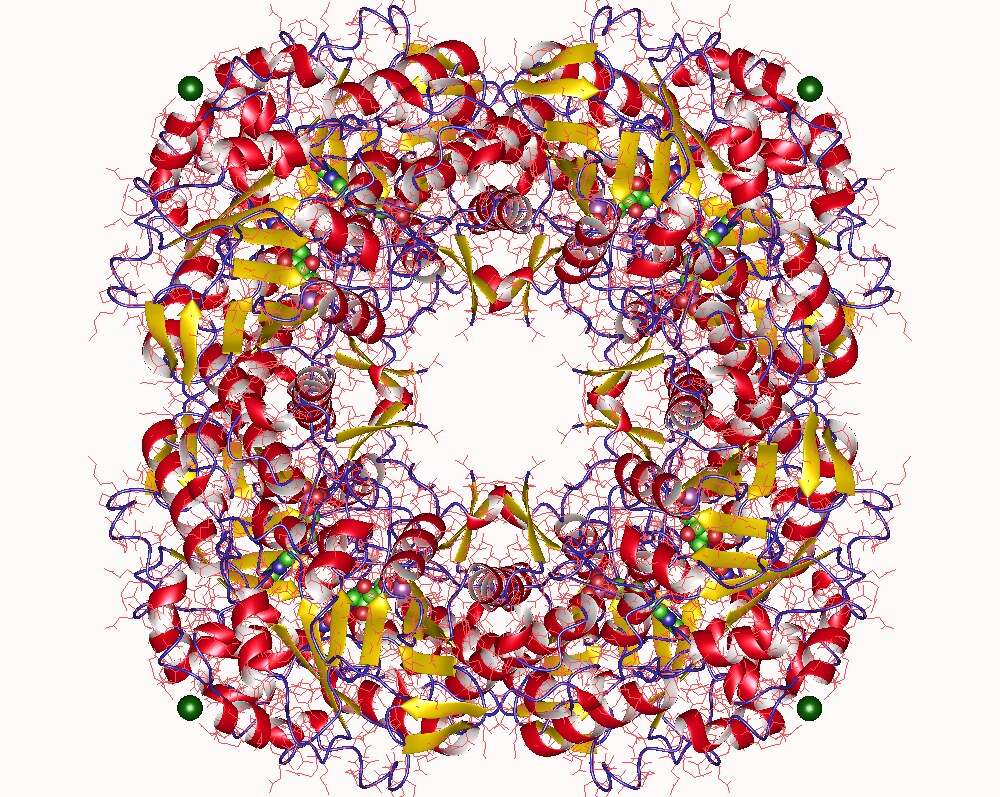
Thermus thermophilus
species of bacterium
Thermus
Thermus is a genus of thermophilic bacteria. It is one of several bacteria belonging to the Deinococcota phylum. According to comparative analysis of 16S rRNA, this is one of the most ancient group of bacteria. Thermus species can be distinguished from other genera in the family Thermaceae as well as all other bacteria by the presence of eight conserved signature indels found in proteins such as adenylate kinase and replicative DNA helicase as well as 14 conserved signature proteins that are exclusively shared by members of this genus.
Thermoacidophile
A thermoacidophile is an extremophilic microorganism that is both thermophilic and acidophilic; i.e., it can grow under conditions of high temperature and low pH. The large majority of thermoacidophiles are archaea (particularly the Thermoproteota and "Euryarchaeota") or bacteria, though occasional eukaryotic examples have been reported. Thermoacidophiles can be found in hot springs and solfataric environments, within deep sea vents, or in other environments of geothermal activity. They also occur in polluted environments, such as in acid mine drainage.
thumb|400x400px|Hot Spring in Yellowston