Category
page 1Theseus
%20-%20Napoli%20MAN%209043%20-%2001.jpg)
Theseus
thumb|Theseus after having slain the Minotaur, freeing captive Athenian boys; Cretans approaching to marvel the scene, Antique fresco from [[Pompeii]]
Theseus (, ; ) was a divine hero in Greek mythology, famous for slaying the Minotaur. The myths surrounding Theseus, his journeys, exploits, and friends, have provided material for storytelling throughout the ages.

Minotaur
In Greek mythology, the Minotaur (), also known as Asterion or Asterius, is a mythical creature portrayed during classical antiquity with the head and tail of a bull and the body of a man or, as described by Roman poet Ovid, a being "part man and part bull". He dwelt at the center of the Labyrinth, which was an elaborate maze-like construction designed by the architect Daedalus and his son Icarus, upon command of King Minos of Crete. According to tradition, every nine years the people of Athens were compelled by King Minos to choose fourteen young noble citizens (seven men and seven women) to

Minos
250 px|thumb|Gustave Doré's illustration of King Minos for [[Dante Alighieri's Inferno]]
thumb|Mural of Minos at the National and Kapodistrain University of Athens

Ariadne
In Greek mythology, Ariadne (; ) was a Cretan princess, the daughter of King Minos of Crete. There are variations of Ariadne's myth, but she is known for helping Theseus escape from the Minotaur and being abandoned by him (or herself dying) on the island of Naxos. There, Dionysus saw Ariadne sleeping, fell in love with her, and later married her. Many versions of the myth recount Dionysus throwing Ariadne's jeweled crown into the sky to create a constellation, the Corona Borealis.

labyrinth
thumb|Silver coin from Knossos displaying the 7-course "Classical" design to represent the Labyrinth,

Aegeus
thumb|upright=1.3|Theseus Recognized by his Father by Hippolyte Flandrin (1832)
Aegeus (, ; ) was one of the kings of Athens in Greek mythology, who gave his name to the Aegean Sea, was the father of Theseus, and founded Athenian institutions.

Hippolyta
In Greek mythology, Hippolyta, or Hippolyte (; Hippolytē), was a daughter of Ares and Otrera, queen of the Amazons, and a sister of Antiope and Melanippe. She wore her father Ares' zoster, the Greek word found in the Iliad and elsewhere meaning "war belt". Some English translations prefer "girdle". Hippolyta figures prominently in the myths of both Heracles and Theseus. The myths about her are so varied it is thought that they may be about different women. The name Hippolyta translates as "she who unleashes the horses", deriving from two Greek roots meaning "horse" and "let loose".

Ship of Theseus
thought experiment concerning the continuity of identity of an item which has all its parts replaced
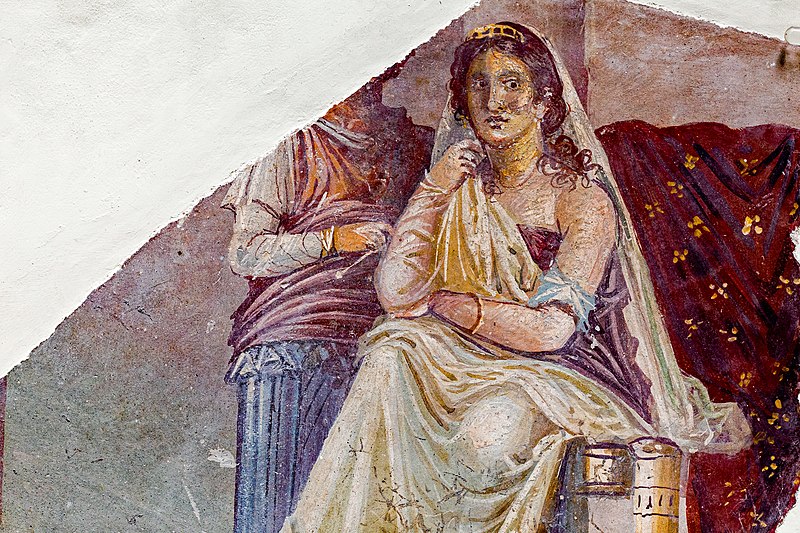
Phaedra
wife of Theseus in Greek mythology
Cretan Bull
bull in Greek mythology
%20-%20Napoli%20MAN%209044%20(cropped).jpg)
Pirithous
thumb|upright=1.2|Pirithous and Hippodamia (wife of Pirithous)|Hippodamia receiving the centaurs at his wedding. Antique fresco from Pompeii.
thumb|"Pirithous' Kampf um Helena" by Joseph Echteler and [[Richard Brend'amour]]
Calydonian Boar
mythical creature
Akademos
Academus or Academos (; ), also Hecademus (), was an Attic hero in Greek mythology. The site of Academus, either a grove or a park, which became known as Akademeia, lies on the Cephissus, six stadia from Athens. He is the namesake of the Academy founded by Plato, who taught his students at the site, and as such of the modern English word academy, signifying an institution of higher learning.
Hippolytus
ancient Greek tragedy by Euripides
Lycomedes
king of Scyros in Greek mythology
Aethra
mother of Theseus

synoecism
Synoecism or synecism ( ; , sunoikismos, ), also spelled synoikism ( ), was originally the amalgamation of villages in Ancient Greece into poleis, or city-states. Etymologically, the word means "dwelling together (syn) in the same house (oikos)." Subsequently, any act of civic union between polities of any size was described by the word synoikismos, in addition to the Latinized synoecism. Synoecism is opposed to Greek dioecism (διοικισμóς, dioikismos), the creation of independent communities within the territory of a polis.

Thiseio
thumb|220px|right|The "Temple of Theseus" ([[Temple of Hephaestus), after which the area was named]]
thumb|220px|left|upright|Statue of Theseus outside the [[Thiseio metro station]]
thumb|The Entry of King Otto of Greece into Athens by [[Peter von Hess, 1839]]
thumb|left|Line 1 (Athens Metro)|A metro line between the [[Stoa of Attalos and a basilica's ruins]]
thumb|right|The Byzantine Church of the Holy Apostles, Athens|Church of the Holy Apostles next to the [[Stoa of Attalos]]
thumb|right|The Roman-era Philopappos Monument
thumb|left|The Odeon of Herodes Atticus, open-air ancient theatre
230
Eurytus
Eurytus, Eurytos (; Ancient Greek: Εὔρυτος) or Erytus (Ἔρυτος) is the name of several characters in Greek mythology, and of at least one historical figure.
Pallantides
thumb|250px|The fight against the Pallantidae on the frieze of the Temple of Hephaestus at [[Athens, Greece.]]
Thoas

Marathon
mythical son of Epopeus of Sicyon
Phegeus
In Greek mythology, Phegeus (Ancient Greek: Φηγεύς) was the name of the following characters: