Category
page 1Thor
.svg)
Thursday
Thursday is the day of the week between Wednesday and Friday. According to the ISO 8601 international standard, it is the fourth day of the week. In countries which adopt the "Sunday-first" convention, it is the fifth day of the week.

thorium
Thorium is a chemical element; it has symbol Th and atomic number 90. Thorium is a weakly radioactive light silver metal which tarnishes olive grey when it is exposed to air, forming thorium dioxide; it is moderately soft, malleable, and has a high melting point. Thorium is an electropositive actinide whose chemistry is dominated by the +4 oxidation state; it is quite reactive and can ignite in air when finely divided.

Thor
right|thumb|upright=1.3|''Thor's Fight with the Giants (Tors strid med jättarna) by (1872).
Thor (from ) is a prominent god in Germanic paganism. In Norse mythology, he is a hammer-wielding god associated with thunder, storms, strength, protection, fertility, and farmers. Besides Old Norse , the deity occurs in Old English as ', in Old Frisian as '', in Old Saxon as , and in Old High German as , all ultimately stemming from the Proto-Germanic theonym ', meaning 'Thunder'.

Thor
fictional character in Marvel Comics
%20-%20cropped%20(cropped).png)
Jörmungandr
thumb|Jörmungandr in the sea during Ragnarök, drawn by the Norwegian illustrator [[Louis Moe in 1898.]]
In Norse mythology, Jörmungandr (, see Etymology), also known as the Midgard Serpent or World Serpent (, "worm of Midgard"), is an unfathomably large and monstrous sea serpent or worm who dwells in the world sea, encircling the Earth (Midgard) and biting his own tail, an example of an ouroboros. As a result of him surrounding Midgard, the beast is referred to as the World Serpent. Jörmungandr releasing his tail is one of the signs of the beginning of Ragnarök.

Mjölnir
thumb|A silver-gilded Thor|Thor's hammer found in [[Scania, Sweden, that once belonged to the collection of Baron Claes Kurck.]]

Sif
thumb|The goddess Sif holds her long, golden hair while grain grows behind her in an illustration from 1897
In Norse mythology, Sif is a golden-haired goddess associated with earth. Sif is attested in the Poetic Edda, compiled in the 13th century from earlier traditional sources, and the Prose Edda, written in the 13th century by Snorri Sturluson, and in the poetry of skalds. In both the Poetic Edda and the Prose Edda, she is known for her golden hair and is married to the thunder god Thor.
Járnsaxa
Járnsaxa (; Old Norse: ) is a jötunn in Norse mythology. In the Prose Edda of Snorri Sturluson, she is described as the lover of Thor and the mother of his son Magni.
Yule Goat
Scandanavian decorative Christmas straw goat
Tanngrisnir and Tanngnjóstr
pair of goats in Norse mythology
Bilskirnir
Bilskirnir (Old Norse "lightning-crack") is the hall of the god Thor in Norse mythology. Here he lives with his wife Sif and their children. According to Grímnismál, the hall is the greatest of buildings and contains 540 rooms, located in Asgard, as are all the dwellings of the gods, in the kingdom of Þrúðheimr (or Þrúðvangar according to Gylfaginning and Ynglinga saga).

megingjörð
thumb|right|"Thor" (1901) by Johannes Gehrts.

Gullfaxi
thumb|right|An artist's impression of Gullfaxi
Gullfaxi (Old Norse: ) is a horse in Norse mythology. Its name means "golden mane".
Járngreipr
thumb|right|"Thor" (1901) by Johannes Gehrts.
In Norse mythology, Járngreipr (Old Norse: , "iron grippers") or Járnglófar (, "iron gauntlets") are the iron gloves of the god Thor. According to the Prose Edda, along with the hammer Mjölnir and the belt Megingjörð, Járngreipr is one of Thor's three crucial possessions. According to chapter 20 of the book Gylfaginning, he requires the gloves to handle his powerful hammer. The reason for this may come from the forging of the hammer, when the dwarf working the bellows was bitten in his eye by a gadfly (commonly held to be Loki in disguise) which ca
Donar's Oak
sacred tree of the Germanic pagans
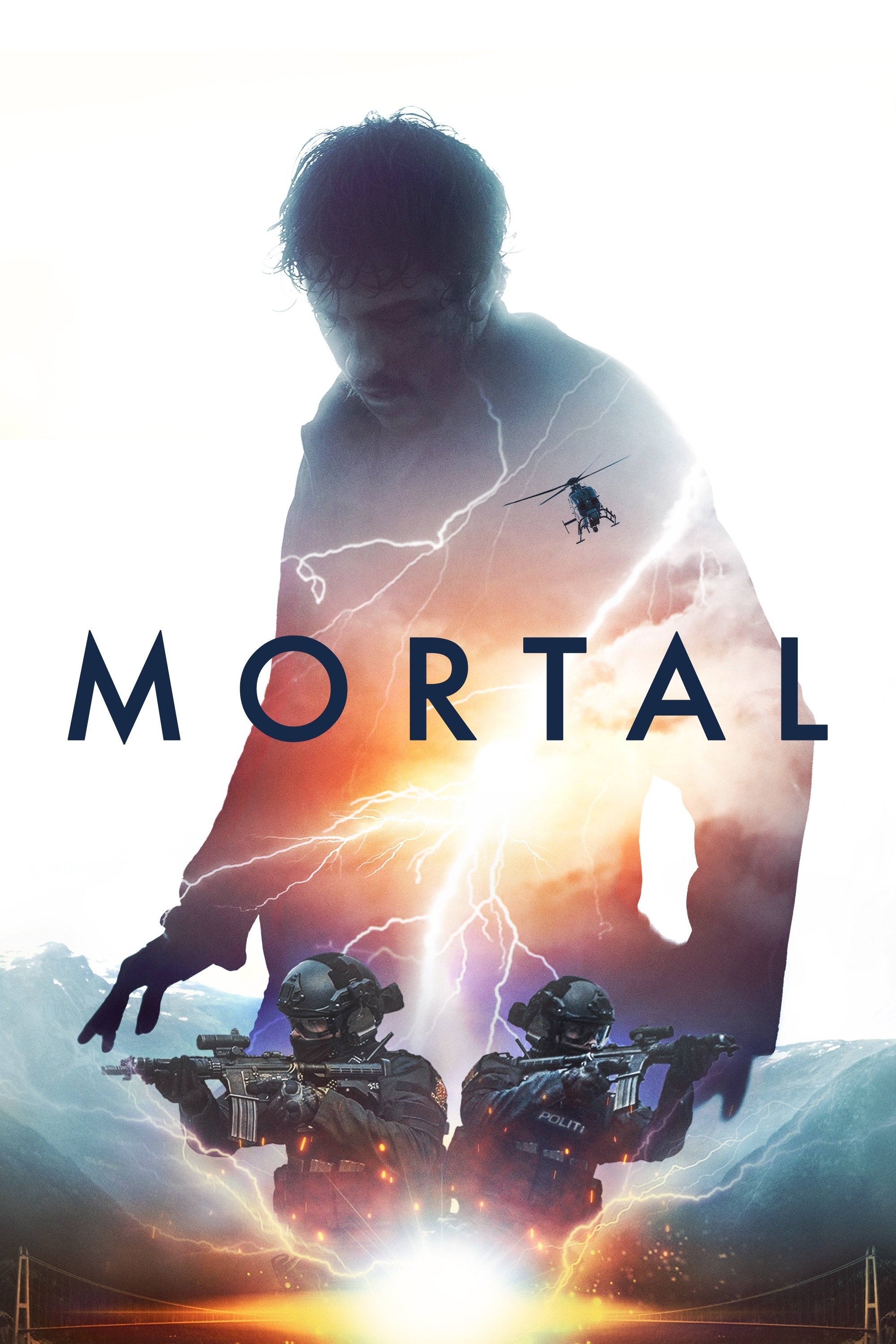
Mortal
2020 film directed by André Øvredal
Þrúðvangr
In Norse mythology, Þrúðvangr (plural: Þrúðvangar; Old Norse: , "power-field", sometimes anglicized as Thrudvang or Thruthvang) is a field where the god Thor resides. The field is attested in the Prose Edda and in Heimskringla, both written by Snorri Sturluson in the 13th century.
King Arthur
semi-opera by John Dryden and Henry Purcell
ICGV Þór
ship built in 2011
Þórsdrápa
Þórsdrápa (also Thorsdrapa; Old Norse: 'The Lay of Thor') is a skaldic poem by Eilífr Goðrúnarson, a poet in the service of Jarl Hákon Sigurðarson. The poem is noted for its creative use of kennings and other metaphorical devices, as well as its labyrinthine complexity.
Þorri
Þorri () is the Icelandic name of the personification of frost or winter in Norse mythology, and also the name of the fourth winter month (mid January to mid February) in the Icelandic calendar.
list of names of Thor
Wikimedia list article
Þrúðheimr
In Nordic mythology, Þrúðheimr (anglicized Thrúdheim or Thrudheim), which means "home of strength" in Old Norse, is the home of Thor according to the Eddic poem Grímnismál (4). But in Snorri Sturluson's Edda (Gylfaginning, 21, 47; Skáldskaparmál, 17) and Ynglinga saga (5), the name of Thor's residence is Þrúðvangr or Þrúðvangar. Þrúðheimr is nevertheless mentioned in Snorri's Edda, but in its prologue. In this euhemerized story, it is written that Tror, "whom we call Thor", conquered the kingdom of Thrace, "which we call Þrúðheimr".
Litr
right|thumb|300px|Thor kicks Litr onto Baldr's burning ship, illustration by Emil Doepler (ca. 1905)
Litr (also Lit; Old Norse: , 'colour, appearance') is the name borne by a dwarf and a jötunn in Norse mythology.
Þrívaldi
In Norse mythology, Þrívaldi (anglicized as Thrívaldi or Thrivaldi), whose name means "thrice mighty", is a jötunn killed by Thor.
Hercules Magusanus
deity
Vimur River
largest of the Elivagar rivers in Norse mythology
Kerlaugar
thumb|Thor wades through a river while the other Æsir ride across the bridge [[Bifröst (1895) by Lorenz Frølich]]
In Norse mythology, the Kerlaugar (plural form of Old Norse kerlaug "kettle-bath",) i.e. "bath-tub", are two rivers through which the god Thor wades. The Kerlaugar are attested in the Poetic Edda, compiled in the 13th century from earlier traditional material, and in a citation of the same verse in the Prose Edda, written in the 13th century by Snorri Sturluson.
Þorsteins þáttr bæjarmagns
medieval Icelandic tale
The Sandman: Season of Mists
comic book album by Neil Gaiman
Hercules' Club
Roman Empire artefact type