Category
page 1Thyroid disease

goiter
A goitre (British English), or goiter (American English), is a swelling in the neck resulting from an enlarged thyroid gland. A goitre can be associated with a thyroid that is not functioning properly.

hypothyroidism
Hypothyroidism is an endocrine disease in which the thyroid gland does not produce enough thyroid hormones. It can cause a number of symptoms, such as poor ability to tolerate cold, extreme fatigue, muscle aches, constipation, slow heart rate, depression, and weight gain. Occasionally, there may be swelling of the front part of the neck due to goiter. Untreated cases of hypothyroidism during pregnancy can lead to delays in growth and intellectual development in the baby or congenital iodine deficiency syndrome.
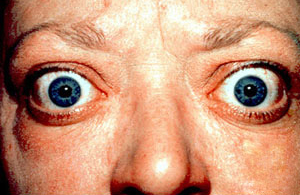
toxic diffuse goiter
endocrine disease

hyperthyroidism
Hyperthyroidism is a endocrine disease in which the thyroid gland produces excessive amounts of thyroid hormones. Thyrotoxicosis is a condition that occurs due to elevated levels of thyroid hormones of any cause and therefore includes hyperthyroidism. Some, however, use the terms interchangeably. Signs and symptoms vary between people and may include irritability, muscle weakness, sleeping problems, a fast heartbeat, heat intolerance, diarrhea, enlargement of the thyroid, hand tremor, and weight loss. Symptoms are typically less severe in the elderly and during pregnancy. An uncommon but life-

chronic thyroiditis
autoimmune disease

thyroid cancer
endocrine gland cancer located in the thryoid gland located in the neck below the thyroid cartilage

cretinism
human medical condition
thyroiditis
Thyroiditis is the inflammation of the thyroid gland. The thyroid gland is located on the front of the neck below the laryngeal prominence, and makes hormones that control metabolism.
congenital hypothyroidism
hypothyroidism that is present at birth

thyroidectomy
A thyroidectomy is an operation that involves the surgical removal of all or part of the thyroid gland. In general surgery, endocrine or head and neck surgeons often perform a thyroidectomy when a patient has thyroid cancer or some other condition of the thyroid gland, such as hyperthyroidism or goiter. Less common indications for surgery include cosmetic concerns or airway obstruction related to significant enlargement of the thyroid. Post-operative complications or sequelae may involve temporary or permanent change in voice, temporary or permanent hypocalcemia, the need for lifelong thyroid
Thyrotoxic periodic paralysis
human disease
Graves' ophthalmopathy
thyroid eye disease often associated with Graves' disease
thyroid crisis
endocrine disease
De Quervain's thyroiditis
Thyroid disease
thyroid nodule
human disease
Toxic multinodular goitre
Human diseasexdr dildar
thyroid gland disease
medical condition that affects the function of the thyroid gland

Goitrogen
thumb|Broccoli is a goitrogenic food
Goitrogens are substances that disrupt the production of thyroid hormones. This triggers the pituitary to release thyroid-stimulating hormone (TSH), which then promotes the growth of thyroid tissue, eventually leading to goiter.

Myxedema coma
medical condition

Riedel's fibrosing thyroiditis
thyroid disease
autoimmune thyroiditis
autoimmune disease of endocrine system that involves inflammation located in thyroid gland caused by the immune system reacting against its own tissues

euthyroid sick syndrome
Secondary allostasis of thyroid function in fetal life, starving and in critical illness
suppurative thyroiditis
Human disease
thyroid hormone resistance syndrome
Human disease
subacute lymphocytic thyroiditis
human disease
postpartum thyroiditis
thyroid disease
Thyroid disease in pregnancy
potential health issue in pregnancy
Winter-over syndrome
psychological condition related to the Antarctic winter
radioactive iodine uptake test
diagnostic test for different causes of hyperthyroidism
subacute thyroiditis
Human disease
Sign of Hertoghe
medical condition
Polar T3 syndrome
characterized by low levels of that hormone in polar explorers