Category
page 1Titles

monarchy
A monarchy is a hereditary form of government in which political power is legally passed on to the family members of the monarch, a head of state who rules for life. While monarchs gain their power depending on specific succession laws, they can also gain their authority via election.

president
leader of a country or part of a country, usually in republics

mayor
In many countries, a mayor is the highest-ranking official in a municipal government such as that of a city or a town. Worldwide, there is a wide variance in local laws and customs regarding the powers and responsibilities of a mayor as well as the means by which a mayor is elected or otherwise mandated. Depending on the system chosen, a mayor may be the chief executive officer of the municipal government, may simply chair a multi-member governing body with little or no independent power, or may play a solely ceremonial role. A mayor's duties and responsibilities may be to appoint and oversee

prime minister
most senior minister of cabinet in the executive branch of government in a parliamentary system

sultan
thumb|Suleiman the Magnificent, the longest-reigning [[sultan of the Ottoman Empire|281x281px]]

knight
thumb|A 14th-century depiction of the 13th-century German knight Hartmann von Aue, from the [[Codex Manesse]]

dictator
thumb|upright=1.25|20th-century leaders typically described as dictators (from left to right and top to bottom): Joseph Stalin of the Soviet Union; [[Adolf Hitler of Germany; Augusto Pinochet of Chile; Mao Zedong of China; Benito Mussolini of Italy; and Kim Il Sung of North Korea]]
thumb|Saddam Hussein, the fifth president of Iraq, is typically described as a dictator.
thumb|upright=0.9|Julius Caesar outmaneuvered his opponents in ancient Rome to install himself as dictator for life.

monarch
A monarch () is a head of state for life or until abdication, and therefore the head of state of a monarchy. A monarch usually exercises the highest authority and power in the state. Usually, a monarch either personally inherits the lawful right to exercise the state's sovereign rights (often referred to as the throne or the crown) or is selected by an established process from a family or cohort eligible to provide the nation's monarch. Alternatively, an individual may proclaim oneself monarch, or even usurp power, as many Ancient Greek tyrants did. If a young child is crowned the monarch, the

Doctor of Philosophy
postgraduate academic degree awarded by most universities worldwide

khagan
{| class="wikitable wikitable mw-collapsible autocollapse"
|style="background: #cbe; min-width:18.5em" colspan=2 align="center"|Khagan
|-
! colspan="2" |Rouran
|-
| Brahmi Script:||
|-
| Transliteration:|| Kagan
|-
| Transcription (Vovin):||
|-
! colspan="2" |Mongolian
|-
| Mongolian Script:||
|-
| ʼPhags-pa script:||
|-
| Transliteration:|| Qagan, Xagan
|-
| Cyrillic script:|| Хаан / Хаган
|-
| Transliteration:|| Khaan / Khagan
|-
! colspan="2"|Yeniseian
|-
| Latin alphabet:|| Qaγan
|-
! colspan="2" |Arabic
|-
|Arabic script:
|خاقان
|-
|Transliteration:
|Khaqan
|-
! colspan="2" |Hindustan
regent
upright=1.35|thumb|16th century Swedish regent Sten Sture the Younger|Stenonis Sture and wife [[Christina Gyllenstierna who both operated in strong resistance to Danish rule during the Kalmar Union]]
upright=1.35|thumb|The oath of the provisional triumvirate|triumviral regents of the [[Empire of Brazil on behalf of the 5-year-old Emperor Pedro II in 1831, at the beginning of the Regency period.]]
In a monarchy, a regent () is a person appointed to execute the office of a monarch temporarily, essentially as a substitute ruler. Regencies may arise for a number of reasons, including the monarch b
epithet
An epithet (, ), also a byname, is a descriptive term (word or phrase) commonly accompanying or occurring in place of the name of a real or fictitious person, place, or thing. It is usually literally descriptive, as in Alexander the Great, Suleiman the Magnificent, Richard the Lionheart, and Ladislaus the Short, or allusive, as in Edward the Confessor, William the Conqueror, Æthelred the Unready, Mehmed the Conqueror, and Bloody Mary.
title
A title is one or more words used before or after a person's name, in certain contexts. It may signify their generation, official position, military rank, professional or academic qualification, or nobility. In some languages, titles may be inserted between the first and last name (for example, in German or clerical titles such as Cardinal in Catholic usage – Richard Cardinal Cushing). Some titles are hereditary.

very important person
person with privileges due to their status

lord
Lord is an appellation for a person or deity who has authority, control, or power over others, acting as a master, chief, or ruler. The appellation can also denote certain persons who hold a title of the peerage in the United Kingdom, or are entitled to courtesy titles. The collective "Lords" can refer to a group or body of peers.
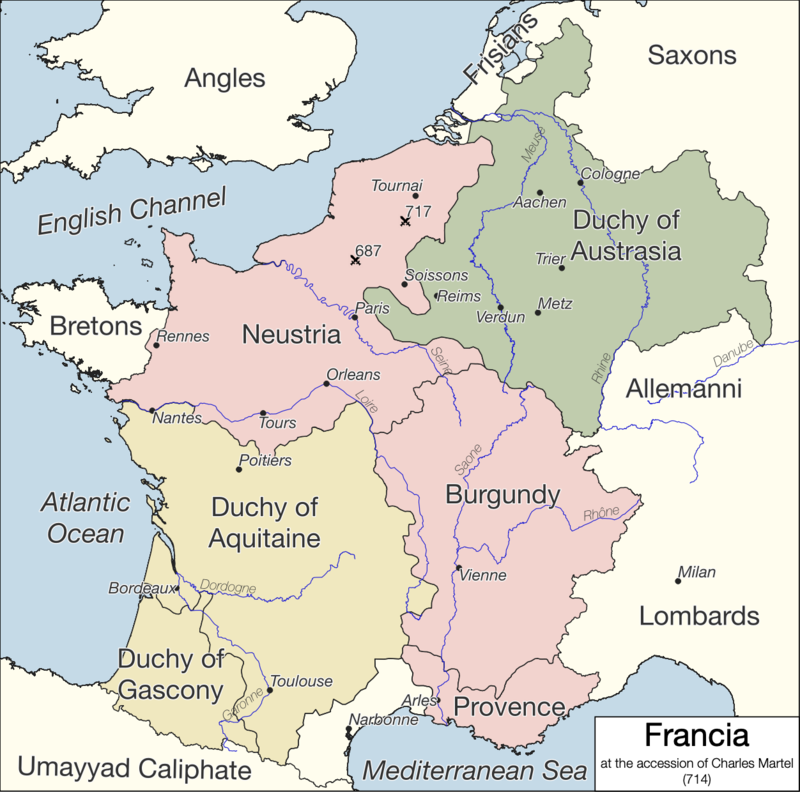
Mayor of the Palace
Merovingian-dynasty term for the manager of the King's household

sheriff
thumb|A sheriff's department poses with an illegal still ([[Hamlet, North Carolina; 1909)]]
A sheriff is a government official, with varying duties, existing in some countries with historical ties to England where the office originated. There is an analogous, although independently developed, office in Iceland and the Faroe Islands, the , which is commonly translated to English as sheriff.
.jpg)
count
thumb|upright|Count Carl Gustaf Mannerheim (naturalist)|Carl Gustaf Mannerheim (1797–1854), the [[governor of the Vyborg Province, entomologist and the grandfather of Baron C. G. E. Mannerheim.]]
Count (feminine: countess) is a historical title of nobility in certain European countries, varying in relative status, generally of middling rank in the hierarchy of nobility. Especially in earlier medieval periods the term often implied not only a certain status, but also that the count had specific responsibilities or offices. The etymologically related English term "county" denoted the territories
general secretary
leader or chief officer of an organisation
Sharif
Sharīf or Sherif (, 'noble', 'highborn'), also spelled shareef, feminine sharīfa (), plural ashrāf (), shurafāʾ (), or (in the Maghreb) shurfāʾ, is a title used to designate a person descended, or claiming to be descended, from the family of the Islamic prophet Muhammad ( ). It may be used in three senses:
attaché
In diplomacy, an attaché () is a person who is assigned ("to be attached") to the diplomatic or administrative staff of a higher placed person or another service or agency. Although a loanword from French, in English the word is not modified according to gender.
primus inter pares
Latin phrase meaning "first among equals"
Aga Khan
hereditary religious title

commanding officer
officer in command of a military unit

lady
A lady is a woman who behaves in a polite way. Once used to describe only women of a high social class or status, the female counterpart of lord, now it may refer to any adult woman, as gentleman can be used for men.
military attaché
military expert who is attached to a diplomatic mission

Gauleiter
A Gauleiter () was a regional leader of the Nazi Party (NSDAP) who served as the head of a Gau or Reichsgau. Gauleiter was the third-highest rank in the Nazi political leadership, subordinate only to Reichsleiter and to the Führer himself. The position was effectively abolished with the fall of the Nazi regime on 8 May 1945.

commissioner
A commissioner (commonly abbreviated as '''Comm'r''') is, in principle, a member of a commission or an individual who has been given a commission (official charge or authority to do something).

treasurer
thumb|In A new way to pay the National Debt (1786), James Gillray caricatured Queen Charlotte and King George III awash with treasury funds to cover royal debts, with Pitt handing them another moneybag.
A treasurer is a person responsible for the financial operations of a government, business, or other organization.

boatswain
A boatswain ( , formerly and dialectally also ) is the most senior rate of the deck department and is responsible for the components of a ship's hull. The boatswain supervises the other members of the ship's deck department and typically is not a watchstander, except on vessels with small crews. Additional duties vary depending upon ship, crew and circumstances. The name is also known as '''bo's'n, bos'n, bosun, deck boss, a qualified member of the deck department or the third hand''' on a fishing vessel.
Grand Master
Position inferred title of the position of a secondary Principal Head or Head of an Order, Decoration or Organisation
page
young male servant
marji'
Marja (; plural marājiʿ; ) is a title given to the highest level of Twelver Shia religious cleric, with the authority given by a hawzah (a seminary where Shi'a Muslim scholars are educated) to make legal decisions within the confines of Islamic law for followers and clerics below him in rank. The highest ranking marjiʿ is known as the marja al-mutlaq or marja al-taqlid al-mutlaq. A marji' is usually also a grand ayatollah.

squire
thumb| Wolfram von Eschenbach and his squire ([[Codex Manesse, 14th century)]]
thumb|The Squire - Ellesmere Chaucer

Dame
thumb|right|The investiture of Lourett Russell Grant|Dame Lourett Russell Grant into the Order of the Holy Sepulchre
Dame is a traditionally British honorific title given to women who have been admitted to certain orders of chivalry. It is the female equivalent of Sir, the title used by knights. Baronetesses in their own right also use the title Dame.

commandant
Commandant ( or ; ) is a title often given to the officer in charge of a military (or other uniformed service) training establishment or academy. This usage is common in English-speaking nations. In some countries it may be a military or police rank. It is also often used to refer to the commander of a military prison or prison camp (including concentration camps and prisoner of war camps).
temple name
name bestowed to a monarch after death (East Asia)
list of heads of state of Nigeria
Wikimedia list article
Bel
Mesopotamian god
prince consort
title usually held by a spouse of a female monarch
first officer
flight crew role

begum
thumb|Begum Malika-uz-Zamani, wife of the [[Mughal Emperor Muhammad Shah.]]
Princess of Wales
royal title given to the wife of the Prince of Wales
.png)
doyen
thumb|right|The Apostolic Nuncio Ivo Scapolo, as Doyen, is the single member of the diplomatic corps in attendance at the second inauguration of [[Marcelo Rebelo de Sousa, President of Portugal, held in March 2021 during the COVID-19 pandemic]]
.jpg)
logothete
Logothete (, logothétēs, pl. λογοθέται, logothétai; Med. , pl. logothetae; ; ; ; , logotet) was an administrative title originating in the eastern Roman Empire. In the middle and late Byzantine Empire, it rose to become a senior administrative title, equivalent to a minister or secretary of state. The title spread to other states influenced by Byzantine culture, such as Bulgaria, Sicily, Serbia, and the Danubian Principalities.
goodwill ambassador
honorific title, occupational position, and/or designation of a person who advocates for a specific cause or global issue on the basis of their notability
Khwaja
Khawaja () is an honorific title used across the Middle East, South Asia, Southeast Asia and Central Asia, particularly towards Sufi teachers.
master of ceremonies
official host of a staged event or similar performance
%20(cropped)%20(3-to-4%20aspect%20ratio).jpg)
sovereign
Sovereign is a title that can be applied to the highest leader in various categories. The word is borrowed from Old French , which is ultimately derived from the Latin , meaning 'above'.
Lord Mayor
municipal executive for certain large cities in the Commonwealth

quartermaster
thumb|right|320px|, quartering (Quartermaster), circa 1893
thumb|320px|Quartermaster Dick Libby, USN. Portrait circa 1834
burgher
group in a society, a class

laureate
thumb|Laureate heads on coins, ancient and modern: Above: Titus, as Caesar (73 AD); Below: [[Napoleon as Emperor (1812).]]

Rebbe
thumb|250px|Rabbi Yisroel Hopstein of [[Kozienice]]
elder
person with authority over others
director general
title given to the highest executive officer in some organizations
alderman
An alderman or alderperson is a member of a municipal assembly or a council in many jurisdictions founded upon English law with similar officials existing in the Netherlands (wethouder) and Belgium (schepen). The term may be titular, denoting a high-ranking member of a borough or county council, a council member chosen by the elected members themselves rather than by popular vote, or a council member elected by voters.
chief mate
profession
assessor
judge's or magistrate's assistant
Allamah
Allamah () is an Islamic honorary title for a profound scholar, a polymath, a man of vast reading and erudition, or a great learned one.