Category
page 1Tongue disorders
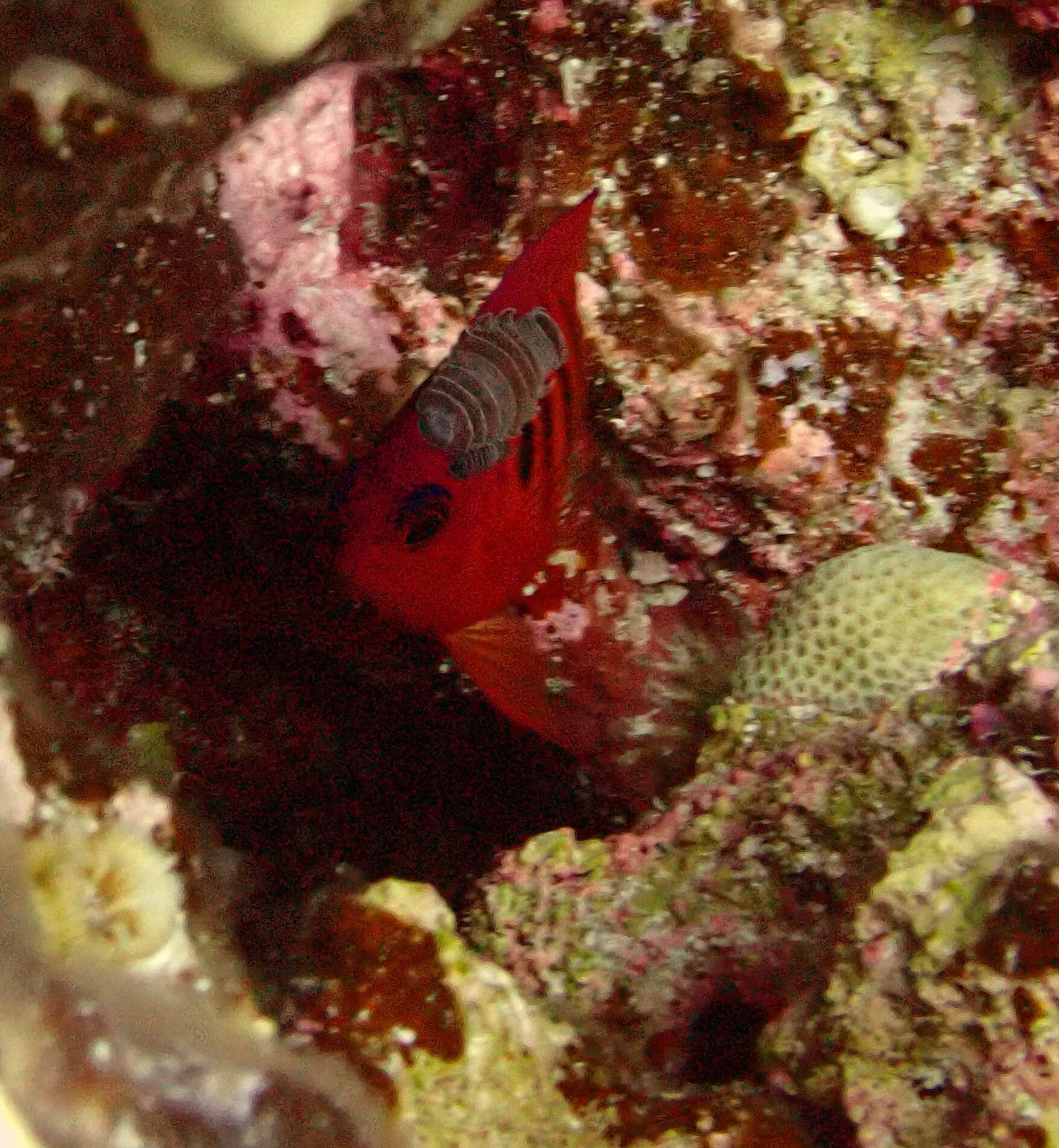
Cymothoa exigua
parasitic crustacean

glossitis
Glossitis can mean soreness of the tongue, or more usually inflammation with depapillation of the dorsal surface of the tongue (loss of the lingual papillae), leaving a smooth and erythematous (reddened) surface, (sometimes specifically termed atrophic glossitis). In a wider sense, glossitis can mean inflammation of the tongue generally. Glossitis is often caused by nutritional deficiencies and may be painless or cause discomfort. Glossitis usually responds well to treatment if the cause is identified and corrected. Tongue soreness caused by glossitis is differentiated from burning mouth syndr

ankyloglossia
Ankyloglossia, also known as tongue-tie, is a congenital oral anomaly that may decrease the mobility of the tongue tip and is caused by an unusually short, thick lingual frenulum, a membrane connecting the underside of the tongue to the floor of the mouth. Ankyloglossia varies in degree of severity from mild cases characterized by mucous membrane bands to complete ankyloglossia whereby the tongue is tethered to the floor of the mouth.
geographic tongue
atrophic glossitis that is characterized as an inflammatory condition of the mucous membrane of the tongue, usually on the dorsal surface
burning mouth syndrome
human disease
hairy tongue
Human disease
.jpg)
macroglossia
Macroglossia is the medical term for an unusually large tongue. Severe enlargement of the tongue can cause cosmetic and functional difficulties in speaking, eating, swallowing and sleeping. Macroglossia is uncommon, and usually occurs in children. There are many causes. Treatment depends upon the exact cause.
fissured tongue
benign condition characterized by deep grooves (fissures) in the dorsum of the tongue
oral hairy leukoplakia
mouth disease characterized by a white patch on the lateral sides of the tongue with a corrugated or hairy appearance; caused by Epstein-Barr virus
median rhomboid glossitis
Human disease
Glossoptosis
Glossoptosis is a medical condition and abnormality which involves the downward displacement or retraction of the tongue. This mostly affects infants and children. It may cause non-fusion of the hard palate, causing cleft palate. It can also cause difficulties with feeding and upper airway obstructions. Glossoptosis could be a symptom of a birth defect from Pierre Robin Syndrome. It can also arise with Down syndrome and cerebral palsy.
Aglossia
Aglossia (aglossia congenita) is defined as the substantial loss of tongue. Instances of isolated aglossia (as in aglossia on its own without any other congenital limb defects) are exceedingly rare.