Category
page 1Trade routes

Silk Road
trade routes through Asia connecting China to the Mediterranean Sea

caravan
group of people traveling together, often on a trade expedition

Atlantic slave trade
slave trade across the Atlantic Ocean between the 16th and 19th centuries

Amber Road
ancient trade route

Royal Road
trade route throughout the middle east

trans-Saharan trade
trade between sub-Saharan Africa and North Africa

Isthmus of Tehuantepec
shortest distance between the Gulf of Mexico and Pacific Ocean
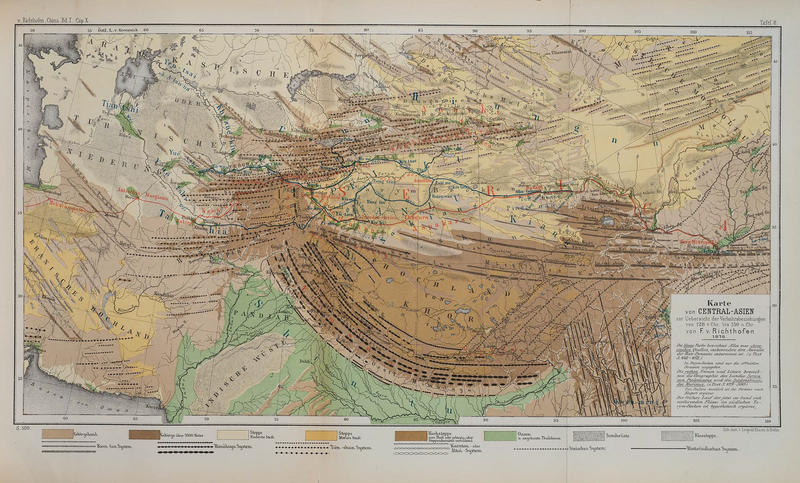
trade route
series of roads, pathways and stoppages for commercial trade on land; excludes rail
Grand Trunk Road
ancient major road in Asia from Teknaf, Bangladesh, to Kabul, Afghanistan
spice trade
historic international commerce
Via Maris
ancient trade route linking Egypt with Syria, Anatolia and Mesopotamia
Land of Frankincense
cultural landscape
King's Highway
ancient trade route
Incense Route – Desert Cities in the Negev
itinerary
Ancient tea route
network of caravan paths winding through the mountains of Southwest China and Tibet
Volga trade route
trade route linking Varangians with Muslims
China–Pakistan Economic Corridor
collection of infrastructure projects

Radhanite
thumb|400px|Map of Eurasia showing the trade network of the Radhanites (in blue), , as reported in the account of [[Ibn Khordadbeh in the Book of Roads and Kingdoms; other trade routes of the period are shown in purple.]]
Gwadar Port
deep-water seaport in Pakistan
India-Middle East-Europe Economic Corridor
economic corridor
sea lane
route through a large body of water
North–South Transport Corridor
Corridor for trade connectivity from Moscow to Mumbai through Central Asia
Maritime Silk Road
maritime section of the historic Silk Road
Spanish Road
16th century international military road
Brazilian Development Bank
federal public company that aims at long-term financing and investment in all segments of the Brazilian economycompany

Hærvejen
thumb|200px|Hærvejen crossing the Danevirke|Dannevirke
Hærvejen (Danish, literally: the army road, , literally: oxen way, , literally: oxen path), sometimes referred to in English as the Ox Road, is the name given to an ancient trackway in Denmark and Schleswig-Holstein. The route runs from Viborg via Flensburg to Hamburg, the territory of which it entered at Ochsenzoll ("oxen toll", "toll" in the meaning of "customs") and where it connected with other roads. It has been known by several other names throughout history, most importantly "the Cattle Road" (Studevejen) and "the Oxen Road" or "Ox
salt road
historical route for salt trade
Old Salt Route
medieval trade route in northern Germany

Azalai
thumb|right|A camel train traveling from Agadez to Bilma (Niger), 1985.
thumb|right|Slabs of salt from the mines of Taoudenni stacked on the quayside at the port of Mopti (Mali)
thumb|right|Rock salt at the market in Mopti. It is sold here in slabs, broken and weighed, and packaged into smaller amounts.
The Azalai (Tamasheq, var. Azalay) is a semi-annual salt caravan route practiced by Tuareg traders in the Sahara desert between Timbuktu and the Taoudenni salt mine in Mali, or the act of traveling with a caravan along that route.

Hellweg
thumb|right|The Westphalian Hellweg (marked red) at Dortmund in 1610, map by Detmar Muhler
In the Middle Ages, Hellweg was the official and common name given to main travelling routes in Germany. Their breadth was decreed as an unimpeded passageway a lance's width, about three metres, which the landholders, through which the Hellweg passed, were required to maintain.
Portuguese India Armadas
fleets used to trade with India
camel train
caravan, series of camels carrying passengers and/or goods

Trans-Caspian International Transport Route
trade route from Southeast Asia and China to Europe via Kazakhstan, Caspian Sea, Azerbaijan, Georgia and Turkey (optional).
Indian Ocean trade
trade conducted through the India Ocean
Shu Roads
thumb|upright=1.4|The ancient roads from Qin (Shaanxi) to Shu (Sichuan);file:carré 10 x 10 px red.png|8 px = city, 9 px = county (县, xiàn), thin lines = ill documented
The Shudao (), or the Road(s) to Shu, is a system of mountain roads linking the Chinese province of Shaanxi with Sichuan (Shu), built and maintained since the 4th century BC. Technical highlights were the gallery roads, consisting of wooden planks erected on wooden or stone beams slotted into holes cut into the sides of cliffs.
Indian Ocean slave trade
Overview of the topic
Siberian River Routes

Vogelfluglinie
thumb|300px|right|The German and part of the Danish railway line
thumb|300 px|right|Ferry at Puttgarden. Trains and cars are loaded by the lower ramp, cars only by the upper ramp.
The ' (German) or ' (Danish) is a transport corridor between Copenhagen, Denmark, and Hamburg, Germany.
Black Sea slave trade
Trafficking of people across the Black Sea
Trans-Saharan slave trade
slave trade
Red Sea slave trade
Black Trail
Historical trail from Crimea to Western Ukraine
Lapis Lazuli corridor
international transit route
axe-monies
thumb|Axe-money from Mexico at the Prehistory Museum of Valencia
Homs Gap
mountain pass in Homs Governorate, Syria
Loango Slavery Harbour
cultural site included in World heritage Tentative Lists
Steppe Route
ancient overland route through the Eurasian Steppe; precursor of the Silk Road
Via Argentaria
Medieval trade route
Via Narenta
Great Lithuanian Route
Don–Volga Portage
Ancient Russian trade and military route
Darb el-Arbain
trans-Saharan trade route between Darfur, Sudan and Asyut, Upper Egypt
Tibet–Nepal salt trade route
ancient salt trading route
Kyakhta trade
historic trade route between Siberia and China
Grease trail
type of overland trade route in America
Dvaravati–Kamboja route
Lhasa Newar
Nepalese businessman
Interoceanic Corridor of the Isthmus of Tehuantepec
trade and transit route in Southern Mexico, which connects the Pacific and Atlantic Oceans