Category
page 1Turtle families
.jpg)
Cheloniidae
Cheloniidae is a family of typically large marine turtles that are characterised by their common traits such as having a flat streamlined wide and rounded shell and almost paddle-like flippers for their forelimbs. They are the only sea turtles to have stronger front limbs than back limbs. The six species that make up this family are the green sea turtle, loggerhead sea turtle, olive ridley sea turtle, hawksbill sea turtle, flatback sea turtle and the Kemp's ridley sea turtle.

Trionychidae
Trionychidae is a family of turtles, commonly known as softshell turtles or simply softshells. The family was described by Leopold Fitzinger in 1826. Softshells include some of the world's largest freshwater turtles, though many can adapt to living in highly brackish waters. Members of this family occur in Africa, Asia, and North America, with extinct species known from Australia. Most species have traditionally been included in the genus Trionyx, but the vast majority have since been moved to other genera. Among these are the North American Apalone softshells that were placed in Trionyx until

Emydidae
Emydidae (Latin (freshwater tortoise) + Ancient Greek (, "appearance, resemblance")) is a family of testudines (turtles) that includes close to 50 species in 10 genera. Members of this family are commonly called terrapins, pond turtles, or marsh turtles. Several species of Asian box turtles were formerly classified in the family; however, revised taxonomy has separated them to a different family (Geoemydidae). As currently defined, the Emydidae are entirely a Western Hemisphere family, with the exception of two species of pond turtle.

Chelidae
Chelidae is one of three living families of the turtle suborder Pleurodira, and are commonly called Austro-South American side-neck turtles. The family is distributed in Australia, New Guinea, parts of Indonesia, and throughout most of South America. It is a large family of turtles with a significant fossil history dating back to the Cretaceous. The family is entirely Gondwanan in origin, with no members found outside Gondwana, either in the present day or as a fossil.

Geoemydidae
The Geoemydidae (formerly known as Bataguridae) are one of the largest and most diverse families in the order Testudines (turtles), with about 70 species. The family includes the Eurasian pond and river turtles and Neotropical wood turtles.

Chelydridae
The Chelydridae is a family of turtles that has seven extinct and two extant genera. The extant genera are the snapping turtles, Chelydra and Macrochelys. Both are endemic to the Western Hemisphere. The extinct genera are Acherontemys, Chelydrops, Chelydropsis, Emarginachelys, Macrocephalochelys, Planiplastron, and Protochelydra.

Pelomedusidae
Alternatively, "Pelomedusidae" may refer to the Pelomedusoidea. See below for details.

Kinosternidae
The Kinosternidae are a family of mostly small turtles that includes the mud turtles and musk turtles. The family contains 25 species within four genera, but taxonomic reclassification is an ongoing process, so many sources vary on the exact numbers of species and subspecies. They inhabit slow-moving bodies of water, often with soft, muddy bottoms and abundant vegetation.

Podocnemididae
Podocnemididae is a family of pleurodire (side-necked) turtles, once widely distributed. Most of its 41 genera and 57 species are now extinct. Seven of its eight surviving species are native to South America: the genus Peltocephalus, with two species, only one of which is extant (P. dumerilianus, the Big-headed Amazon River turtle); and the genus Podocnemis, with six living species of South American side-necked river turtles and four extinct. There is also one genus native to Madagascar: Erymnochelys, the Madagascan big-headed turtle, whose single species E. madagascariensis.

Dermochelyidae
Dermochelyidae is a family of sea turtles which has seven extinct genera and one extant genus, containing one living species, the leatherback sea turtle (Dermochelys coriacea). The oldest fossils of the group date to the Late Cretaceous.
Dermatemydidae
The Dermatemydidae are a family of turtles. The family was named by John Edward Gray in 1870, and its only extant genus is Dermatemys.

Protostegidae
Protostegidae is a family of extinct marine turtles that lived during the Cretaceous period. The family includes some of the largest sea turtles that ever existed. The largest Archelon had a head long. Like most sea turtles, they had flattened bodies and flippers for front appendages; protostegids had minimal shells like leatherback turtles of modern times.
Carettochelyidae
Carettochelyidae is a family of cryptodiran turtles belonging to the Trionychia. It contains only a single living species, the pig-nosed turtle (Carettochelys insculpta) native to New Guinea and Northern Australia. Stem-group carettochelyids are known from the Cretaceous of Asia, with the family being widely distributed across North America, Europe, Asia and Africa during much of the Cenozoic.
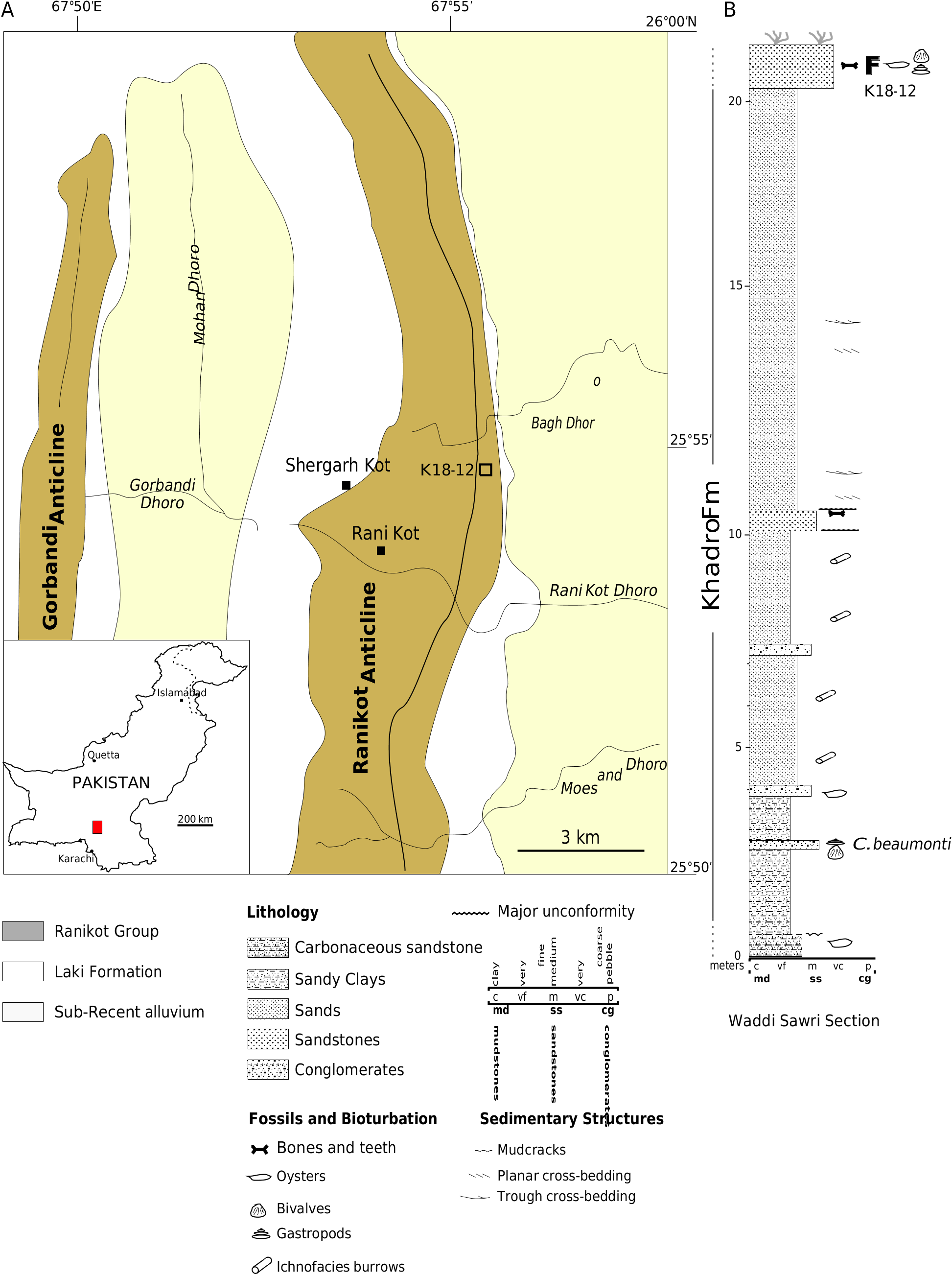
Bothremydidae
Bothremydidae is an extinct family of side-necked turtles (Pleurodira) known from the Cretaceous and Cenozoic. They are closely related to Podocnemididae, and are amongst the most widely distributed pleurodire groups, with their fossils having been found in Africa, India, the Middle East, Europe, North America and South America. Bothremydids were aquatic turtles with a high morphological diversity, indicative of generalist, molluscivorous, piscivorous and possibly herbivorous grazing diets, with some probably capable of suction feeding. Unlike modern pleurodires, which are exclusively freshwat

Baenidae
Baenidae is an extinct family of paracryptodiran turtles known from the Early Cretaceous to Eocene of North America. While during the Early Cretaceous they are found across North America, during the Late Cretaceous they are only found in Laramidia, having disappeared from Appalachia. Most lineages survived the K-Pg Extinction, but the family was extinct by the latest Eocene. The name of the type genus, Baena, appears to be of Native American origin, likely from the Arapaho be’enoo. They are primarily found in freshwater deposits, and are considered to be aquatic, with a largely generalist habi
Adocidae
The Adocidae are an extinct family of aquatic and omnivorous turtles. They are freshwater cryptodiran turtles and are mainly known from Cretaceous and Paleogene Asia and North America.
Sinemydidae
Sinemydidae is an extinct family of turtles from the Jurassic and Cretaceous of East Asia. Their exact position is engimatic, they have alternatively been considered stem-group cryptodires, but also "crownward stem-turtles" alongside Macrobaenidae, Paracryptodira, Xinjiangchelyidae, Thalassochelydia and Sandownidae outside of crown Testudines.
Nanhsiungchelyidae
Nanhsiungchelyidae is an extinct family of land turtles known from Cretaceous deposits in Asia and North America. Nanhsiungchelyids were more terrestrial than many of their contemporaries, and may have gone extinct at the end of the Cretaceous as a result.
Plesiochelyidae
The Plesiochelyidae are an extinct family of turtles in the clade Thalassochelydia originally classified within the Cryptodira suborder, mostly belonging from the Jurassic period. An alternate study placed the clade Thalassochelydia in the Angolachelonia and outside the Testudines.
Macrobaenidae
Macrobaenidae is an extinct family of turtles, known from the Early Cretaceous to Paleogene of Laurasia. Their relationships to other turtles and whether they form a monophlyletic group are controversial. They are typically interpreted as stem or crown group cryptodires, but some more recent analyses have found them to lie outside crown group Testudines. Macrobaenids can be distinguished from other testudinatans by the presence of a carotid fenestra, cruciform plastron with strap-like epiplastra, and a lack of extragulars.
Dortokidae
Dortokidae is an extinct family of freshwater pan-pleurodiran turtles, known from the Cretaceous and Paleocene of Europe. Only four species have been named, but indeterminate fossils show that they were abundant across western and eastern-central Europe during the Cretaceous. The family is only known from postcranial remains.