Category
page 1Types of administrative division

capital city
primary governing city of a top-level (country) or first-level and second-level subdivision (country, state, province, regency, etc) political entity

state
organised community living under a system of government; either a sovereign state, constituent state, or federated state

province
A province is an administrative division within a country or state. The term derives from the ancient Roman , which was the major territorial and administrative unit of the Roman Empire's territorial possessions outside Italy. The term province has since been adopted by many countries. In some countries with no actual provinces, "the provinces" is a metaphorical term meaning "outside the capital city".

U.S. state
constituent political entity of the United States of America

municipality
A municipality is usually a single administrative division having corporate status and powers of self-government or jurisdiction as granted by national and regional laws to which it is subordinate.

colony
A colony is a territory subject to a form of foreign rule, which rules the territory and its indigenous peoples separated from the foreign rulers, the colonizer, and their metropole (or "mother country"). This separated rule was often organized into colonial empires, with their metropoles at their centers, making colonies neither annexed or even integrated territories, nor client states. Particularly new imperialism and its colonialism advanced this separated rule and its lasting coloniality. Colonies were most often set up and colonized for exploitation and possibly settlement by colonists.

oblast
An oblast (, ) is a type of administrative division in Bulgaria and several post-Soviet states, including Belarus, Russia and Ukraine. Historically, the term was used in the Russian Empire and the Soviet Union. The word "oblast" is often translated into English as 'region' or 'province'. In some countries, oblasts are also known by the Russian term.

county
A county is a type of officially recognized geographical division within a state, both federal and sovereign, or province. Counties are defined in diverse ways, but they are typically current or former official administrative divisions within systems of local government, and in this sense counties are similar to shires, and typically larger than municipalities. Various non-English terms can be translated as "county" or "shire" in other languages, and in English new terms with less historical connection have been invented such as "council area" and "local government district". On the other hand

territory
thumb|upright|Sápmi|Lapland is a sparsely populated territory in [[Northern Europe. A view from Saana in Finnish Lapland]]
.svg)
district
A district is a type of administrative division that in some countries is managed by the local government. Across the world, areas known as "districts" vary greatly in size, spanning regions or counties, several municipalities, subdivisions of municipalities, school district, or political district.
administrative territorial entity
territorial entity for administration purposes, with or without its own local government

raion
A raion (also spelt rayon) is a type of administrative unit of several post-Soviet states. The term is used for both a type of subnational entity and a division of a city. The word is from the French (meaning 'honeycomb, department'), and is commonly translated as 'district' in English.

satrap
thumb|The Herakleia head, probable portrait of a Persian (Achaemenid) Empire Satrap of [[Asia Minor, end of 6th century BCE, probably under Darius I]]
A satrap () was a governor of the provinces of the ancient Median and Persian (Achaemenid) Empires and in several of their successors, such as in the Sasanian Empire and the Hellenistic empires. A satrapy is the territory governed by a satrap.

principality
A principality (or sometimes princedom) is a type of monarchical state or feudal territory ruled by a prince or princess. It can be either a sovereign state or a constituent part of a larger political entity. The term "principality" is often used to describe small monarchies, particularly those in Europe, where the ruler holds the title of prince or an equivalent.
electoral unit
territorial division made or used for elections
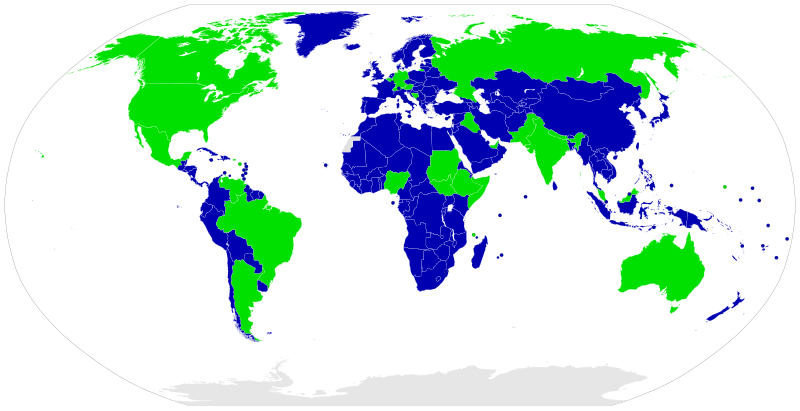
federated state
territorial and constitutional community forming part of a federal union

comune of Italy
thumb|upright=1.4|Italy#Administrative divisions|Administrative divisions of Italy:Regions (black borders)Provinces (dark gray borders) (light grey borders)
A '''''' (; : , ) is an administrative division of Italy, roughly equivalent to a township or municipality. It is the third-level administrative division of Italy, after regions () and provinces (). The can also have the title of ().
.jpg)
duchy
A duchy, also called a dukedom, is a country, territory, fief, or domain ruled by a duke or duchess. In Western European tradition, the title of duke ranked among the highest nobility, generally just below the monarch and above counts or earls.
.png)
wilaya
A wilaya or wilayah (, plural ; ; ; ) is an administrative division, usually translated as "state", "province" or occasionally as "governorate". The word comes from the Arabic root "w-l-y", "to govern": a wāli—"governor"—governs a wilāya, "that which is governed". Under the Caliphate, the term referred to any constituent near-sovereign state.

governorate
administrative subdivision of the Russian Empire and several Soviet States

federal district
title for certain administrative divisions in various federations

powiat
thumb|Division of Poland into powiats (counties)
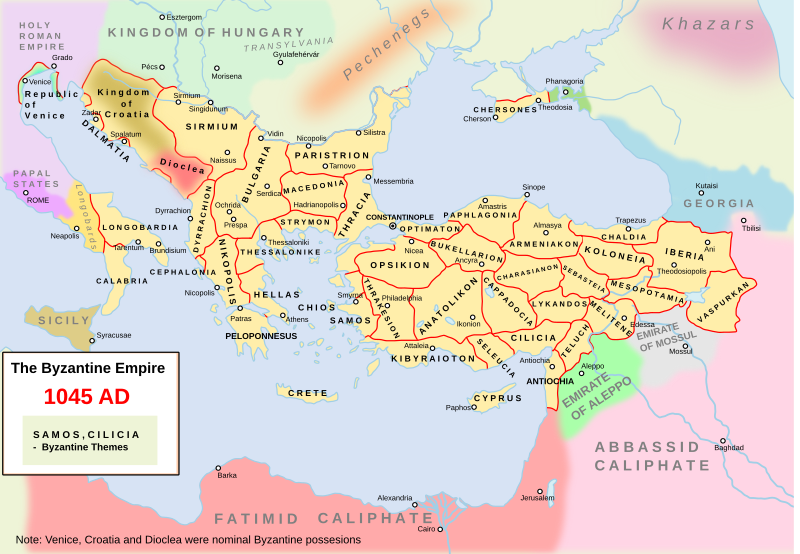
theme of the Byzantine Empire
Byzantine district
suzerainty
A suzerain (, from Old French "above" + "supreme, chief") is a person, state or polity who has supremacy and dominant influence over the foreign policy and economic relations of another subordinate party or polity, but allows internal autonomy to that subordinate. Where the subordinate polity is called a vassal, vassal state or tributary state, the dominant party is called the suzerain. The rights and obligations of a vassal are called vassalage, and the rights and obligations of a suzerain are called suzerainty.
arrondissement
An arrondissement (, , ) is any of various administrative divisions of France, Belgium, Haiti, and certain other Francophone countries, as well as the Netherlands.
prefecture
A prefecture (from the Latin word praefectura) is an administrative jurisdiction traditionally governed by an appointed prefect. This can be a regional or local government subdivision in various countries, or a subdivision in certain international church structures. During the antiquity, it was the name of a type of Roman district. In the 21st century, the term prefecture is used for the modern first-level subdivisions of the Central African Republic, Japan, and Morocco.
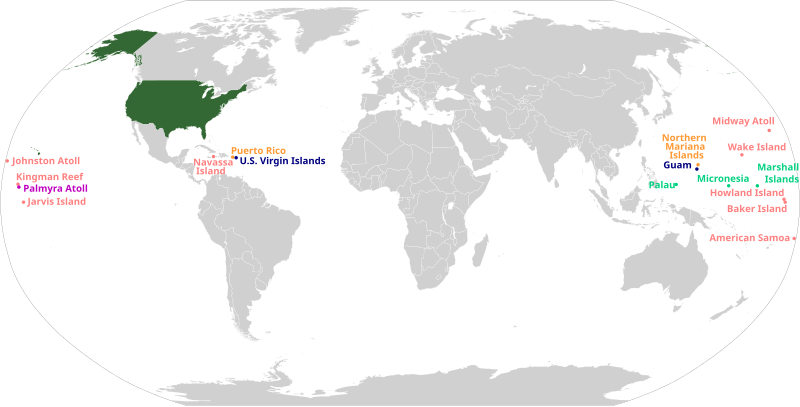
insular area of the United States
U.S. territory that is neither a U.S. state nor the District of Columbia

sanjak
thumb|The Vilayets and Sanjaks of the Ottoman Empire around 1317 Hijri, 1899 Gregorian
department
term for an administrative territorial entity in some countries
muhafazah
A '''''' is a first-level administrative division of many Arab countries, and a second-level administrative division in Saudi Arabia. The term is usually translated as "governorate", and occasionally as "province".
.jpg)
eyalet
thumb|400x400px|Provinces of the Ottoman Empire in Europe, Asia, and Africa in 1692, divided into beylerbeyliks, protectorates and tributary states. By Guillaume Sanson (1633–1703).
Eyalets (, , ), also known as beylerbeyliks or pashaliks, were the primary administrative divisions of the Ottoman Empire.
princely state
type of vassal state in British India
free imperial city
self-ruling city that enjoyed Imperial immediacy in the Holy Roman Empire
canton
type of administrative division of a country

voivodeship
A voivodeship ( ) or voivodate is the area administered by a voivode (governor) in several countries of central and eastern Europe. Voivodeships have existed since medieval times and the area of extent of voivodeship resembles that of a duchy in western medieval states, much as the title of voivode was equivalent to that of a duke. Other roughly equivalent titles and areas in medieval Eastern Europe included ban (bojan, vojin or bayan) and banate.

borough
A borough is an administrative division in various English-speaking countries. In principle, the term borough designates a self-governing walled town, although in practice, official use of the term varies widely. A borough is usually smaller than a city.
okrug
An okrug is a type of administrative division in some Slavic-speaking states. The word okrug is a loanword in English, alternatively translated as area, district, county, or region.
tehsil
A tehsil (, also known as tahsil, taluk, or taluka () is a local unit of administrative division in India and Pakistan. It is a subdistrict of the area within a district including the designated populated place that serves as its administrative centre, with possible additional towns, and usually a number of villages. The terms in India have replaced earlier terms, such as pargana (pergunnah) and thana.
nahiyah

Q61878
The barangay (; abbreviated as Brgy. or Bgy.), historically known as the barrio, is the smallest administrative division in the Philippines. Named after the precolonial polities of the same name, modern barangays are political subdivisions of cities and municipalities, and are analogous to villages, districts, neighborhoods, hamlets, suburbs, or boroughs. The term barangay is derived from balangay, a type of boat used by Austronesian peoples when they migrated to the Philippines.
.svg)
uezd
thumb|right|250px|Uezds of the Russian Empire in 1897
An uezd (also spelled uyezd or uiezd; ), or povit in a Ukrainian context (), was a type of administrative subdivision of the Grand Duchy of Moscow, the Tsardom of Russia, the Russian Empire, the Russian SFSR, and the early Soviet Union, which was in use from the 13th century. For most of Russian history, uezds were a second-level administrative division. By sense, but not by etymology, uezd approximately corresponds to the English "county".
diocese of the Roman Empire
administrative subdivision of the Roman Empire
imperial circle of the Holy Roman Empire
administrative groupings of the Holy Roman Empire

frazione
300px|thumb|View of Bolca, a frazione of the comune of [[Vestenanova, Veneto.]]
regency of Indonesia
second-level subdivision of Indonesia
kraj
A Kraj ( kraje) is the highest-level administrative unit in the Czech Republic and the Slovak Republic. For lack of other English expressions, the Slavic term is often translated as "province", "region", or "territory", although it approximately means "(part of) country", or "(part of) countryside". A kraj is subdivided into okresy ("districts").
Volost
Volost (; ; ; ) was a traditional administrative subdivision in Kievan Rus', the Grand Duchy of Moscow, and the Russian Empire.
autonomous republic
type of administrative division similar to a province or state
metropolitan county
type of county-level administrative division of England
Gau
German term for a region within a country
vilayet
thumb|page=271|Law of the vilayets (; 1867), in Volume II of , published by [[Gregory Aristarchis and edited by Demetrius Nicolaides]]

mahalla
governorate
A governorate or governate is an administrative division headed by a governor. As English-speaking nations tend to call regions administered by governors either states or provinces, the term governorate is typically used to calque divisions of non-English-speaking administrations.

khutor
thumb|300px|Konstantin Kryzhitsky. A Khutir in [[Little Russia, 1884]]

subprefecture
A subprefecture is an administrative division of a country that is below prefecture or province.
timar
A timar was a land grant by the sultans of the Ottoman Empire between the fourteenth and sixteenth centuries, with an annual tax revenue of less than 20,000 akçes. The revenues produced from the land acted as compensation for military service. A holder of a timar was known as a timariot. If the revenues produced from the timar were from 20,000 to 100,000 akçes, the land grant was called a zeamet, and if they were above 100,000 akçes, the grant would be called a hass.

castellan
A castellan, or constable, was the governor of a castle in medieval Europe. Its surrounding territory was referred to as the castellany.

kaza
thumb|right | alt=Kaaza districts in the late Ottoman Empire. |Kazas of Macedonia (region)|Macedonia and Novi Pazar, late Ottoman Empire
A kaza (, "judgment" or "jurisdiction") was an administrative division of the Ottoman Empire. It is also discussed in English under the names district, subdistrict, and juridical district. Kazas continued to be used by some of the empire's successor states. At present, they are used by Iraq, Lebanon, Jordan, and in Arabic discussion of Israel. In these contexts, they are also known by the Arabic name qada, qadā, or qadaa (, ).
autonomous oblast
administrative division (autonomous entity) in Russia, Tajikistan and formerly in the Soviet Union
district of Iran
A '''''' (, also romanized as ) is a third-level administrative division of Iran. While sometimes translated as "county”, it is more accurately translated as "district”, similar to a township in the United States or a district of England.