Category
page 1Types of cities

capital city
primary governing city of a top-level (country) or first-level and second-level subdivision (country, state, province, regency, etc) political entity

city-state
thumb|Monaco is a city state located on the Mediterranean and the second smallest country in the world
.jpg)
metropolis
thumb|upright=1.35|New York City|New York has garnered the nickname Metropolis to describe the city in the daytime in popular culture, contrasting with Gotham, sometimes used to describe New York at night.
thumb|upright=1.35|Skyline of Jakarta, the world's most populous metropolis
thumb|upright=1.35|Skyline of London, which was once the [[metropole of the British Empire]]
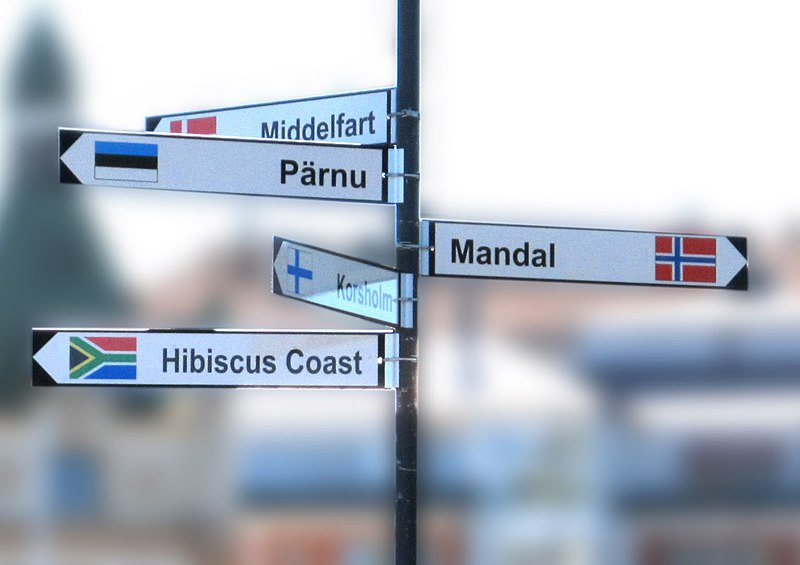
twin town
agreement between geographical entities

global city
city which is an important node in the global economy

satellite city
smaller municipality that is adjacent to a major city within a metropolitan area

megacity
thumb|upright=1.6|right|Map showing urban areas with at least ten million inhabitants in 2025, according to the Global Human Settlement Layer|GHSL

Ecumenopolis
right|thumb|A depiction of a planetwide city, which the artist considers suitable for both Trantor, a fictional ecumenopolis from Isaac Asimov's Galactic Empire, and [[Coruscant in the Star Wars franchise.]]
twin cities
two cities or urban centres that are founded in close geographic proximity and then grow into each other over time
sustainable city
a city designed with consideration for social, economic, environmental impact
holy city
a city important to the history or faith of a specific religion
company town
place where practically all stores and housing are owned by the one company that is also the main employer
fashion capital
city that influences fashion trends
primate city
disproportionately large city in its country or region
carfree city
urban area absent of motor vehicles
sanctuary city
place that limits cooperation with national immigration law
underground city
series of linked subterranean spaces
direct-controlled municipality
city classification used by several states for cities under direct government of the state
independent city
type of city or town
autonomous city
type of autonomous administrative division

monotown
thumb|Novotroitsk, a monotown in [[Orenburg Oblast, Russia]]
edge city
new unstructured settlement created near a major city
federal city
title for certain cities in various countries
Amsar
thumb|right|Ruins of Fustat in [[Old Cairo, Egypt]]

tent city
temporary housing facility made using tents or other temporary structures
Free city
classical antiquity
industrial city
municipality with economy and development featuring factories
Good City
title given to the most important cities of the Prince-Bishopric of Liège
automotive city
city that facilitates, and encourages, the movement of people via private transportation
eco-city
An eco-city or ecocity is "a human settlement modeled on the self-sustaining resilient structure and function of natural ecosystems", as defined by Ecocity Builders, a non-profit organization started by Richard Register, who first coined the term in his 1984 essay, "EcoCities: Making cities sustainable is a crucial challenge".
Simply put, an eco-city is an ecologically healthy city. The World Bank defines eco-cities as "cities that enhance the well-being of citizens and society through integrated urban planning and management that harness the benefits of ecological systems and protect and nurt
city proper
city proper
supernumerary town
type of city in the Russian Empire