Category
page 1Types of towns
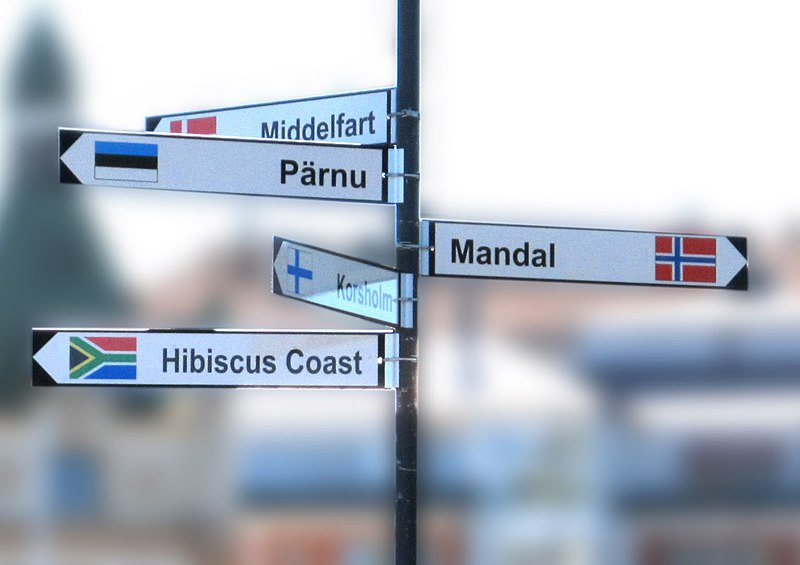
twin town
agreement between geographical entities

urban-type settlement
type of urban populated place

satellite city
smaller municipality that is adjacent to a major city within a metropolitan area

shtetl
thumb|300px|An 1893 Isaak_Asknaziy#Selected_paintings|painting by the artist [[Isaak Asknaziy of a Jewish wedding with a band in a ]]
' or ' ( ; , ; pl. shtetelekh) is a Yiddish term for small towns with predominantly Ashkenazi Jewish populations which existed in Eastern Europe before the Holocaust. The term is used in the context of pre-Second World War European Jewish societies as communities within the surrounding non-Jewish populace, and thus bears certain connotations of discrimination. (or , , or ) were mainly found in the areas that constituted the 19th-century Pale of Settlement in the
market town
settlement that has the right to host markets
commuter town
urban community that is primarily residential, from which most of the workforce commutes out
spa town
specialized resort town situated around a mineral spa
hill station
town located at a higher elevation than the nearby plain or valley
college town
community dominated by its university population
shanty town
a settlement of plywood, corrugated metal, sheets of plastic, and cardboard boxes
company town
place where practically all stores and housing are owned by the one company that is also the main employer
book town
town or village with many used book or antiquarian book stores
railway town
settlement that was greatly developed because of a railway station or junction at its site
census town
category of places in India and some other countries

monotown
thumb|Novotroitsk, a monotown in [[Orenburg Oblast, Russia]]

jōkamachi
The were centres of the domains of the feudal lords in medieval Japan. The jōkamachi represented the new, concentrated military power of the daimyo in which the formerly decentralized defence resources were concentrated around a single, central citadel. These cities did not necessarily form around castles after the Edo period; some are known as ''jin'yamachi, cities that have evolved around jin'ya or government offices that are not intended to provide military services. Defined broadly, jokamachi includes jin'yamachi. It is also referred to as jōka'', as was common before the early modern peri
agrotown
type of rural settlement in Belarus
sundown town
all-white municipalities that practice a form of racial segregation
resort town
town where tourism or vacationing is a primary component of the local culture and economy
border city
town or city on a border between larger political areas
miasteczko
A ' ( or ' (, ) was a historical type of urban settlement similar to a market town in the former Polish–Lithuanian Commonwealth. After the partitions of Polish–Lithuanian Commonwealth at the end of the 18th century, these settlements became widespread in the Austrian, German and Russian empires. The vast majority of miasteczkos had significant or even predominant Jewish populations; these are known in English under the Yiddish term shtetl. Miasteczkos had a special administrative status other than that of town or city.
exurb
thumb|Exurban-style density along the Delaware–Maryland–Pennsylvania Tri-State Point|Delaware–Maryland–Pennsylvania border, part of the [[Philadelphia metropolitan area]]
thumb|Exurban development (left side) blends into suburban development (right side) in Loudoun County, Virginia, in the western part of the [[Baltimore–Washington metropolitan area.]]
military townlet
territory for permanent quartering of military
boomtown
thumb|upright=1.2|World's Richest Acre Park in Downtown Kilgore, where the greatest concentration of oil wells in the world once stood in [[Kilgore, Texas, United States]]
A boomtown is a community that undergoes sudden and rapid population and economic growth, or that is started from scratch. The growth is normally attributed to the nearby discovery of a precious resource such as gold, silver, or oil, although the term can also be applied to communities growing very rapidly for different reasons, such as a proximity to a major metropolitan area, large infrastructure projects, or an attractive
castle town
urban centre linked to a castle
Vorort
See Tagsatzung for the meaning in historical Switzerland.