Category
page 1Types of year

year
thumb|alt=see caption|upright=1.5|An animation of the inner Solar System planets' orbit around the Sun. The duration of the year is the time taken to go around the Sun.
A year is a unit of time based on how long it takes the Earth to orbit the Sun. In scientific use, the tropical year (approximately 365 solar days, 5 hours, 48 minutes, 45 seconds) and the sidereal year (about 20 minutes longer) are more exact. The modern calendar year, as reckoned according to the Gregorian calendar, approximates the tropical year by using a system of leap years.

leap year
type of year that has 366 days, instead of 365 for a common year
common year
calendar year with 365 days

liturgical year
annually recurring fixed sequence of Christian feast days
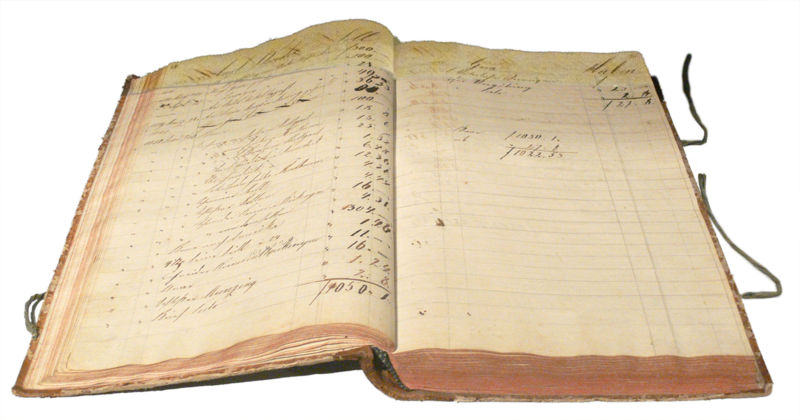
fiscal year
one-year term for government and business financial reporting
galactic year
amount of time it takes the universe to rotate, unit of time equivalent to 230 million years
sidereal year
time taken by the Earth to orbit the Sun once with respect to the fixed stars
calendar year
begins on the New Year's Day of the given calendar system and ends on the day before the following New Year's Day
Julian year
unit of time and a version of the year often used in astronomy
academic year
period of time which schools, colleges and universities use to measure the quantity of study
Gaussian year
unit of time equaling 365.2568983 days, adopted by Carl Friedrich Gauss as the length of the sidereal year in his studies of the dynamics of the solar system