Category
page 1Undead

Death
personification of death
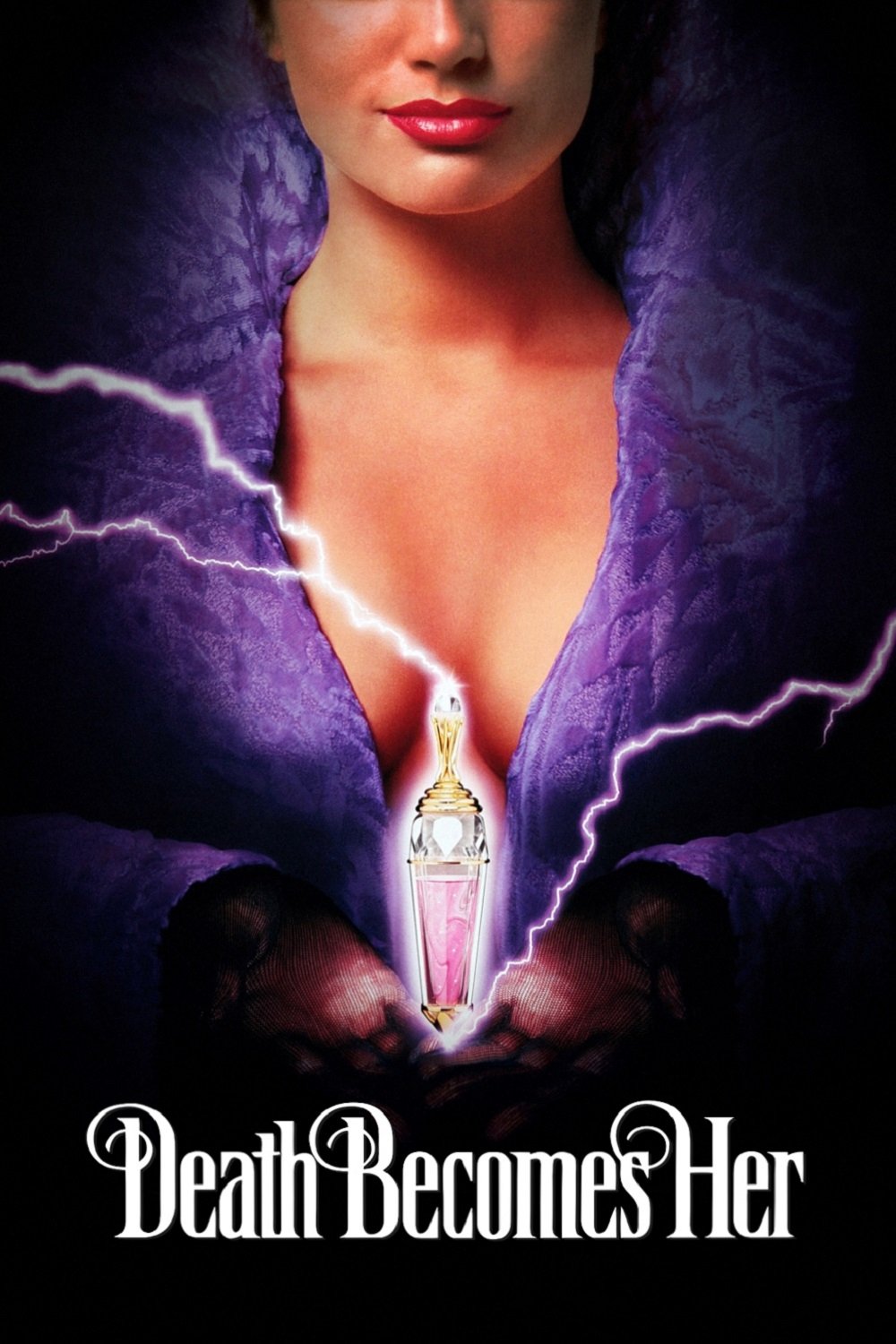
Death Becomes Her
1992 film by Robert Zemeckis

undead
thumb|The Ghost of Barbara Radziwiłł by [[Wojciech Gerson. Ghosts are a common form of the undead.]]

yūrei
thumb|Yūrei, Bakemono no e scroll, [[Brigham Young University]]
are figures in Japanese folklore analogous to the Western concept of ghosts. The name consists of two kanji, (yū), meaning "faint" or "dim" and (rei), meaning "soul" or "spirit". Alternative names include , meaning ruined or departed spirit, , meaning dead spirit, or the more encompassing or . Like their Western counterparts, they are thought to be spirits barred from a peaceful afterlife.

preta
Preta (, yi dags), also known as hungry ghost, is the Sanskrit name for a type of supernatural being described in Hinduism, Buddhism, Taoism, and Chinese folk religion as undergoing suffering greater than that of humans, particularly an extreme level of hunger and thirst.

onryō
thumb|Depiction of an onryō in the , by Katsushika Hokusai.

Mavka
Mavka ( ) or Nyavka ( ) is a type of female spirit in Ukrainian folklore and mythology. The Mavka is a long-haired "Soul of the Forest", typically depicted as a temptress figure who lures men to their deaths.
Bhoot
ghost in Indian culture
.jpg)
draugr
thumb|Kim Diaz Holm's contemporary art depicting a draugr haunting in enormous Hamr (folklore)|hamr ("magical shape")
thumb|Kim Diaz Holm's contemporary art depicting a #Sea draugr|sea draugr in Norwegian folklore
Lemures
The '''''' were shades or spirits of the restless or malignant dead in Roman religion, sometimes used interchangeably with the term (from Latin , 'mask').

Ubume
alt=|thumb|Ubume うぶめ from Bakemono no e (化物之繪, c. 1700), Harry F. Bruning Collection of Japanese Books and Manuscripts, L. Tom Perry Special Collections, [[Harold B. Lee Library, Brigham Young University.]]
are Japanese yōkai of pregnant women. They can also be written as ''''. Throughout folk stories and literature the identity and appearance of ubume varies. However, she is most commonly depicted as the spirit of a woman who has died during childbirth. Passersby will see her as a normal-looking woman carrying a baby. She will typically try to give the passerby her child then disappear. When
Mania
Etruscan goddess of the dead

Umibōzu
thumb|400px|Umibōzu, from the (pub. 1801)
thumb|upright|The , a kibyōshi by . Here appears an umibōzu with scales and a fin.
Drekavac
Drekavac (literally "the screamer" or "the screecher"), also called drekalo, krekavac, zdrekavac or zrikavac, is a mythical creature in South Slavic mythology. The name is derived from the verb "drečati" ("to screech").

Funayūrei
right|thumb|180px|"Funayūrei" from the Konjaku Gazu Zoku Hyakki by [[Sekien Toriyama]]
right|thumb|240px|Kawanabe Kyōsai's "Boatman and Funayūrei". An example of a funayūrei rendered as an umibōzu-like yokai.
right|thumb|260px|An example of a funayūrei appearing as mysterious flames. From the Tosa Bakemono Ehon.

Hone-onna
thumb|upright|"Honeonna" (骨女) from the Konjaku Gazu Zoku Hyakki by [[Sekien Toriyama]]
is a yōkai depicted in the Konjaku Gazu Zoku Hyakki (1779) by Toriyama Sekien. As its name implies, it depicts this yōkai as a woman in the form of bones.

Nuppeppō
thumb|Nuppeppō (ぬつへつほう) from Bakemono no e (化物之繪, c. 1700), Harry F. Bruning Collection of Japanese Books and Manuscripts, L. Tom Perry Special Collections, [[Harold B. Lee Library, Brigham Young University.|alt=]]
right|thumb|180px|"Nuppepō" (ぬつへつほう) from the Hyakkai Zukan by Sawaki Suushi
right|thumb|180px|"Nuppepō" (ぬつへつほふ) from the Gazu Hyakki Yagyō by [[Toriyama Sekien]]
Moroi
A moroi (sometimes moroii in modern fiction; pl. moroi) is a type of vampire or ghost in Romanian folklore. A female moroi is called a moroaică (pl. moroaice). In some versions, a moroi is a phantom of a dead person which leaves the grave to draw energy from the living.
Pocong
'''''' ( ; from ) is a ghost that resembles a dead body wrapped in a shroud. In Islamic funerals, a shroud called a "" (in Indonesian and Malay) is used to wrap the body of the dead person. The dead body is covered in a white fabric that is tied over the head, under the feet, and around the neck. The shroud is firmly secured at multiple points to ensure it stays in place during the journey to the gravesite. Upon placement in the grave, it is believed that the knots must be undone; otherwise, the corpse will animate and become known as a Pocong. Pocong is also known in Malaysia as (wrapped-up g
Phi Tai Hong
a ghost of Thai folklore
Necrobotics
thumb|Demonstration of the concept
thumb|A "necrobotic" gripper is fashioned from a dead spider and used to lift objects.
thumb|Procedure explanation
Necrobotics is the practice of using biotic materials (or dead organisms) as robotic components. Necrobotics can serve as an alternative to mechanical components that are difficult to manufacture by using biological components designed by natural selection in order to exploit the highly developed selective design implemented in biological lifeforms via the process of evolution.
Sluagh
The Sluagh (, ; ; English: 'host, army, crowd'), or Sluagh na marbh ('host of the dead'), were the hosts of the unforgiven dead in Irish and Scottish folklore. In the words of British folklorist Lewis Spence, "In the Western Isles of Scotland the Sluagh, or fairy host, was regarded as composed of the souls of the dead flying through the air, and the feast of the dead at Hallowe'en was likewise the festival of the fairies." Usually taking a crescent form, similar to a flight of grey birds, they were said to be able to approach and pick up a person from any direction and then transport them far
Red Ghost
Folklore figure
mummy
undead monster
Lietuvēns
Lietuvēns or lietonis (in Latgale also can be called “lītūņš”, similar to Slavic mara (Russian: Мара) or Lithuanian “lauma”) is a mythological creature in Latvian folklore. According to Latvian folk epics and omens, lietuvēns is the soul of a murdered (strangled, drowned or hanged) person cursed to live in this world as long as it has been meant to live. By some beliefs, it is the soul of an unbaptized child. It attacks both people and domestic animals. Sleep paralysis is thought to be torture or strangling by a lietuvēns. When under attack, one must move the toe of the left foot to get rid of