Category
page 1Unfinished books

Capital: A Critique of Political Economy
foundational theoretical text of Karl Marx

History of the Peloponnesian War
5th century BC history book by Thucydides

Being and Time
Philosophy book by Martin Heidegger
Summa Theologica
theological treatise by Thomas Aquinas
Unfinished Tales
1980 collection of stories and essays by J.R.R. Tolkien

On War
treatise on military strategy by Carl von Clausewitz
Pensées
thumb|Second edition of Blaise Pascal's , 1670
The '''' (Thoughts'') is a collection of fragments written by the French 17th-century philosopher and mathematician Blaise Pascal. Pascal's religious conversion led him into a life of asceticism, and the was in many ways his life's work. It represented Pascal's defense of the Christian religion, and the concept of "Pascal's wager" stems from a portion of this work.
%20-%20Portrait%20of%20Marguerite%20of%20Navarre%20-%20Google%20Art%20Project.jpg)
Heptaméron
thumb|250px|Portrait of Marguerite de Navarre|Marguerite, Queen of Navarre, attributed to [[Jean Clouet, .]]
250px|thumb|''The Gentleman's Spur catching in the Sheet. Illustration from an 1894 edition of The Tales of the Heptameron.
The Heptaméron is a collection of 72 short stories written in French by Marguerite de Navarre (1492–1549), published posthumously in 1558. It has the form of a frame narrative and was inspired by The Decameron of Giovanni Boccaccio. It was originally intended to contain one hundred stories covering ten days like The Decameron'', but at Marguerite’s death it was com
De vulgari eloquentia
essay by Dante Alighieri
The Secret Doctrine
non-fiction work by Helena Blavatsky

Grundrisse
The Grundrisse der Kritik der Politischen Ökonomie (Rohentwurf) (; "Foundations/Outlines of the Critique of Political Economy (Rough Draft)") is a lengthy, unfinished manuscript written by Karl Marx in 1857–1858. Comprising seven notebooks of economic studies, the work represents the first major draft of Marx's critique of political economy and is widely considered the preparatory work for his magnum opus, Das Kapital. The text was written for self-clarification during the Panic of 1857, and remained unpublished during his lifetime. A first edition was published in German in Moscow in 1939 and

2666
2004 novel by Roberto Bolaño
Dialectics of Nature
Book
Tintin and Alph-Art
unfinished twenty-fourth volume of The Adventures of Tintin
God and the State
book by Mikhail Bakunin

Book of Abraham
religious text of some Latter Day Saint churches
Rules for the Direction of the Mind
essay by René Descartes
The Book of Lost Tales
collection of stories by J. R. R. Tolkien

Ormulum
thumb|upright=1.2|A page from the Ormulum demonstrating the editing performed over time by Orrm, as well as the insertions of new readings by "Hand B"

Convivio
thumb|1521 edition of Convivio, retitled to Lo amoroso Convivio di Dante
Convivio (;) ("The Banquet") is an unfinished work written by Dante Alighieri roughly between 1304 and 1307. It consists of four books, or "tratatti": a prefatory one, plus three books that each include a canzone (long lyrical poem) and a prose allegorical interpretation or commentary of the poem that goes off in multiple thematic directions.
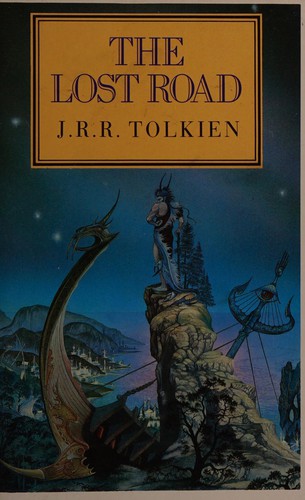
The Lost Road and Other Writings
fifth volume of the 12-volume series 'The History of Middle-earth'
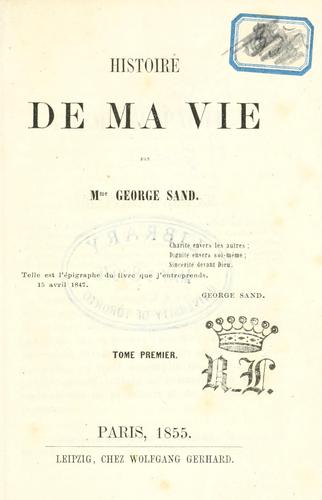
Histoire de ma vie
Autobiography of Giacomo Casanova
Joseph Smith Translation of the Bible
Biblical revision by the founder of the Latter Day Saint movement

The Pencil of Nature
book

The Autobiography of Benjamin Franklin
1791 memoir by Benjamin Franklin
On Certainty
essay by Ludwig Wittgenstein
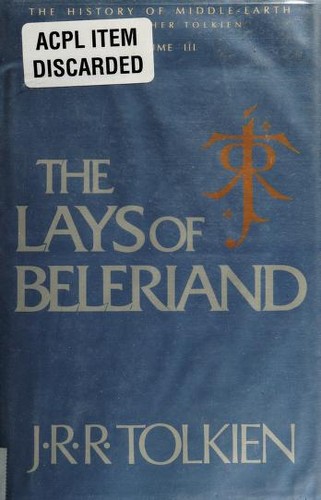
The Lays of Beleriand
third volume of the 12-volume series ''
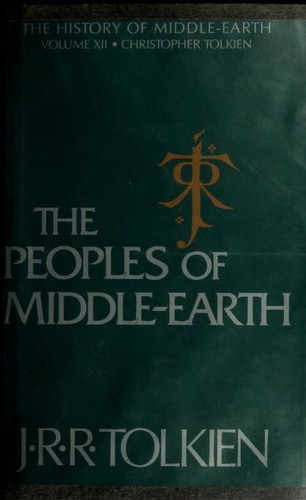
The Peoples of Middle-earth
12th and last volume of the 12-volume series 'The History of Middle-earth'

Philosophy in the Tragic Age of the Greeks
incomplete book by Friedrich Nietzsche
Reveries of a Solitary Walker
book by Jean-Jacques Rousseau

Church Dogmatics
English translation theological work of Karl Barth

The Burrow
short story by Franz Kafka

Ars Conjectandi
Book on probability and combinatorics

The Salmon of Doubt
2002 book by Douglas Adams

Life of Constantine
work by Eusebius
Contre Sainte-Beuve
collection of literary criticism by Marcel Proust (published posthumously in 1954)

Capitalism as Religion
1921 fragment written by Walter Benjamin
The Part Played by Labour in the Transition from Ape to Man
unfinished essay written by Friedrich Engels
Moshe Flinker
Dutch author (1926–1944)
The Life of Henry Brulard
novel by Stendhal
Éléments de géométrie algébrique
book

Description of a Struggle
short story by Franz Kafka
De regimine principum
work by Thomas Aquinas
Arabic Bayán
text by the Báb, written ca. 1848
The Life of the Mind
non-fiction work by Hannah Arendt

Stalin
biography of Josef Stalin by Leon Trotsky
The Village Schoolmaster
1931 short story by Franz Kafka

Autobiography of Mark Twain
written collection of reminiscences by Mark Twain

Biblioteca Universale Sacro-Profana
literary work

An Outline of Psychoanalysis
Posthumous book by Sigmund Freud

Mortality
essay by Christopher Hitchens

Constitutional Project for Corsica
work by Jean-Jacques Rousseau
Anacalypsis
Anacalypsis (full title: Anacalypsis: An Attempt to Draw Aside the Veil of the Saitic Isis or an Inquiry into the Origin of Languages, Nations and Religions) is a lengthy two-volume treatise written by religious historian Godfrey Higgins, and published after his death in 1836. The book was published in two quarto volumes numbering 1,436 pages, and contains meticulous references to hundreds of references. Initially printed as a limited edition of 200 copies, it was partially reprinted in 1878, and completely reprinted in a limited edition of 350 copies in 1927. In 1965, University Books, Inc. p

From the Caves and Jungles of Hindostan
book
Freydal
thumb|A scene from the Kunsthistorisches Museum’s Freydal Illuminated manuscript: Freydal jousts with Veit von Wolkenstein (fol.133}
Freydal is an uncompleted illustrated prose narrative commissioned by the Holy Roman Emperor Maximilian I in the early 16th century. It was intended to be a romantic allegorical account of Maximilian's own participation in a series of jousting tournaments in the guise of the tale's eponymous hero, Freydal. In the story, Freydal takes part in the tournaments to prove that he is worthy to marry a princess, who is a fictionalised representation of Maximilian's late