Category
page 1Units of length

metre
The metre (or meter in US spelling; symbol: m) is the base unit of length in the International System of Units (SI). Since 2019, the metre has been defined as the length of the path travelled by light in vacuum during a time interval of of a second, where the second is defined by a hyperfine transition frequency of caesium.

light-year
A light-year, alternatively spelled light year (ly or lyr), is a unit of length used to express astronomical distances and is equal to exactly , which is approximately 9.46 trillion kilometres or 5.88 trillion miles. As defined by the International Astronomical Union (IAU), a light-year is the distance that light travels in vacuum in one Julian year (365.25 days). Despite its inclusion of the word "year", the term is not a unit of time.

kilometre
The kilometre (SI symbol: km; or ), spelt kilometer in American English, is a unit of length in the International System of Units (SI), equal to one thousand metres (kilo- being the SI prefix for ). It is the preferred measurement unit to express distances between geographical places on land in most of the world; notable exceptions are the United States and the United Kingdom where the statute mile is used.

astronomical unit
mean distance between Earth and the Sun, common length reference in astronomy

mile
The mile, sometimes the international mile or statute mile to distinguish it from other miles, is a British imperial unit and United States customary unit of length; both are based on the older English unit of length equal to 5,280 English feet, or 1,760 yards. The statute mile was standardised as a unit of length between the Commonwealth of Nations and the United States by an international agreement in 1959, when the yard was formally redefined with respect to SI units as 0.9144metres, making the mile exactly (). For everyday use, five miles equates roughly to eight kilometres. Mileage is the

foot
unit of length

centimetre
thumb|upright=1.35|Different lengths as in respect to the electromagnetic spectrum, measured by the metre and its derived scales. The [[microwave is in-between 1 metre to 1 millimetre.]]

inch
The inch (symbol: in or prime (symbol)|) is a unit of length in the British Imperial and the United States customary systems of measurement. It is equal to yard or of a foot. Derived from the Roman uncia ("twelfth"), the word inch is also sometimes used to translate similar units in other measurement systems, usually understood as deriving from the width of the human thumb.

millimetre
thumb|330px|Different lengths with respect to the electromagnetic spectrum. The [[microwave spans from 1 metre to 1 millimetre.]]

parsec
The parsec (symbol: pc) is a unit of length used to measure the large distances to astronomical objects outside the Solar System, approximately equal to or (au), i.e. . The parsec unit is obtained by the use of parallax and trigonometry, and is defined as the distance at which 1 au subtends an angle of one arcsecond ( of a degree). The nearest star, Proxima Centauri, is about from the Sun: from that distance, the gap between the Earth and the Sun spans slightly less than one arcsecond. Most stars visible to the naked eye are within a few hundred parsecs of the Sun, with the most distant a

ångström
The angstrom (; ) is a unit of length equal to m; that is, one ten-billionth of a metre, a hundred-millionth of a centimetre, 0.1 nanometre, or 100 picometres. The unit is named after the Swedish physicist Anders Jonas Ångström (1814–1874). It was originally spelled with Swedish letters, as Ångström and later as ångström (). The latter spelling is still listed in some dictionaries, but is now rare in English texts. Some popular US dictionaries list only the spelling angstrom.
nanometre
thumb|330px|Different lengths as in respect to the electromagnetic spectrum, measured by the metre and its derived scales. The nanometre is often used to express dimensions on an atomic scale and mostly in the molecular scale.
The nanometre (international spelling as used by the International Bureau of Weights and Measures; SI symbol: nm), or nanometer (American spelling), is a unit of length in the International System of Units (SI), equal to one billionth (short scale) or one thousand millionth (long scale) of a metre (0.000000001 m) and to 1000 picometres. One nanometre can be exp

yard
thumb|The informal public imperial units|imperial measurement standards erected at the [[Royal Observatory, Greenwich, in the 19th century: 1 British yard, 2 feet, 1 foot, 6 inches, and 3 inches. The inexact monument was designed to permit rods of the correct measure to fit snugly into its pins at an ambient temperature of 62 °F (16.66 °C).]]
thumb|Bronze Yard No.11, the official standard of length for the United States between 1855 and 1892, when the Treasury Department formally adopted a metric standard. Bronze Yard No.11 was forged to be an exact copy of the British Imperial Stan

nautical mile
unit of distance (1852 m)

decimetre
The decimetre (' in American English; symbol: dm') is a unit of length in the International System of Units, equal to one tenth of a metre, ten centimetres, one hundred millimetres, and 3.937 inches.

picometre
The picometre (international spelling as used by the International Bureau of Weights and Measures; SI symbol: pm) or picometer (American spelling) is a unit of length in the International System of Units (SI), equal to , or one trillionth of a metre, which is the SI base unit of length.

verst
A verst (; ) is an obsolete Russian unit of length, defined as 500 sazhen. This makes a verst equal to .

femtometre
The femtometre (American spelling femtometer), symbol fm, (derived from the Danish and Norwegian word 'fifteen', ) is a unit of length in the International System of Units (SI) equal to 10−15 metres, which means a quadrillionth of one metre. This distance is sometimes called a fermi and was so named in honour of Italian naturalized to American physicist Enrico Fermi, as it is a typical length-scale of nuclear physics.
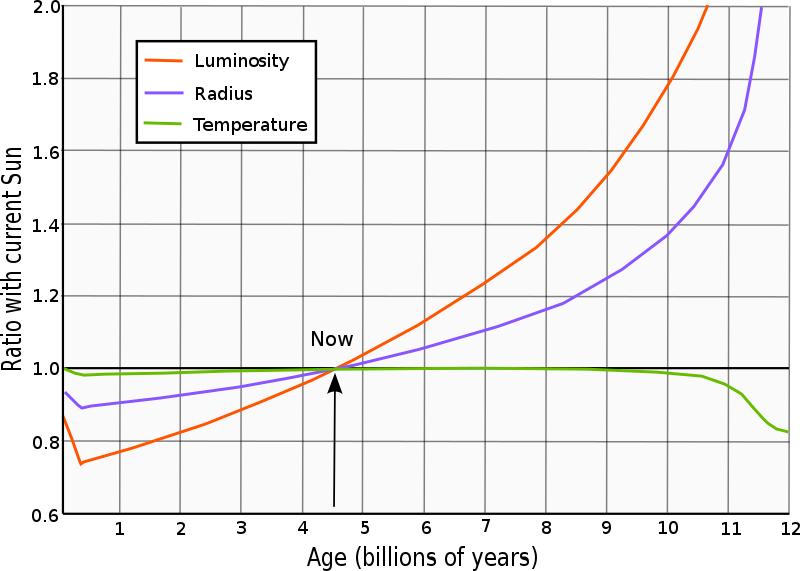
solar radius
unit of measurement

span
unit of length

cubit
thumb|Egyptian cubit rod in the Liverpool World Museum
thumb|Cubit rod of Maya (Egyptian)|Maya, 52.3 cm long, 1336–1327 BC (Eighteenth Dynasty)

league
unit of length

Bohr radius
physical constant; the most probable distance between an electron and the nucleus in a nonrelativistic model of the hydrogen atom with infinitely heavy nucleus

decametre
A decametre (International spelling as used by the International Bureau of Weights and Measures and by most English speaking countries, United States spelling dekameter), symbol dam ("da" for the SI prefix deca-, "m" for the SI unit metre), is a unit of length in the International System of Units (SI) equal to ten metres.
fathom
A fathom is a unit of length in the imperial and U.S. customary systems equal to , used especially for measuring the depth of water. The fathom is neither an international standard (SI) unit, nor an internationally accepted non-SI unit. Historically, it was the maritime measure of depth in the English-speaking world but, apart from within the US, charts now use metres.

furlong
A furlong is a measure of distance in imperial units and United States customary units equal to one-eighth of a mile, equivalent to any of 660 feet, 220 yards, 40 rods or perches, 10 chains, or approximately 201 metres. It is now mostly confined to use in horse racing, where in many countries it is the standard measurement of race lengths, and agriculture, where it is used to measure rural field lengths and distances specifically in the United Kingdom, Ireland, Canada, and the United States.
stadion
ancient Greek unit of length
unit of length
way of measuring length or distance
Li
[里] traditional Chinese unit of distance; today standardized as 500 metres
arshin
historic Russian unit of length

parasang
thumb|right|1814 map of Persia during the Qajar dynasty, with [[scale bars in the bottom left corner for both British Statute Miles and "Persian Farsangs or Parasangs"]]
cable length
unit of length
chain
unit of length
point
measurement unit used in typography
rod
unit of length

light-second
The light-second is a unit of length useful in astronomy, telecommunications and relativistic physics. It is defined as the distance that light travels in free space in one second, and is equal to exactly (approximately or ).
orders of magnitude
range of lengths from the subatomic to the astronomical scales
pace
unit of length
thousandth of an inch
small unit of length in the imperial and US customary systems
shaku
Japanese unit of length; today standardized as 10/33 metres
hand
unit of length

Modulor
thumbnail|Commemorative Swiss coin showing the modulor.
The Modulor is an anthropometric scale of proportions devised by the Swiss-born French architect Le Corbusier (1887–1965).
lunar distance
distance from center of Earth to center of Moon
cicero
unit of measure used in European typography; ⅙ of the French inch
em
unit of measurement in the field of typography

ell
thumb|upright|Historic standard units of the city of Regensburg: from left to right, a [[fathom (Klafter), foot (Schuch) and ell (Öln)]]
thumb|right|Prussian ell

toise
A toise (; symbol: T) is a unit of measure for length, area and volume originating in pre-revolutionary France. In North America, it was used in colonial French establishments in early New France, French Louisiana (Louisiane), Acadia (Acadie) and Quebec. The related '''''' () was used in Portugal, Brazil, and other parts of the Portuguese Empire until the adoption of the metric system.
line
English unit of length
palm
anthropic unit of length, based on the width of the human palm and then variously standardized
cun
Chinese unit of length; the width of a person's thumb at the knuckle; today standardized as 10/3 cm in mainland China and Taiwan; as 1/33 m in Japan
Jupiter radius
unit of radius equal to the total radius of the planet Jupiter
X unit
unit of length; approximately 0.10021 picometres
rack unit
unit of measure describing the height of electronic equipment designed to mount in a 19-inch rack or a 23-inch rack
Scandinavian mile
unit of length in Norway and Sweden

smoot
The smoot is a nonstandard, humorous unit of length created as part of an MIT fraternity pledge to Lambda Chi Alpha by Oliver R. Smoot, who in October 1958 lay down repeatedly on the Harvard Bridge between Boston and Cambridge, Massachusetts, so that his fraternity brothers could use his height to measure the length of the bridge.
pica
unit of length
gauge
bore diameter of firearms
chi
Traditional Chinese unit of length
arpent
An arpent (, sometimes called arpen) is either of two units of measure, a unit of length or a unit of area. It is a pre-metric French unit based on the Roman actus. It is used in Quebec, some areas of the United States that were part of French Louisiana, and in Mauritius and the Seychelles.
link
unit of length