Category
page 1Urban planning

disability
Disability is the experience of any condition that makes it more difficult for a person to do certain activities or have equitable access within a given society. Disabilities may be cognitive, developmental, intellectual, mental, physical, sensory, or a combination of multiple factors. Disabilities can be present from birth or can be acquired during a person's lifetime. Historically, disabilities have only been recognized based on a narrow set of criteria—however, disabilities are not binary and can present uniquely depending on the individual. A disability may be easily visible, or invisible

suburb
A suburb (more broadly suburban area) is an area within a metropolitan area which is predominantly residential and within commuting distance of a large city. Suburbs can have their own political or legal jurisdictions, especially in the United States, but this is not always the case, especially in the United Kingdom, where most suburbs are located within the administrative boundaries of cities. In most English-speaking countries, suburban areas are defined in contrast to central city or inner city areas, but in Australian English and South African English, suburb has become largely synonymous

urbanization
alt=Global urbanization map|thumb|upright=1.35|Global urbanization map showing the percentage of urbanization and the biggest global population centres per country in 2018, based on UN estimates.

urban planning
technical and political process concerned with the use of land and design of the urban environment
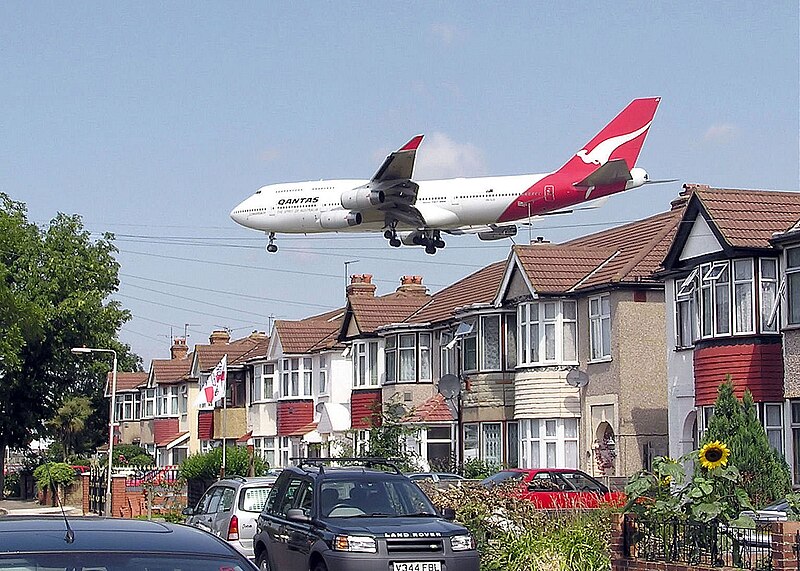
noise pollution
excessive, displeasing human, animal, or machine-created environmental noise

light pollution
anthropogenic light in the night environment, caused by excess or misdirected lighting

urban area
large area with high population density and infrastructure of built environment

slum
A slum is a derogatory term for a highly populated urban residential area consisting of densely packed housing units of weak build quality and often associated with poverty. The infrastructure in slums is often deteriorated or incomplete, and they are primarily inhabited by impoverished people.

fire hydrant
connection point by which firefighters can tap into a water supply

streetlight
raised source of light on the edge of a road or walkway

urban geography
subdiscipline of geography concentrating on urban areas

urbanism
Urbanism is the scientific study of how inhabitants of urban areas, such as towns and cities, interact with the built environment. It is a direct component of disciplines such as urban planning, a profession focusing on the design and management of urban areas, and urban sociology, an academic field which studies urban life.
Covenant of Mayors
european co-operation movement
medina quarter
distinct city section found in many North African cities

zoning
thumb|right|upright=1.35|The Zoning Scheme of the General Spatial Plan for the Skopje|City of Skopje, [[North Macedonia. Different urban zoning areas are represented by different colours.]]
urban sociology
sociological study of life and human interaction in metropolitan areas
urban ecology
area of study in ecology
central place theory
geographical theory explaining the number, size and location of human settlements in an urban system
linear settlement
type of village
rural flight
population shift from rural to urban areas
visual pollution
visible deterioration and negative aesthetic quality of natural and human-made landscapes
urban economics
economic study of urban areas
Athens Charter
proceedings of a conference
urban planner
professional who practices in the field of urban planning

suburbanization
thumb|A suburban land use planning|land use pattern in the United States ([[Colorado Springs, Colorado), showing a mix of residential streets and cul-de-sacs intersected by a four-lane road.]]
Counter urbanization
Counterurbanization, ruralization, or deurbanization is a demographic and social process in which people move from urban areas to rural areas. It, as suburbanization, is inversely related to urbanization, and first occurs as a reaction to inner-city deprivation. Recent research has documented the social and political drivers of counterurbanization and its impacts in China and other developing countries which are undergoing a process of mass urbanization. Counterurbanization is one of the causes that can lead to shrinking cities.
urban green space
green area planned in an urban location
%2C_the_ancient_capital_of_Kangleipak_%E2%80%94_Early_modern_era_street_lamps_%E2%80%94_Old_Footpath.jpg)
footpath
thumb|Footpath inside the Kangla Fort, [[Imphal]]
thumb|upright|Footpath through the forest in Brastad, Sweden
%2C%20Montreal%202005-10-21.JPG)
walkability
thumb|De la Gauchetière Street, [[Montreal]]
thumb|Chinatown, Manhattan|Chinatown, [[New York City ]]
sustainable city
a city designed with consideration for social, economic, environmental impact
regional planning
land use planning at the meta (crossing one or more municipal boundaries)
Venice Charter
international charta for the conservation and restoration of historic buildings
transportation planning
process of defining future policies, goals, investments, and spatial planning designs to prepare for future needs to move people and goods to destinations

Bryum argenteum
species of plant
traffic calming
methods to slow or reduce some types or all vehicle traffic
garden square
a type of communal garden in an urban area wholly or substantially surrounded by buildings, which is accessible to the public at large
urban history
branch of history studying urban life and cities
shanty town
a settlement of plywood, corrugated metal, sheets of plastic, and cardboard boxes
urban studies
field within the social sciences
pocket park
small park accessible to the general public
municipal corporation
legal term for a local governing body
settlement geography
subfield of geography
tactical urbanism
a low-cost, temporary approach in changing the built environment, usually in cities, in order to improve local neighbourhoods, city gathering places, bike, pedestrian, transit infrastructure
urban anthropology
subset of anthropology that focuses on the study of cities, urban spaces, residential suburbs and the ways people interact within these environments, in concerns with issues of urbanization, poverty and neoliberalism
Eurocities
Eurocities is a network of large cities in Europe, established in 1986 by the mayors of six large cities: Barcelona, Birmingham, Frankfurt, Lyon, Milan, and Rotterdam. Today, Eurocities members include over 200 of Europe's major cities from 38 countries, which between them represent over 130 million people.
right to the city
idea/slogan, proposed by Henri Lefebvre in 1968, to reclaim the city as a co-created space—a place for life detached from the effects of commodification, capitalism, and spatial inequalities
ideal city
utopian concept for a city imagined, conceived, or planned, in accordance with a particular rational or moral objective
compact city
concept in urban planning and urban design
Sector model
model of urban land use proposed in 1939
cyclability
Cyclability is the degree of ease of bicycle circulation. A greater degree of cyclability in cities is related, among others, to benefits for people's health, lower levels of air and noise pollution, improved fluidity of traffic or increased productivity.
urban morphology
studies of the shape of urban spaces
municipal charter
legal document establishing a municipality
landscape urbanism
theory of urban design
Multiple nuclei model
Model in urban studies
urban structure
arrangement of land use in urban areas

monotown
thumb|Novotroitsk, a monotown in [[Orenburg Oblast, Russia]]
World Urbanism Day
international observance
urban vitality
the intensity of use of urban space, whose quality is reflected by frequently attracting people to varied activities and times

centuriation
Centuriation (in Latin centuriatio or, more usually, limitatio), also known as Roman grid, was a method of land survey used by the Romans. In many cases land divisions based on the survey formed a field system, often referred to in modern times by the same name. According to O. A. W. Dilke, centuriation combined and developed features of land surveying present in Egypt, Etruria, Greek towns and Greek countryside.
City Beautiful movement
North American architectural movement