Category
page 1Uterus

uterus
The uterus (from Latin uterus, : uteri or uteruses) or womb () is the organ in the reproductive system of most female mammals, including humans, that accommodates the embryonic and fetal development of one or more fertilized eggs until birth. The uterus is a hormone-responsive sex organ that contains glands in its lining that secrete uterine milk for embryonic nourishment. (The term uterus is also applied to analogous structures in some non-mammalian animals.)

hysteria
thumb|alt=refer to caption|An 1893 depiction of a woman with hysteria
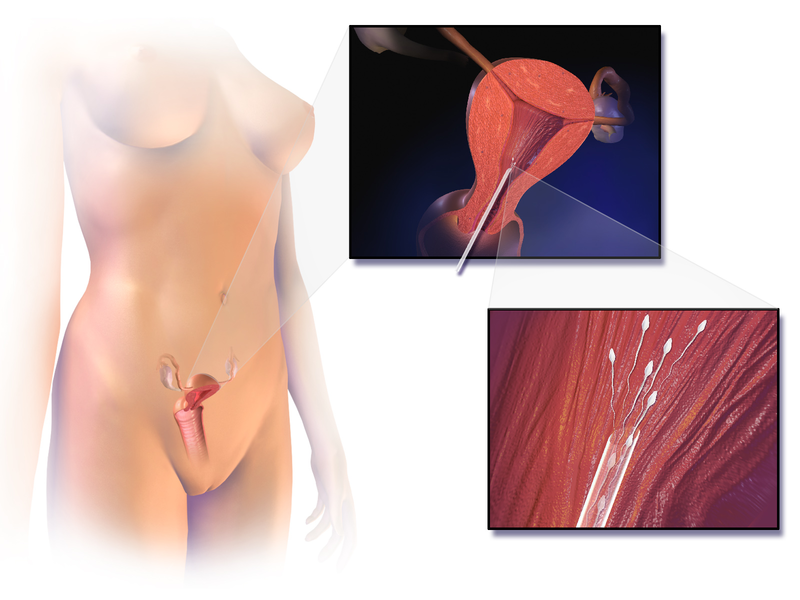
artificial insemination
pregnancy through in vivo fertilization

hysterectomy
Hysterectomy is the surgical removal of the uterus and cervix. Supracervical hysterectomy refers to the removal of the uterus while the cervix is spared. These procedures may also involve removal of the ovaries (oophorectomy), fallopian tubes (salpingectomy), and other surrounding structures. The terms "partial" or "total" hysterectomy are lay terms that incorrectly describe the addition or omission of oophorectomy at the time of hysterectomy. These procedures are usually performed by a gynecologist. Removal of the uterus is a form of sterilization, rendering the patient unable to bear childre

endometrium
The endometrium is the inner epithelial layer, along with its mucous membrane, of the mammalian uterus. It has a basal layer and a functional layer: the basal layer contains stem cells which regenerate the functional layer. The functional layer thickens and then is shed during menstruation in humans and some other mammals, including other apes, Old World monkeys, some species of bat, the elephant shrew and the Cairo spiny mouse. In most other mammals, the endometrium is reabsorbed in the estrous cycle. During pregnancy, the glands and blood vessels in the endometrium further increase in size a
polyp
abnormal growth of tissue projecting from a mucous membrane
abnormal uterine bleeding
medical condition
artificial womb
device that would allow for extracorporeal pregnancy
uterus transplantation
surgical procedure
uterine contraction
contraction of the uterus
uterine artery
artery that supplies blood to the uterus
dilation and curettage
gynecologic procedure
female hysteria
outdated diagnosis for patients with multiple symptoms of a neurological condition
Ferguson reflex
Cycle of uterine contractions
uterine cavity
Inside of the uterus
uterine septum
human disease
hysterotomy
A hysterotomy is an incision made in the uterus. This surgical incision is used in several medical procedures, including during termination of pregnancy in the second trimester (or abortion) and delivering the fetus during caesarean section. It is also used to gain access and perform surgery on a fetus during pregnancy to correct birth defects, and it is an option to achieve resuscitation if cardiac arrest occurs during pregnancy and it is necessary to remove the fetus from the uterus.
Uterine gland
type of gland
uterine vein
vein of the uterus
Uterosacral ligament
major ligaments of uterus
uterine venous plexus
blood vessel network
OHVIRA
Herlyn–Werner–Wunderlich syndrome, also known as OHVIRA (obstructed hemivagina and ipsilateral renal anomaly) is an extremely rare syndrome characterized by a congenital birth defect of the lower abdominal and pelvic organs. It is a type of abnormality of the Müllerian ducts.
uterotonic
A uterotonic, also known as an oxytocic or ecbolic, is a type of medication used to induce contraction or greater tonicity of the uterus. Uterotonics are used both to induce labor and to reduce postpartum hemorrhage.
uterine horns
exit of the fallopian tube
Uterine isthmus
inferior-posterior part of uterus