Category
page 1Vegetables

vegetable
thumb|Vegetables separated with baskets in a Market (place)|market in the [[Philippines]]

vegetarianism
Vegetarianism is the practice of abstaining from the consumption of meat (red meat, poultry, seafood, freshwater fish, insects, and the flesh of any other animal). It may also include abstaining from eating all by-products of animal slaughter. A person who practices vegetarianism is known as a vegetarian.

Medicago sativa
Alfalfa (; in North America), lucerne (in the United Kingdom, South Africa, Australia, and New Zealand), Medicago sativa is a perennial flowering plant in the legume family Fabaceae. It is cultivated as an important forage crop in many countries around the world and is used for grazing, hay, and silage, as well as a green manure and cover crop. It has also been cultivated as livestock fodder since at least the era of the ancient Greeks and Romans. Alfalfa has clusters of small purple flowers followed by fruits spiraled in two to three turns containing 10–20 seeds. It is native to warmer temper

legume
thumb|upright=0.9|A selection of dried pulses and fresh legumes
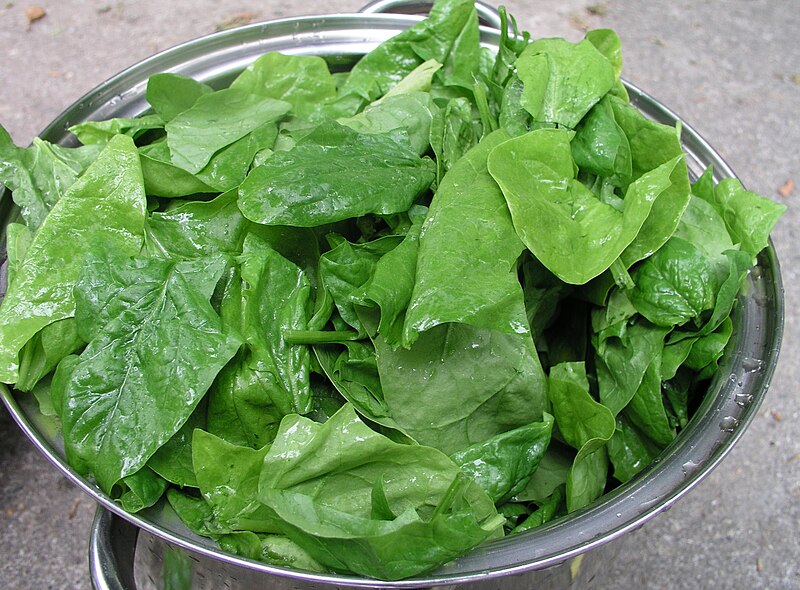
leaf vegetable
plant leaves eaten as a vegetable

Trifolium incarnatum
species of plant
list of culinary vegetables
Wikimedia list article

Allium chinense
species of plant

sprouting
thumb|Mixed bean sprouts (shoots)
thumb|Melon seeds sprouting
thumb|Buckwheat sproutsSprouting is the natural process by which seeds or spores germinate and put out shoots, and already established plants produce new leaves or buds, or other structures experience further growth.

olericulture
thumb|Olericulture - panoramio
Olericulture (from ) is the science of vegetable growing, dealing with the culture of non-woody (herbaceous) plants for food.

Zea mays Saccharata Group
variety of corn

microgreen
thumb|Technicians harvesting different types of microgreens for shelf-life studies and [[nutrient analyses]]
Microgreens are vegetable greens (not to be confused with sprouts or shoots) harvested just after the cotyledon leaves have developed with one set of true leaves. They are used as a visual, flavor and texture enhancement. thumb
Microgreens are used to add sweetness and spiciness to foods. Microgreens are smaller than "baby greens" because they are harvested soon after sprouting, rather than after the plant has matured to produce multiple leaves.

pomato
thumb|A pomato (sold as TomTato) in a store display

Allium subhirsutum
species of plant

Belgian endive
Variety of cultivated leaf chicory

Nostoc flagelliforme
species of edible, terrestrial cyanobacterium

produce
right|thumb|250px|Produce on display at La Boqueria market in [[Barcelona, Spain]]
In American English, produce generally refers to fresh fruits and vegetables intended to be eaten by humans, although other food products such as dairy products or nuts are sometimes included. In other English usage, the term "greens" is often used.

Alocasia fornicata
species of plant
waxy corn
mutation in Zea mays
cruciferous vegetable
vegetables of the family Brassicaceae
World Vegetable Center
international agricultural research institute based in Tainan, Taiwan
Allium omeiense
species of plant
ketchup as a vegetable
American political controversy

kale sprouts
Kalettes (formerly known as Flower Sprouts, Petit Posy, Brukale, or Brusselkale) is a hybrid plant brand name for kale sprouts. Bred using breeding techniques, they are a cross between kale and Brussels sprouts. The plant can be eaten as raw or cooked. "Kalette" is actually a brand name for the vegetable "kale sprouts," which were introduced to the U.K. market in 2010 under the name Flower Sprouts.
frozen vegetable
product category
Hungry gap
vegetable shortage in spring
unusually shaped vegetable
vegetable that has grown into a shape not in line with its normal body plan