Category
page 1VEI-5 volcanoes

Mount Fuji
volcano in Yamanashi and Shizuoka Prefectures, Japan

Teide
thumb|This 3D panoramic view of Teide was created using Shuttle Radar Topography Mission|SRTM data (160% elevation).
Teide () or Mount Teide (, ; 'Peak of Teide') is a volcano on the Spanish island of Tenerife, part of the Canary Islands. Its summit (at ) is the highest point in Spain and the highest of any island in the Atlantic Ocean. Measured from its base on the ocean floor, Teide reaches a total height of , making it the third-tallest volcano in the world; UNESCO and NASA also rank it as Earth's third-tallest volcanic structure. Its elevation above sea level makes Tenerife the tenth-highe

Citlaltepetl
highest mountain and volcano in Mexico
%20Detail%20from%20map%20of%20Iceland%201585.jpg)
Hekla
Hekla (), or Hecla, is an active stratovolcano in the south of Iceland with a height of . Hekla is one of Iceland's most active volcanoes; over 20 eruptions have occurred in and around the volcano since the year 1210. During the Middle Ages, the Icelandic Norse called the volcano the "Gateway to Hell" and the idea spread over much of Europe.

Mount Agung
Active volcano in Bali, Indonesia
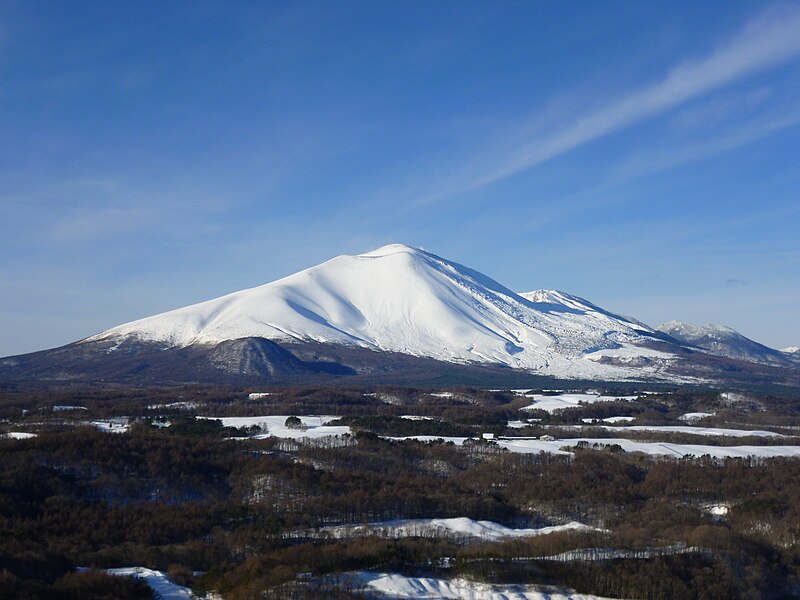
Mount Asama
volcano on the border of Gunma and Nagano prefectures in Japan
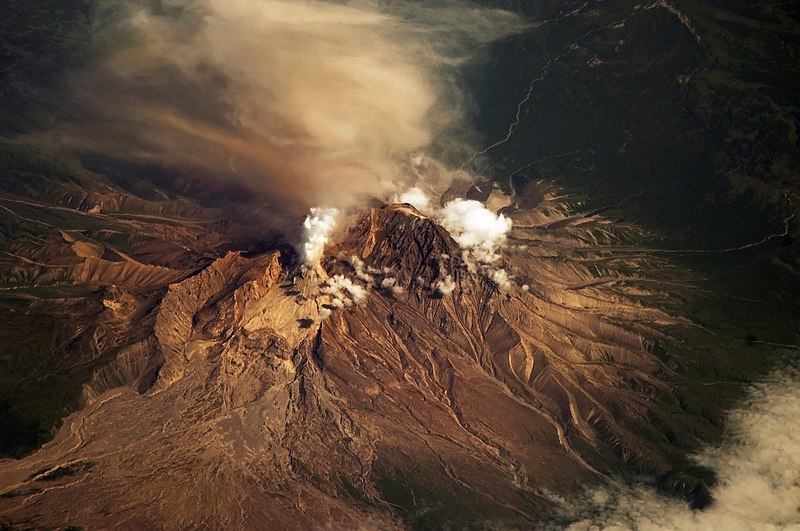
Shiveluch
Shiveluch (), also called Sheveluch, which originates from the name "suelich" which means "smoking mountain" in Itelmen, is the northernmost active volcano in Kamchatka Krai, Russia. It and Karymsky are Kamchatka's largest, most active and most continuously erupting volcanoes, as well as one of the most active on the planet. Shiveluch erupts around of magma per year, which causes frequent and large hot avalanches and lava dome formations at the summit. Volcanic ash emissions from this volcano often disrupt air traffic connecting the Asian and North American continents.

Askja
thumb|right|300px|Víti geothermal lake at Askja
thumb|right|300px|Askja and Víti (in the foreground)

Piton de la Fournaise
Volcano on the French oversea department La Réunion
Mount Tongariro
Compound volcano on the North Island of New Zealand
Puyehue-Cordón Caulle
volcanic complex in Chile
El Chichón
Mexican volcano
Bezymianny
Bezymianny ( Bezymyannyyi, meaning unnamed) is an active stratovolcano in Kamchatka, Russia. Bezymianny volcano had been considered extinct until 1955. Activity started in 1955, culminating in a dramatic eruption on 30 March 1956. This eruption, similar to the 1980 eruption of Mount St. Helens, produced a large horseshoe-shaped crater that was formed by a sector collapse and an associated lateral blast. Subsequent episodic but ongoing lava dome growth, accompanied by intermittent explosive activity and pyroclastic flows, has largely filled the 1956 crater. The most recent eruption of lava flow
Llaima
The Llaima Volcano is one of the largest and most active volcanoes in Chile. It is situated 82 km East of Temuco and 663 km South of Santiago, within the borders of Conguillío National Park.
Calbuco
volcano near Llanquihue lake, Chile

Gunung Galunggung
Mount Galunggung (Indonesian: Gunung Galunggung, formerly spelled Galoen-gong, ) is an active stratovolcano in West Java, Indonesia, around southeast of the West Java provincial capital, Bandung (or around to the northwest of the West Java town of Tasikmalaya). Mount Galunggung is part of the Sunda Arc extending through Sumatra, Java and the Lesser Sunda Islands, which has resulted from the subduction of the Australian Plate beneath the Eurasian Plate.
Mount Tarawera
volcano in New Zealand
Aogashima
is a volcanic island to the south of Japan in northernmost Micronesia. It is the southernmost and most isolated inhabited island of the Izu Islands. The islands border the northeast Philippine Sea and lie north of the Ogasawara Islands. The island lies approximately south of mainland Tokyo and south of Hachijō-jima.
Furnas
Furnas is a civil parish in the municipality of Povoação on the island of São Miguel in the Portuguese Azores. The population in 2011 was 1,439, in an area of 34.43 km2. The parish is one of the largest in the island and in the Azores. It is located east of Lagoa and Ponta Delgada, west of Povoação and southeast of Ribeira Grande.
Cosigüina
Cosigüina (also spelt Cosegüina) is a stratovolcano located in the western part of Nicaragua. It forms a large peninsula extending into the Gulf of Fonseca. The summit is truncated by a large caldera, 2 x 2.4 km in diameter and 500 m deep, holding a substantial crater lake (Laguna Cosigüina). This cone has grown within an earlier caldera, forming a somma volcano. The earlier caldera rim is still exposed on the north side, but has been buried by the younger cone elsewhere.
Torfajökull
Torfajökull (Icelandic for "Torfi's glacier"; ) is a rhyolitic stratovolcano, with a large caldera (central volcano) capped by a glacier of the same name and associated with a complex of subglacial volcanoes. Torfajökull last erupted in 1477 and consists of the largest area of silicic extrusive rocks in Iceland. This is now known to be due to a VEI 5 eruption 55,000 years ago.
Mount Gamkonora
mountain
Cerro Azul
mountain in Curicó Province, Chile
Mount Usu
mountain in Hokkaido, Japan
Glacier Peak
Stratovolcano in Washington
Mount Akutan
mountain in United States of America
Pico viejo
mountain in Spain
Mount Haruna
mountain in Gunma Prefecture, Japan

Cuicocha
Cuicocha (Kichwa: Kuykucha 'lake of guinea pigs' or Kuychikucha 'rainbow lake') is a wide caldera and crater lake at the foot of Cotacachi Volcano in the Cordillera Occidental of the Ecuadorian Andes.
Makushin Volcano
mountain
Mayor Island / Tūhua
high island in New Zealand
Yantarni Volcano
volcano in the U.S. state of Alaska
Hayes Volcano
mountain in United States of America
Mount Kaguyak
mountain in United States of America
Dyngjufjöll
The Dyngjufjöll is a volcanic mountain range in the northeast of Iceland which belongs to the Askja volcanic system. It is part of the Vatnajökull National Park, and contains the Askja caldera.
Pūtauaki
Pūtauaki, known in English as Mount Edgecumbe, is a dacite volcanic cone in the Bay of Plenty Region of New Zealand. A King of the Mountain race was run on Pūtauaki as part of the international King of the Mountain series between 1955 and 2020, and proceeds were donated to charity.
Soche
Soche is a dacitic volcano in Ecuador and is located on the northern end of a secondary volcanic chain. Constructed on a Paleozoic substratum, it contains an eastwards-opening caldera in the summit region. A large eruption in 6650 BCE generated ashfall into Colombia and two lava domes in the caldera. The ash- and lapilli-fall is about a metre thick in the Interandean valley and the neighbouring cordilleras and most likely represented a long-lasting obstacle for human population. Earlier eruptive events involving a lava flow that was subsequently offset by a fault zone named the Cayambe-Chingua
Vatnaöldur
Vatnaöldur () is the name of a series of craters in the Suðurland region of Iceland. They are located in the Highlands of Iceland, north–west of the Veiðivötn and north–east of Landmannalaugar, within the municipality of Rangárþing ytra. It is part of the Eastern volcanic zone (EVZ).
Iriomote Submarine Volcano
Ryukyu Islands and Kyushu / Submarine / Eruption Observed