Category
page 1Vertebrate superfamilies

Varanoidea
Varanoidea is a superfamily of lizards, including the well-known family Varanidae (the monitors and goannas). Also included in the Varanoidea are the Lanthanotidae (earless monitor lizards), and the extinct Palaeovaranidae.
Dissorophoidea
Dissorophoidea is a clade of medium-sized, temnospondyl amphibians that appeared during the Moscovian in Euramerica, and continued through to the Late Permian and the Early Triassic of Gondwana. They are distinguished by various details of the skull, and many species seem to have been well adapted for life on land.
Mastodonsauroidea
The Mastodonsauroidea are an extinct superfamily of temnospondyl amphibians known from the Triassic. Fossils belonging to this superfamily have been found in North America, Greenland, Europe, Asia, and Australia. Ferganobatrachus from the Jurassic of Asia was initially assigned to this superfamily, but is now considered to be congeneric with the brachyopid Gobiops.
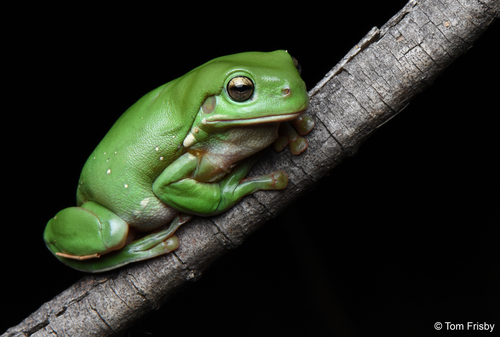
Ranoidea
The Ranoidea are a superfamily of frogs in the order Anura. Members of this superfamily are characterised by having the pectoral girdle fused into a single complex unit, having no ribs, and using an axillary grip during amplexus. The larvae have a single spiracle on the left side and complex mouthparts, or in some species, undergo direct development. The taxonomy of these families has been under heavy debate for many years. In recent studies, molecular data has been used to better identify the phylogentic relationships of these frogs, rearranging and introducing new subfamilies to better disti

Hyloidea
Hyloidea is a superfamily of frogs. Hyloidea accounts for 54% of all living anuran species. The superfamily Hyloidea branched off from its closest relative, the Australobatrachia, during the mid-Cretaceous. The fossil evidence found during the Cretaceous-Paleogene extinction event could not determine the effects upon the frogs, due to the lack of fossils. Increased forestation erupted after this extinction, possibly leading to more arboreal adaptations of these anurans to be best suited for this habitat.
Edopoidea
Edopoidea is a clade of primitive temnospondyl amphibians including the genus Edops and the family Cochleosauridae. Edopoids are known from the Late Carboniferous and Early Permian of North America and Europe, and the Late Permian of Africa. They are among the most basal temnospondyls, and possess a number of primitive features that were lost in later members of the group.
Dendrobatoidea
The Dendrobatoidea are a superfamily of frogs. This group is found in the Neotropics and has the largest diversity of alkaloids among all amphibians. These alkaloids show up in the skin by one of three ways: de novo biosynthesis, direct sequestration, or metabolic transformation.
Pelobatoidea
The Pelobatoidea are a superfamily of frogs. They typically combine a toad-like body shape with a frog-like, pointed face (hence the German name 'Krötenfrösche', literally 'toad frogs'). Phylogenetically they stand between primitive frogs (fire-bellied toads, midwife toads) on the one side and higher frogs (the family of true toads, tree frogs, and the family of true frogs) on the other and are therefore – among other things by characteristics of bone construction – in the suborder Mesobatrachia.
Metriorhynchoidea
Metriorhynchoidea is an extinct superfamily of thalattosuchian crocodyliforms from the Early Jurassic to the Early Cretaceous (Toarcian - Valanginian, possibly as late as early Aptian) of Europe, North America and South America. Metriorhynchids are fully aquatic crocodyliforms. Named by Fitzinger, in 1843, it contains the basal taxa like Teleidosaurus, Zoneait and Eoneustes and the family Metriorhynchidae. An unnamed taxon is known from Chile.
Baurioidea
Baurioidea is a superfamily of therocephalian therapsids. It includes advanced therocephalians such as Regisaurus and Bauria. The superfamily was named by South African paleontologist Robert Broom in 1911. Bauriamorpha, named by D. M. S. Watson and Alfred Romer in 1956, is a junior synonym of Baurioidea.
Dinichthyloidea
The Dinichthyloidea is an extinct superfamily of placoderms, armored fish most diverse during the Devonian. However, the term is no longer in use, as modern cladistical methods have produced alternative phylogenetic trees of Brachythoraci with new subdivisions.
Baphetoidea
Baphetoidea is a superfamily of stem-tetrapods. It includes the family Baphetidae and several more basal genera such as Eucritta and Spathicephalus (which has been given its own family Spathicephalidae). The superfamily has also been called Loxommatoidea, but this name is a junior synonym of Baphetoidea.