Category
page 1Veterinary diagnosis
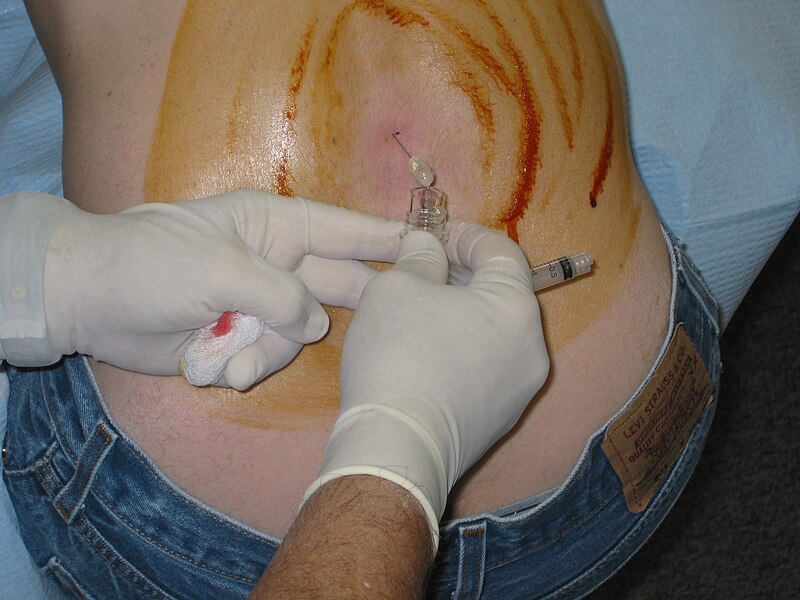
lumbar puncture
procedure to collect cerebrospinal fluid

auscultation
Auscultation (based on the Latin verb auscultare "to listen") is listening to the internal sounds of the body, usually using a stethoscope. Auscultation is performed for the purposes of examining the circulatory and respiratory systems (heart and breath sounds), as well as the alimentary canal.

bronchoscopy
Bronchoscopy is an endoscopic technique of visualizing the inside of the airways for diagnostic and therapeutic purposes. An instrument (bronchoscope) is inserted into the airways, usually through the nose or mouth, or occasionally through a tracheostomy. This allows the practitioner to examine the patient's airways for abnormalities such as foreign bodies, bleeding, tumors, or inflammation. Specimens may be taken from inside the lungs. The construction of bronchoscopes ranges from rigid metal tubes with attached lighting devices to flexible optical fiber instruments with realtime video equipm

arthroscopy
Arthroscopy (also called arthroscopic or keyhole surgery) is a minimally invasive surgical procedure on a joint in which an examination and sometimes treatment of damage is performed using an arthroscope, an endoscope that is inserted into the joint through a small incision. Arthroscopic procedures can be performed during ACL reconstruction.
Schirmer's test
decreased lacrimation indicates lesion proximal to the geniculate ganglion

thoracentesis
Thoracentesis , also known as thoracocentesis (), pleural tap, needle thoracostomy, or needle decompression (often used term), is an invasive medical procedure to remove fluid or air from the pleural space for diagnostic or therapeutic purposes. A cannula, or hollow needle, is carefully introduced into the thorax, generally after administration of local anesthesia. The procedure was first performed by Morrill Wyman in 1850 and then described by Henry Ingersoll Bowditch in 1852.
bronchial challenge test
medical test used to assist in the diagnosis of asthma
Ortolani test
part of the physical examination for developmental dysplasia of the hip
cannulated cow
Cow surgically fitted with a cannula

paracentesis
Paracentesis (from Greek κεντάω, "to pierce") is a form of body fluid sampling procedure, generally referring to peritoneocentesis (also called laparocentesis or abdominal paracentesis) in which the peritoneal cavity is punctured by a needle to sample peritoneal fluid.
fructosamine
Fructosamines are compounds that result from glycation reactions between glucose and a primary amine, followed by isomerization via the Amadori rearrangement. Biologically, fructosamines are recognized by fructosamine-3-kinase, which may trigger the degradation of advanced glycation end-products (though the true clinical significance of this pathway is unclear). Fructosamine can also refer to the specific compound 1-amino-1-deoxy-D-fructose (isoglucosamine), first synthesized by Nobel laureate Hermann Emil Fischer in 1886.