Category
page 1Veterinary helminthology

Fasciola hepatica
parasitic flatworm in mammal livers

filariasis
Filariasis is a filarial infection caused by parasitic nematodes (roundworms) spread by different vectors. They are included in the list of neglected tropical diseases.

Trichinella spiralis
species of worm

Dirofilaria immitis
species of worm

Echinococcus granulosus
species of worm
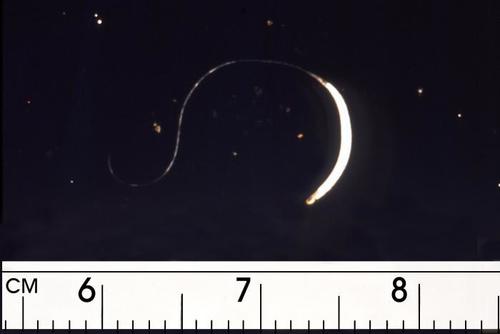
Trichuris trichiura
species of worm

fasciolosis
.jpg)
Trichinella
Trichinella is the genus of parasitic roundworms of the phylum Nematoda that cause trichinosis (also known as trichinellosis). Members of this genus are often called trichinella or trichina worms. A characteristic of Nematoda is the one-way digestive tract, with a pseudocoelom (body cavity made up of only an ectoderm and endoderm).

Toxocara canis
species of worm

Dicrocoelium dendriticum
parasite fluke

Haemonchus contortus
very common parasite of ruminants that attatch to the abomasal mucosa and feed on the blood

Toxocara cati
species of worm
Liver fluke
group of liver parasites

Fasciola gigantica
taxon in the invertebrate family Fasciolidae

Ascaris suum
species of worm

Fasciolidae
Fasciolidae is a family of trematodes and includes several parasites involved in the veterinary and medical sciences, which cause the disease Fasciolosis. Fasciolidae is divided into five genera by Olson et al. 2003. The family's various species are localised in liver, gall bladder, and intestine. Their life-cycle includes an intermediate host, freshwater snails from the family Lymnaeidae.

Syngamus trachea
A gapeworm (Syngamus trachea), also known as a red worm and forked worm, is a parasitic nematode worm that infects the tracheas of certain birds. The resulting disease, known as "gape", occurs when the worms clog and obstruct the airway. The worms are also known as "red worms" or "forked worms" due to their red color and the permanent procreative conjunction of males and females. Gapeworms are common in young, domesticated chickens and turkeys.

Fasciola
Fasciola, commonly known as the liver fluke, is a genus of parasitic trematodes. There are three species within the genus Fasciola: Fasciola nyanzae, Fasciola hepatica and Fasciola gigantica. Fasciola hepatica and F. gigantica are known to form hybrids. Both F. hepatica and F. gigantica and their hybrids infect the liver tissue of a wide variety of mammals, including humans, in a condition known as fascioliasis. F. hepatica measures up to 30 mm by 15 mm, while F. gigantica measures up to 75 mm by 15 mm. Fasciola nyanzae is thought to exclusively infect the common hippopotam

Toxascaris leonina
species of worm

Dirofilaria repens
species of worm

Metastrongylus
Metastrongylus is a genus of nematodes of the family Metastrongylidae, usually found as lungworms in pigs and sometimes causing parasitic bronchitis. It causes a disease called metastrongylosis.

Ascaridia galli
species of a parasitic roundworm

Dictyocaulus
Dictyocaulus is a genus of nematode parasites of the bronchial tree of horses, sheep, goats, deer, and cattle. Dictyocaulus arnfieldi is the lungworm of horses, and Dictyocaulus viviparus is the lungworm affecting ruminants.

Strongylidae
Strongyles (from Greek strongulos 'round'), or alternatively, strongyls, are nematode worms of the family Strongylidae, order Strongylida. They are often parasitic in the gastrointestinal tract of mammals, especially grazers such as sheep, cattle, and horses.
Parascaris equorum
species of worm
thelaziasis
Thelaziasis is the term for infestation with parasitic nematodes of the genus Thelazia. The adults of all Thelazia species discovered so far inhabit the eyes and associated tissues (such as eyelids, tear ducts, etc.) of various mammal and bird hosts, including humans. Thelazia nematodes are often referred to as "eyeworms".
Fascioloides magna
species of worm
Capillaria aerophila
species of worm
Thelazia callipaeda
species of worm
metastrongylosis
Metastrongylosis is a parasitic disease that affects wild boars and pigs which live outdoors. It is caused by various species of roundworms of the genus Metastrongylus. A handful of cases of metastrongylosis have been reported in humans.
Capillaria hepatica
species of worm

Trichuris vulpis
species of worm

Thelazia
Thelazia is a genus of nematode worms which parasitize the eyes and associated tissues of various bird and mammal hosts, including humans. They are often called "eyeworms", and infestation with Thelazia species is referred to as "thelaziasis" (occasionally spelled "thelaziosis"). Adults are usually found in the eyelids, tear glands, tear ducts, or the so-called "third eyelid" (nictitating membrane). Occasionally, they are found in the eyeball itself, either under the conjunctiva (the membrane that covers the white part of the eye) or in the vitreous cavity of the eyeball. All species of Thelaz

Dipylidium
thumb|250px|Dipylidium life cycle
Capillaria plica
species of worm
Muellerius capillaris
species of worm