Category
page 1Viperinae

Viperinae
Viperinae, or viperines, are a subfamily of vipers endemic to Europe, Asia and Africa. They are distinguished by their lack of the heat-sensing pit organs that characterize their sister group, the subfamily Crotalinae. Currently, 13 genera are recognized. Most are tropical and subtropical, although one species, Vipera berus, even occurs within the Arctic Circle. Like all vipers, they are venomous.
Echis carinatus
species of reptile

Echis
Echis (common names: saw-scaled vipers, carpet vipers) is a genus of vipers found in the dry regions of Africa, the Middle East, India, Sri Lanka and Pakistan. They have a characteristic threat display, rubbing sections of their body together to produce a "sizzling" warning sound. The name Echis is the Latin transliteration of the Greek word for "viper" (ἔχις). Like all vipers, they are venomous. Their common name is "saw-scaled vipers" and they include some of the species responsible for causing the most snakebite cases and deaths in the world. Twelve species are currently recognized.
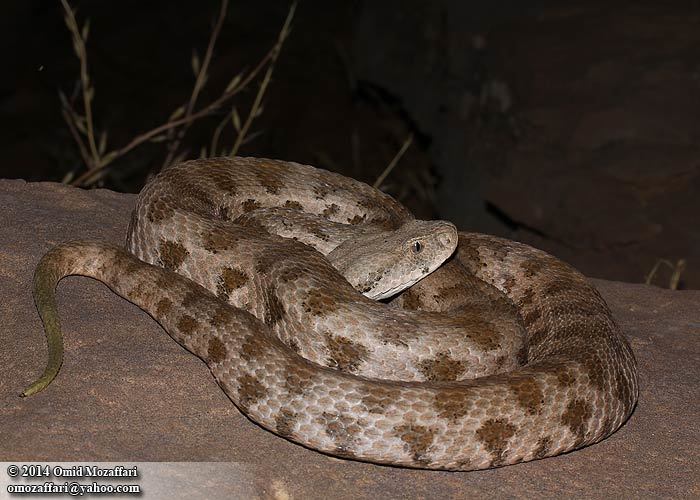
Macrovipera lebetina
species of reptile

Cerastes cerastes
species of reptile

Cerastes
genus of reptiles
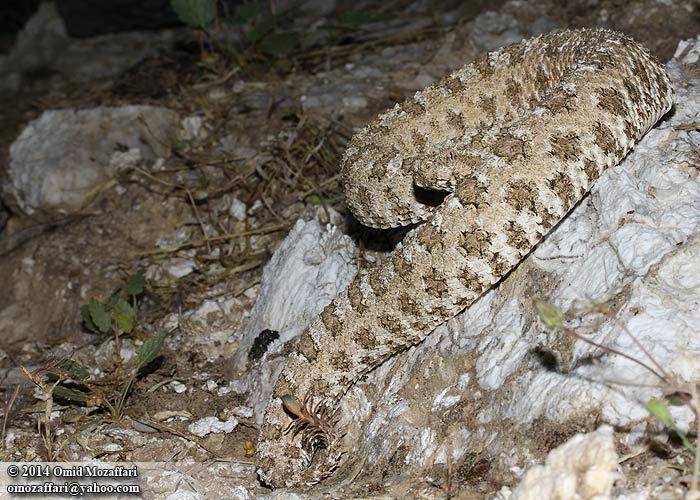
Pseudocerastes urarachnoides
species of reptile
Pseudocerastes
Pseudocerastes is a genus of vipers endemic to the Middle East and Asia. It was originally created as a monotypic genus in 1896 by Boulenger for the species Pseudocerastes persicus, but three species are now recognised: the spider-tailed horned viper (P. urarachnoides); Persian horned viper (P. persicus) and Field's horned viper (P. fieldi). Like all other vipers, the members of this genus are venomous.
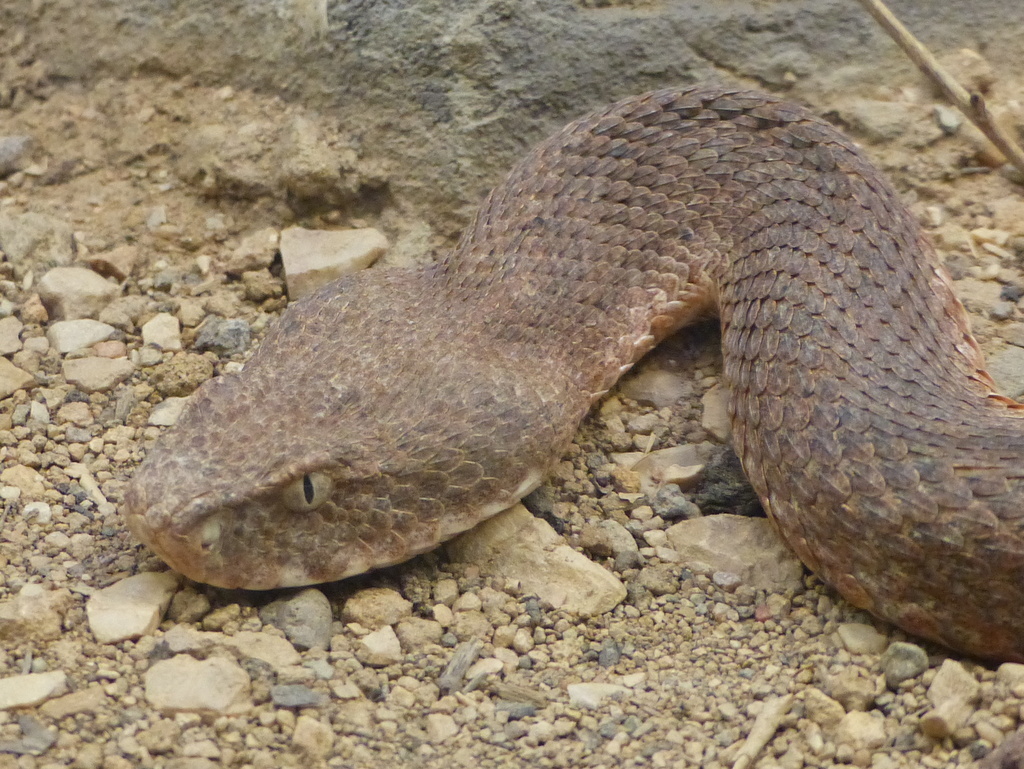
Macrovipera
Macrovipera, known as the large Palearctic vipers, is a genus of vipers that inhabit the semideserts and steppes of North Africa, the Near and Middle East, and the Milos Archipelago in the Aegean Sea. Like all other vipers, they are venomous. These snakes are responsible for a number of bites in Africa and Western Asia every year. They have a reputation for being ill-tempered and can inject a lot of venom, which is why they should be considered as very dangerous. Two species are currently recognized.

Cerastes vipera
species of reptile

Arabian horned viper
species of reptile
Macrovipera schweizeri
species of reptile

Echis pyramidum
species of reptile
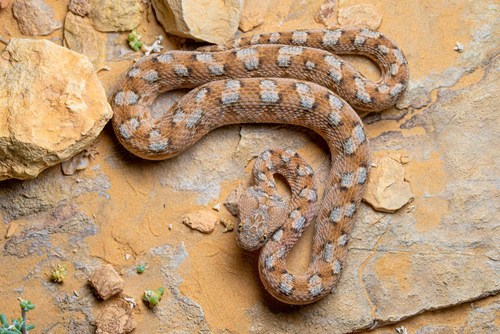
Echis coloratus
species of reptile

Pseudocerastes persicus
species of reptile

Proatheris superciliaris
species of snake

Pseudocerastes fieldi
species of reptile
Montatheris hindii
species of reptile

Echis leucogaster
species of reptile

Echis ocellatus
species of reptile
Echis hughesi
species of reptile

Echis jogeri
species of reptile
Echis megalocephalus
species of reptile
Oman saw-scaled viper
species of reptile
Bothrocophias myersi
species of reptile
Echis khosatzkii
species of reptile
Echis borkini
species of reptile
Eristicophis
Eristicophis is a monotypic genus created for the viper species, Eristicophis macmahonii, which is endemic to the desert region of Balochistan near the borders of Iran, Pakistan, and Afghanistan. Common names for the species include '''McMahon's viper, Asian sand viper, leaf-nosed viper, and whiskered viper'''. Like all other vipers, it is venomous. No subspecies are recognized as being valid.
Proatheris
Proatheris (commonly referred to as the lowland viper and swamp viper among other names) is a monotypic genus created for the viper species, Proatheris superciliaris. This is a small terrestrial species endemic to East Africa. Like all other vipers, it is venomous. No subspecies are currently recognized.
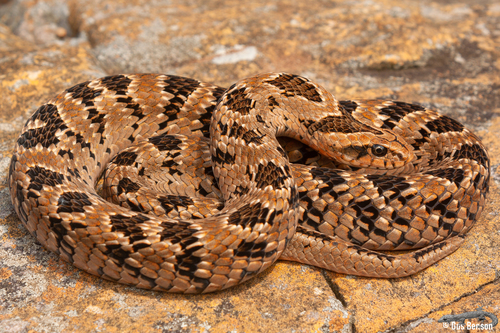
Causus
REDIRECT Causus
Montatheris
Montatheris is a monotypic genus created for the viper species, Montatheris hindii, a venomous snake also known by the common names Kenya mountain viper, Kenya montane viper, montane viper, and '''Hind's viper'''. This is a small terrestrial species endemic to Kenya. There are no subspecies which are recognized as being valid.