Category
page 1Vipers

viper
Vipers are snakes in the family Viperidae, found in most parts of the world, except for Antarctica, Australia, Hawaii, Madagascar, Ireland, and various other isolated islands. All vipers are venomous, and have long (relative to non-vipers), hinged fangs that permit deep envenomation of their prey. Three subfamilies are currently recognized. They are also known as viperids. The name "viper" is derived from the Latin word vipera, -ae, also meaning viper, possibly from vivus ("living") and parere ("to beget"), referring to the trait viviparity (giving live birth) common in vipers like most of the

Azemiops feae
species of reptile

Causus
Causus is a genus of vipers found only in sub-Saharan Africa. It is a group considered to be among the most primitive members of the family Viperidae based on head scalation, oviparity, venom apparatus, and because they have round pupils. However, this is contradicted by recent molecular studies. Seven species are currently recognized as being valid. They are commonly known as night adders. Like all other vipers, they are venomous.
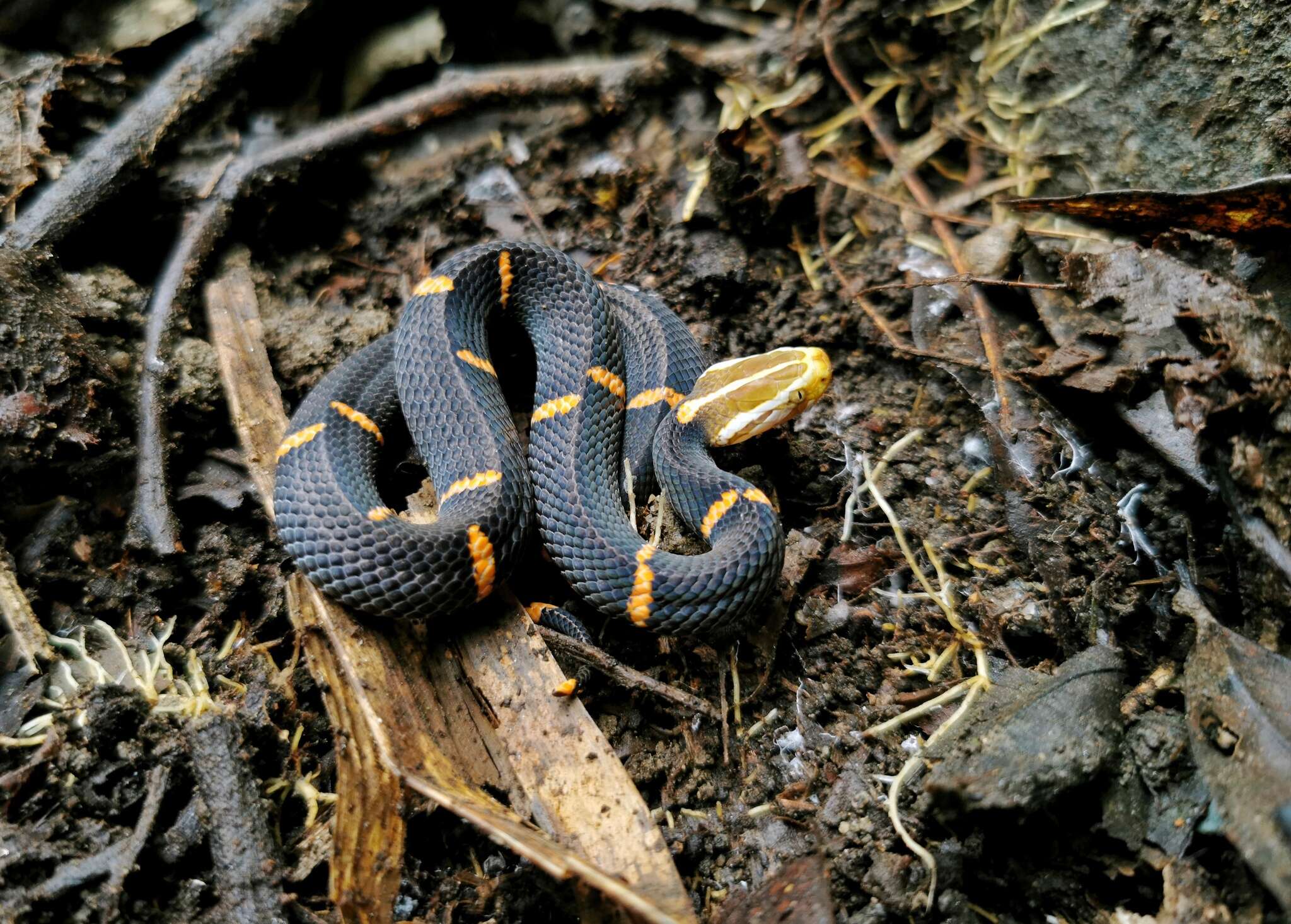
Azemiops
Azemiopinae is a monogeneric subfamily created for the genus Azemiops that contains the viper species A. feae and A. kharini. They are commonly known as '''Fea's vipers'''. No subspecies are recognized. The first specimen was collected by Italian explorer Leonardo Fea, and was described as a new genus and new species by Boulenger in 1888. Formerly considered to be one of the most primitive vipers, molecular studies have shown that it is the sister taxon to the pit vipers, Crotalinae. It is found in the mountains of Southeast Asia, in China, southeastern Tibet, and Vietnam. Like all other viper