Category
page 1Visibility

twilight
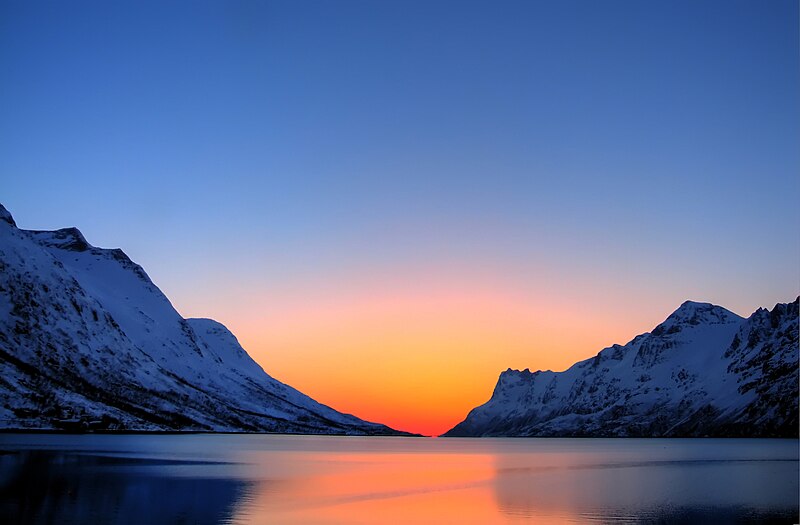
thumb|Twilight is the period between dawn and [[sunrise, and between sunset and dusk.]]
thumb|Morning twilight: astronomical, nautical, and civil stages at dawn. The apparent disk of the Sun is shown to scale.
thumb|Evening twilight: civil, nautical, and astronomical stages at dusk. The solar disk is shown to scale.

light pollution
anthropogenic light in the night environment, caused by excess or misdirected lighting
Rayleigh scattering
elastic scattering of light, or other electromagnetic radiation, by particles of size much smaller than the wavelength of the radiation

daylight
thumb|upright=1.2|World map showing the areas of Earth receiving daylight around 1:00 pm UTC in April

haze
thumb|Harmattan Haze in [[Abuja]]
thumb|right|Haze over the Mojave Desert from a [[brush fire in Santa Barbara, California, seen as the Sun descends on the 2016 June solstice, allows the Sun to be photographed without a filter.]]
thumb|Haze as smoke pollution over the Mojave from fires in the Inland Empire, June 2016, demonstrates the loss of contrast to the [[Sun, and the landscape in general.]]
blue hour
period of twilight in the morning or evening
Beer–Lambert law
physical law describing absorption of light
particulates
microscopic solid or liquid matter suspended in the Earth's atmosphere

visibility
In meteorology, visibility is the measure of the distance at which an object or light can be clearly discerned. It depends on the transparency of the surrounding air and as such, it is unchanging no matter the ambient light level or time of day. It is reported within surface weather observations and METAR code either in meters or statute miles, depending upon the country. Visibility affects all forms of traffic: roads, railways, sailing and aviation.

turbidity
thumb|Turbidity standards of 5, 50, and 500 NTU
optical depth
natural logarithm of the ratio of incident to transmitted radiant power through a material; the absorbance × ln(10)
Mie scattering
scattering of an electromagnetic plane wave by a homogeneous sphere, producing an infinite series of spherical multipole partial waves
diffuse sky radiation
Solar radiation scattered and absorbed in Earth's atmosphere
Battenburg markings
markings used on emergency vehicles
runway visual range
distance over which a pilot of an aircraft on the centreline of the runway can see the runway surface markings
satellite flare
visual phenomenon caused by a satellite reflecting sunlight onto the Earth
Arctic haze
Air pollution in the Arctic caused by sources further South
Angstrom exponent
name of the exponent in the formula that is usually used to describe the dependency of the aerosol optical thickness, or aerosol extinction coefficient on wavelength
list of most polluted cities in the world by air quality
Wikimedia list article
gloom
upright|thumb|Gloomy mudflats at Bo'ness in Scotland
Gloom is a low level of light which is so dim that there are physiological and psychological effects. Human vision at this level becomes monochrome and has lessened clarity.
Sillitoe tartan
black (or other) and white chequered pattern, associated with policing