Category
page 1Warfare by type
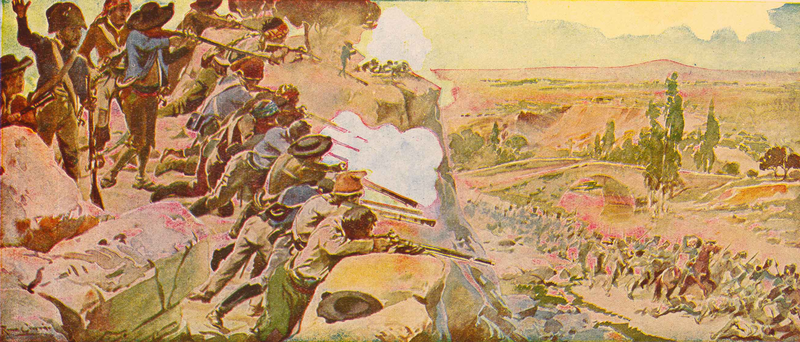
guerrilla warfare
form of irregular warfare

Blitzkrieg
thumb|upright=1.5|Tanks and [[mechanised infantry of the 24th Panzer Division advancing through Ukraine, June 1942, typifying fast-moving combined arms forces of classic blitzkrieg]]
.jpg)
cyberwarfare
thumb|Cyberwarfare specialists of the United States Army's 782nd Military Intelligence Battalion (Cyber) supporting the [[3rd Brigade Combat Team, 1st Cavalry Division during a training exercise in 2019]]

trench warfare
land warfare involving static fortification of lines

proxy war
conflict between two actors in which neither directly engages the other

total war
unrestricted warfare in which belligerents engage with all available resources and/or civilians and civil infrastructure are considered legitimate targets

psychological warfare
military information operations aimed at promoting behaviour to assist military objectives

special forces
military units trained to conduct special operations

electronic warfare
combat involving electronics and directed energy

hybrid warfare
type of war, warfare and a theory of military strategy
biological warfare
use of biological toxins or infectious agents with the intent to kill as an act of war
religious war
war primarily caused or justified by differences in religion
attrition warfare
military strategy of wearing down the enemy by continual losses in personnel and material

asymmetric warfare
war between belligerents whose relative military power differs significantly

amphibious warfare
type of offensive military operations
chemical warfare
type of warfare that involves using the toxic properties of chemical substances as weapons
anti-tank warfare
military operations and doctrine for defeating enemy tanks and armored forces
conventional warfare
war between two states in open confrontation
ground warfare
combat operations conducted primarily using ground-based forces and weapons
preventive war
war initiated to prevent another party from attacking
submarine warfare
naval warfare conducted by submarines
unconventional warfare
opposite of conventional warfare

counter-insurgency
thumb|right|275px|U.S. Marines and ANA soldiers on patrol during counterinsurgency operations in [[Marjah, Afghanistan, February 2010]]thumb|right|275px|Police question a civilian during the Malayan Emergency. Counterinsurgency involves action from both military and police authorities.
low-intensity conflict
use of military forces applied selectively and with restraint to enforce compliance with the policies or objectives of the political body controlling the military force
combined arms
military operations and doctrine utilizing different branches in combination
Radiological warfare
Form of warfare involving radiation poisoning
fourth-generation warfare
categorization of conflict
anti-aircraft warfare
combat operations and doctrine designed to nullify or reduce the effectiveness of hostile air action
political warfare
use of political means to compel an opponent with hostile intent
two-front war
specific manifestation of warfare
expeditionary warfare
deployment of a state's military to fight abroad, especially away from established bases
cold war
conflict not involving direct military action between the major actors
preemptive war
war that is initiated in an attempt to deal with an expected attack before that attack materializes
meeting engagement
combat action that occurs when a moving force, incompletely deployed for battle, engages an enemy at an unexpected time and place
jungle warfare
special techniques needed by soldiers to fight on jungle terrain

Unrestricted Warfare
1999 book on military strategy by Qiao Liang and Wang Xiangsui
Visha Kanya
The Vishakanya ( ) were young women reportedly used as assassins, often against powerful enemies, in Ancient India. Their blood and bodily fluids were purportedly poisonous to other humans, as was mentioned in the ancient Indian treatise on statecraft, Arthashastra, written by Chanakya, an adviser and a prime minister to the first Maurya Emperor Chandragupta (c. 340–293 BC).
war of annihilation
type of war in which the goal is the complete annihilation of a state, a people or an ethnic minority
weather warfare
use of weather modification techniques such as cloud seeding for military purposes
irregular warfare
warfare in which one or more combatants are irregular military rather than regular forces
generations of warfare
theory in the history of war
defensive war
type of war justification
undeclared war
military conflict between two or more nations without either side issuing a formal declaration of war
endemic warfare
state of continual or frequent warfare
violent extremism
beliefs and actions of people who support or use ideologically motivated violence to achieve radical ideological, religious or political views
petty warfare
composed of lesser actions in war
new generation warfare
Russian psychosocial military approach