Category
page 1Weimar culture

Weimar Republic
Germany in the years 1918/1919–1933

Bauhaus

Frankfurt School
school of neo-Marxist interdisciplinary social theory
New Objectivity
attitude of public life in Weimar Germany as well as the art, literature, music, and architecture created to adapt to it

Bruno Taut
German architect (1880–1938)

Erich Mühsam
German-Jewish anarchist writer (1878–1934)

John Heartfield
German artist (1891–1968)
German Expressionism
cultural movement
Conservative Revolution
German national conservative movement during the Weimar Republic (1918-1933)

Berlin Alexanderplatz
novel by Alfred Döblin

Simplicissimus
Simplicissimus () was a German weekly satirical magazine, founded by Albert Langen in April 1896 and headquartered in Munich. It was interrupted by a hiatus from 1944–1954, became a biweekly in 1964, and ceased publication in 1967. Simplicissimus took its name from the protagonist of Hans Jakob Christoffel von Grimmelshausen's 1668 novel Der Abenteuerliche Simplicissimus Teutsch, which is regarded as the first adventure novel in the German language and the first German novel masterpiece.
Der Sturm
periodical literature
November Group
1918 German political group of artists
Verein für Raumschiffahrt
German amateur rocket association existing from 1927 to 1934, prior to World War II
University of Frankfurt Institute for Social Research
research institute in Frankfurt, Germany
New Objectivity
architecture movement in (mainly German-speaking) Europe
Paul Kornfeld
playwright (1889–1942)
Max Karl Tilke
German ethnographer (1869–1942)
Berlin Circle
former group of philosophers and scientists
Transvestite certificate
medical certificate, previously issued in Germany allowing for the wearing of garments not typical to their sex
Weimar culture
emergence of art and science in the Weimar Republic
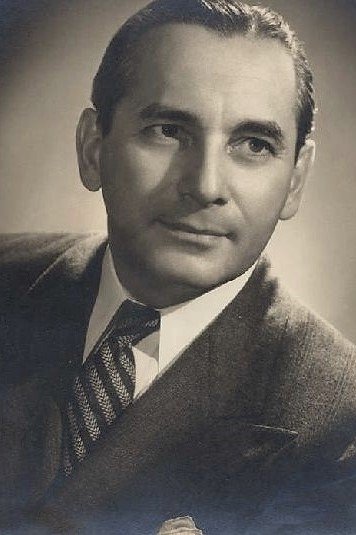
Leo Monosson
German singer (1897–1967)
Union of Poles in Germany
voluntary association
Mezhrabpom-Film
thumb|250px|The first Soviet sound film, Road to Life (1931 film)|Road to Life (1931), was made by Mezhrabpomfilm.
Mezhrabpomfilm (), from the word film, and the Russian acronym for Workers International Relief or Workers International Aid (, was a German-Russian film studio, formerly Mezhrabpom-Rus, from 1928-1936. Currently “Gorky Film Studio”
Terra Film
German film production company
Metropolis
triptych by Otto Dix in the Kunstmuseum Stuttgart
Franz Hillinger
German architect
Berge Meere und Giganten
1924 novel by Alfred Döblin