Category
page 1Wind

wind
thumb|upright=1.35|Cherry tree moving with the wind blowing about 22 m/sec (about 79 km/h or 49 mph)
thumb|Sound of wind blowing in a pine forest at around 25 m/sec, with Wind gust|gust alterations
Wind is the natural movement of air or other gases relative to a planet's surface. Winds occur on a range of scales, from thunderstorm flows lasting tens of minutes, to local breezes generated by heating of land surfaces and lasting a few hours, to global winds resulting from the difference in absorption of solar energy between the climate zones on Earth. The study of wind is called anemology.

tornado
A tornado, also known as a twister, is a rapidly rotating column of air that extends vertically from the surface of the Earth to the base of a cumulonimbus or cumulus cloud. Tornadoes are often (but not always) visible in the form of a condensation funnel originating from the cloud base, with a cloud of rotating debris and dust close to the ground. Most tornadoes have wind speeds less than , are about across, and travel several kilometers (a few miles) before dissipating. The most extreme tornadoes can attain wind speeds of more than , can be more than in diameter, and can stay on the ground f

monsoon
thumb|upright=1.2|Advancing monsoon clouds and showers in Aralvaimozhy, near Nagercoil, [[Tamil Nadu, India]]
thumb|upright=1.2|Monsoon clouds arriving at Port Blair, Andaman, India
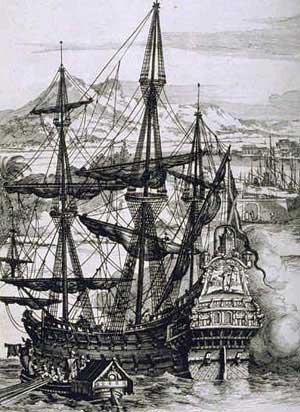
trade wind
permanent east-to-west prevailing winds that flow in the Earth's equatorial region

Beaufort Scale
empirical measure describing wind speed based on observed conditions

sea breeze
wind blowing from sea to land

foehn wind
a warm, dry, downslope wind descending the lee side of the Alps as a result of synoptic-scale, cross-barrier flow over the mountain range

weather vane
meteorological instrumentation used for showing the direction of the wind

jet stream
fast-flowing atmospheric air-current

Saffir–Simpson hurricane wind scale
System of classifying tropical cyclones into five categories based on measured wind speed and used to estimate potential damage
dust devil
meteorological phenomenon
Fujita scale
scale for rating tornado intensity
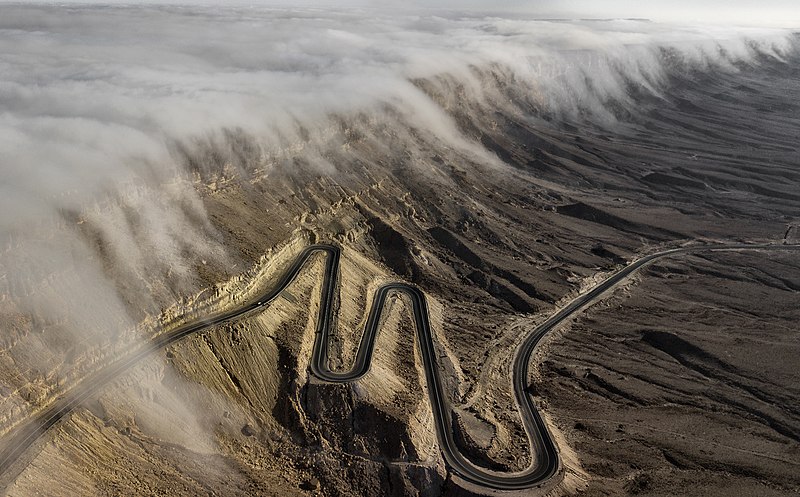
katabatic wind
wind that carries high density air down a slope

windcatcher
thumb |An ab anbar (water reservoir) with windcatchers (openings near the top of the towers) in the central desert city of [[Yazd, Iran]]
thumb |Aghazadeh Mansion in Abarkooh, [[Iran, has an elaborate 18-m windtower with two levels of openings, plus some smaller windtowers.]]
wind shear
difference in wind speed or direction over a short distance

westerlies
right|thumb|400px|The westerlies (blue) and trade winds (yellow and brown)
thumb|397x397px|The general atmospheric circulation. Trade winds (red), westerlies (white) and the South Pacific High|South Pacific anticyclone (blue)

anemophily
Anemophily or wind pollination is a form of pollination whereby pollen is distributed by wind. Almost all gymnosperms are anemophilous, as are many plants in the order Poales, including grasses, sedges, and rushes. Other common anemophilous plants are oaks, pecans, pistachios, sweet chestnuts, alders, hops, and members of the family Juglandaceae (hickory or walnut family). Approximately 12% of plants across the globe are pollinated by anemophily, including cereal crops like rice and corn and other prominent crop plants like wheat, rye, barley, and oats. In addition, many pines, spruces, and fi
wind speed
measure

downburst
thumb|right|A downburst seen in Phoenix, Arizona.
325px|thumb|Illustration of a microburst at an airport. The air moves in a downward motion until it hits the surface. It then spreads outward in all directions. The wind regime in a microburst is opposite to that of a tornado.
squall
thumb|A video recorded nearing the end of a squall, caused by a dry microburst (strong downdraft); after this video was shot, it started raining.
A squall is a sudden, sharp increase in wind speed lasting minutes, as opposed to a wind gust, which lasts for only seconds. They are usually associated with active weather, such as rain showers, thunderstorms, or heavy snow. Squalls refer to the increase of the sustained winds over that time interval, as there may be higher gusts during a squall event. They usually occur in a region of strong sinking air or cooling in the mid-atmosphere. These force
wind direction
geographic direction from which a wind blows
fire whirl
whirlwind induced by a fire and often partially composed of flame or ash
Anabatic wind
wind which blows up a steep slope or mountain side
wind rose
graphic tool used by meteorologists to give a succinct view of how wind speed and direction are typically distributed at a particular location

gale
thumb|After a Gale – Wreckers by James Hamilton (1819-1878)|James Hamilton
thumb|Gale warning flag
Enhanced Fujita Scale
Scale for assessing the intensity of tornadoes used in North America

hodograph
A hodograph is a diagram that gives a vectorial visual representation of the movement of a body or a fluid. It is the locus of one end of a variable vector, with the other end fixed. The position of any plotted data on such a diagram is proportional to the velocity of the moving particle. It is also called a velocity diagram. It appears to have been used by James Bradley, but its practical development is mainly from Sir William Rowan Hamilton, who published an account of it in the Proceedings of the Royal Irish Academy in 1846.
windward and leeward
position relative to wind direction
clear-air turbulence
turbulence without visual cues

windthrow
thumb|Windsnap in the Bavarian Forest National Park
thumb|An old dried out windthrow. Ystad.
thumb|right|A large-scale event in the Sangre de Cristo Mountains.
thumb|Juniperus virginiana var. silicicola windsnapped by [[Hurricane Irma.]]
thumb|Young Picea abies|spruce group marginal windthrow area twelve years after Kyrill
thumb|Video of windthrow in Tammneeme, Estonia
prevailing winds
surface wind that blows predominantly from a particular direction
mountain breeze and valley breeze
term
tropical cyclone scale
scales of the intensity of tropical cyclones
derecho
thumb|right|Timelapse video of a derecho approaching and eventually passing over an airport in South Dakota, United States
A derecho (, from , 'straight') is a widespread, long-lived, straight-line wind storm that is associated with a fast-moving complex of severe thunderstorms referred to as a mesoscale convective system.
wind gust
brief increase in the speed of the wind
TORRO scale
Scale for rating tornado intensity
microburst
REDIRECT Downburst
outflow boundary
in atmospheric science, boundary separating thunderstorm-cooled air from the surrounding air
wind engineering
wide ranging subject concerning the effects of wind on the natural and built environment
maximum sustained wind
intensity indicator of tropical cyclone
Alpine föhn
regional wind
Williwaw
In meteorology, a williwaw (archaic spelling williwau) is a sudden blast of wind descending from a mountainous coast to the sea. The word is of unknown origin, but was earliest used by British seamen in the 19th century. The usage appears for winds found in the Strait of Magellan, the Aleutian Islands, and the coastal fjords of the Alaskan Panhandle, where the terms outflow wind and squamish wind are also used for the same phenomenon. On Greenland the word piteraq is used.
heat burst
atmospheric phenomenon
Steam devil
a type of vortex similar to a dust devil
wind assistance
presence of favorable wind speed during a track event
Chergui
wind
sting jet
meteorological phenomenon
International Fujita scale
Tornado rating system
Dutch Headwind Cycling Championships
Dutch cycling time trial Championships, held by storm
wind gradient
vertical component of the spatial gradient of the mean horizontal wind speed