Category
page 1Wind gods

Amun
Amun was a major ancient Egyptian deity who appears as a member of the Hermopolitan Ogdoad. Amun was attested from the Old Kingdom together with his wife Amunet. His oracle in Siwa Oasis, located in Western Egypt near the Libyan Desert, remained the only oracle of Amun throughout. With the 11th Dynasty ( BC), Amun rose to the position of patron deity of Thebes by replacing Montu.

Quetzalcoatl
Quetzalcoatl () (Nahuatl: "Feathered Serpent") is a deity in Aztec culture and literature. Among the Aztecs, he was related to wind, Venus, Sun, merchants, arts, crafts, knowledge, and learning. He was also the patron god of the Aztec priesthood. He is also a god of wisdom, learning and intelligence. He was one of several important gods in the Aztec pantheon, along with the gods Tlaloc, Tezcatlipoca and Huitzilopochtli. The two other gods represented by the planet Venus are Tlaloc (ally and the god of rain) and Xolotl (psychopomp and its twin).
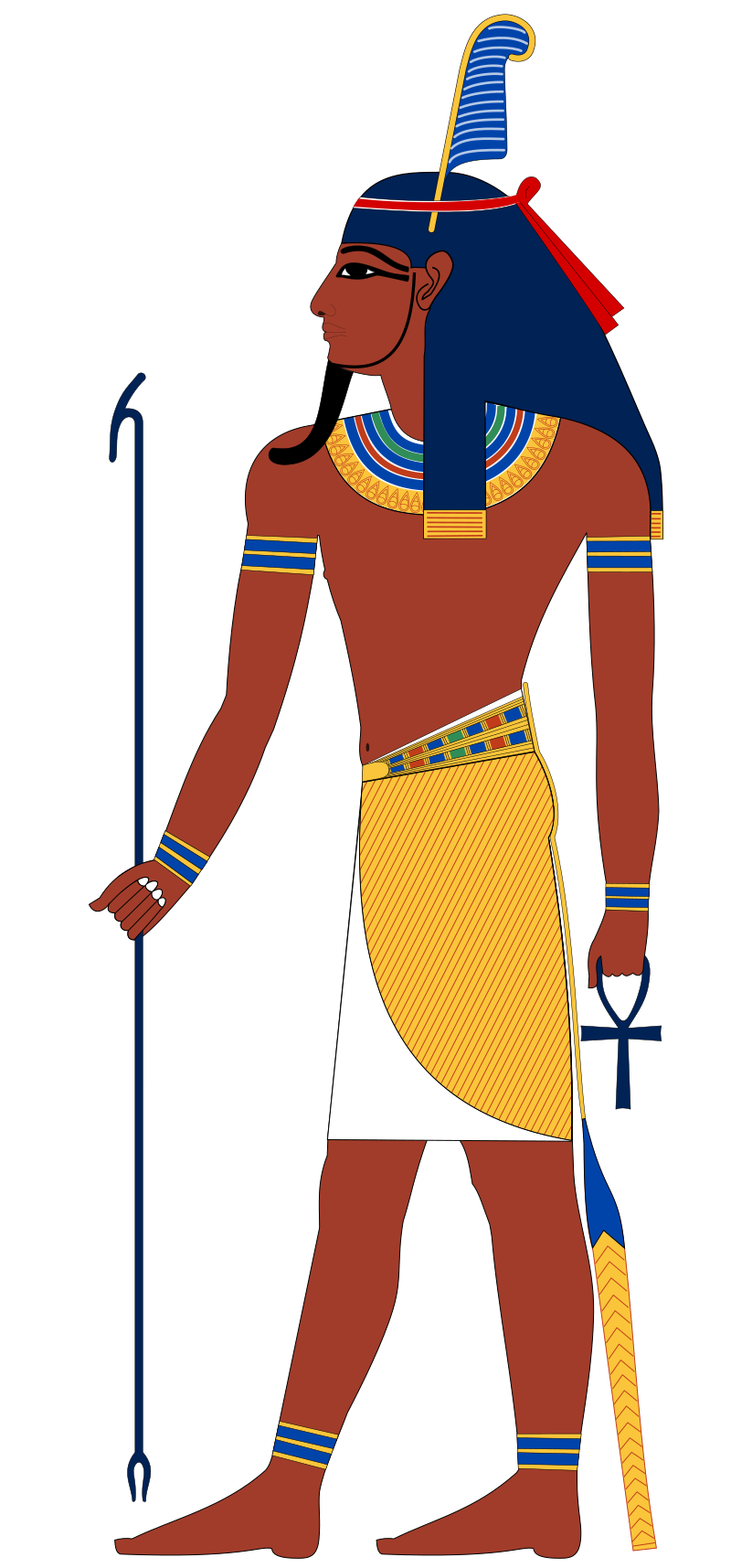
Shu
primordial Egyptian god, a personification of dry air, spouse and counterpart to goddess Tefnut

Enlil
Enlil (Sumerian: dEN-LÍL), later known as Elil and Ellil, is an ancient Mesopotamian god associated with wind, air, earth, and storms. He is first attested as the chief deity of the Sumerian pantheon, but he was later worshipped by the Akkadians, Babylonians, Assyrians, and Hurrians. Enlil's primary center of worship was the Ekur temple in the city of Nippur, which was believed to have been built by Enlil himself and was regarded as the "mooring-rope" of heaven and earth. He is also sometimes referred to in Sumerian texts as Nunamnir. According to one Sumerian hymn, Enlil himself was so holy t

Vayu
Vayu (; ), also known as Vata () and Pavana (), is the Hindu god of the winds as well as the divine messenger of the gods. In the Vedic scriptures, Vayu is an important deity and is closely associated with Indra, the king of gods. He is mentioned to be born from the breath of Supreme Being Vishvapurusha and also the first one to drink Soma. The Upanishads praise him as Prana or 'life breath of the world'. In the later Hindu scriptures, he is described as a dikpala (one of the guardians of the direction), who looks over the north-west direction. The Hindu epics describe him as the father of the

Aeolus
god of winds, son of Hippotes in Greek mythology

Rudra
Rudra (, ) is a Rigvedic deity associated with Shiva, the wind or storms, Vayu, medicine, and the hunt. One translation of the name is 'the roarer'. In the Rigveda, Rudra is praised as the "mightiest of the mighty". Rudra means "who eradicates problems from their roots". Depending upon the period, the name Rudra can be interpreted as 'the most severe roarer/howler' or 'the most frightening one'. This name appears in the Shiva Sahasranama, and R. K. Sharma notes that it is often used as a name of Shiva in later languages. The "Shri Rudram" hymn from the Yajurveda is dedicated to Rudra and is im

Anemoi
thumb|Wind rose of ancient Greece, created by the scholar [[Adamantios Korais around 1796]]

Tezcatlipoca
thumb|The jaguar was an animal sacred to Tezcatlipoca.|link=File:Standing_jaguar.jpg
thumb|Mirrors in Mesoamerican culture#Aztecs|Aztec obsidian mirror

Pazuzu
thumb|This Assyrian bronze statuette of Pazuzu is in height, from the early 1st millennium BC, held at the Louvre Museum.

Kukulkan
thumb|Kukulkan at the base of the west face of the northern stairway of El Castillo, Chichen Itza
thumb|Kukulkan at Chichen Itza during the Equinox.
upright|thumb|The Classic Maya vision serpent, as depicted at Yaxchilan.
Kukulkan, also spelled K’uk’ulkan (; "Plumed Serpent", "Amazing Serpent"), is the serpent deity of Maya mythology. It is closely related to the deity Qʼuqʼumatz of the Kʼicheʼ people and to Quetzalcoatl of Aztec mythology. Prominent temples to Kukulkan are found at archaeological sites in the Yucatán Peninsula, such as Chichen Itza, Uxmal and Mayapan.

Leshy
Leshy or Leshi is a tutelary deity of the forest in pagan Slavic mythology. As Leshy rules over the forest and hunting, he may be related to the Slavic god Porewit.
.jpg)
Stribog
Stribog is a god in Slavic mythology found in three East Slavic sources, whose cult may also have existed in Poland. The sources do not inform about the functions of the god, but nowadays he is most often interpreted as a wind deity who distributes wealth.''''

Ehecatl
thumb|Statue of Ehecatl-Quetzalcoatl, in the Brooklyn Museum (New York City)
Ehecatl ( , ) is a pre-Columbian deity associated with the wind, who features in Aztec mythology and the mythologies of other cultures from the central Mexico region of Mesoamerica. He is most usually interpreted as the aspect of the Feathered Serpent deity (Quetzalcoatl in Aztec and other Nahua cultures) as a god of wind, and is therefore also known as Ehecatl-Quetzalcoatl. Ehecatl also figures prominently as one of the creator gods and culture heroes in the mythical creation accounts documented for pre-Columbian cen
Hræsvelgr
Hræsvelgr (Old Norse)is a jötunn in Norse mythology. He is portrayed as the eagle-shaped originator of the wind.

Tāwhirimātea
right|300px|thumb|The clouds are children of Tāwhirimātea
In Māori mythology, Tāwhirimātea (or Tāwhiri) is the god of weather, including thunder and lightning, wind, clouds and storms. He is a son of Papatūānuku (earth mother) and Ranginui (sky father). Tāwhirimātea is the second oldest of 70 children, all of whom are boys. In his anger at his brothers for separating their parents, Tāwhirimātea destroyed the forests of Tāne (god of forests), drove Tangaroa (god of the sea) and his progeny into the sea, pursued Rongo and Haumia-tiketike till they had to take refuge in the bosom of their mother
Takeminakata
Takeminakata (タケミナカタ), also known as Minakatatomi or Takeminakatatomi, is a kami in Japanese mythology. Also known as or after Suwa Grand Shrine (Suwa Taisha) in Nagano Prefecture in which he is enshrined alongside his consort Yasakatome, Takeminakata is historically worshiped as a god of wind, water and agriculture, as well as a patron of hunting and warfare, in which capacity he enjoyed a particularly fervent cult from various samurai clans during the medieval period such as the Hōjō or the Takeda. Takeminakata was also held to be the mythical ancestor of certain families who once served at
Feng Bo
Taoist deity of the wind
Shenlong
Shenlong (, literally "god dragon" or "divine dragon", Japanese: 神龍 Shinryū) is the spirit dragon from Chinese mythology who is the dragon god of the tempest and also a master of rain. He is of equal significance to other creatures such as Tianlong the celestial dragon, Zhulong the dragon of eruption, Qinglong the azure dragon, and Yinglong the responsive dragon.
Weshparkar
Weshparkar, or Veshparkar, was the Sogdian god of the Atmosphere and the Wind. He corresponds to the Avestan god Vayu. In Central Asia, Weshparkar has also been associated to the Indian god Shiva.
Loiyalakpa
Loyalakpa is a God in Sanamahism, the indigenous religion of Manipur. He is best known for wrestling with Khoriphaba during the Lai Haraoba festival. He is the consort of goddess Thoudu Nungthel Leima. He is one of the ten kingly gods (or ten divine kings) in Meitei religion.
Pakaa
In Hawaiian mythology, Pakaʻa is the god of the wind and the inventor of the sail.
Negafook
thumb|Negafook (negeqvaruaq in Central Alaskan Yup'ik language|Central Yup'ik) depicted in a [[Yup'ik mask]]