Category
page 1Windows

glass
thumb|300px|A glass building facade|alt=Refer to caption

window
A window is an opening in a wall, door, roof, or vehicle that allows the exchange of light and may also allow the passage of sound and sometimes air. Modern windows are usually glazed, or covered in some other transparent or translucent material, a sash set in a frame in the opening. The sash and frame are also referred to as a window. Many glazed windows may be opened, to allow ventilation, or closed to exclude inclement weather. Windows may have a latch or similar mechanism to lock the window shut or to hold it open by various amounts.

curtain
thumb|upright=1.35|Typical curtains for a window
thumb|upright=1.35|Theatre curtains on a small stage (Canberra Albert Hall, 2016)
A curtain is a piece of cloth or other material intended to block or obscure light, air drafts, or (in the case of a shower curtain) water.
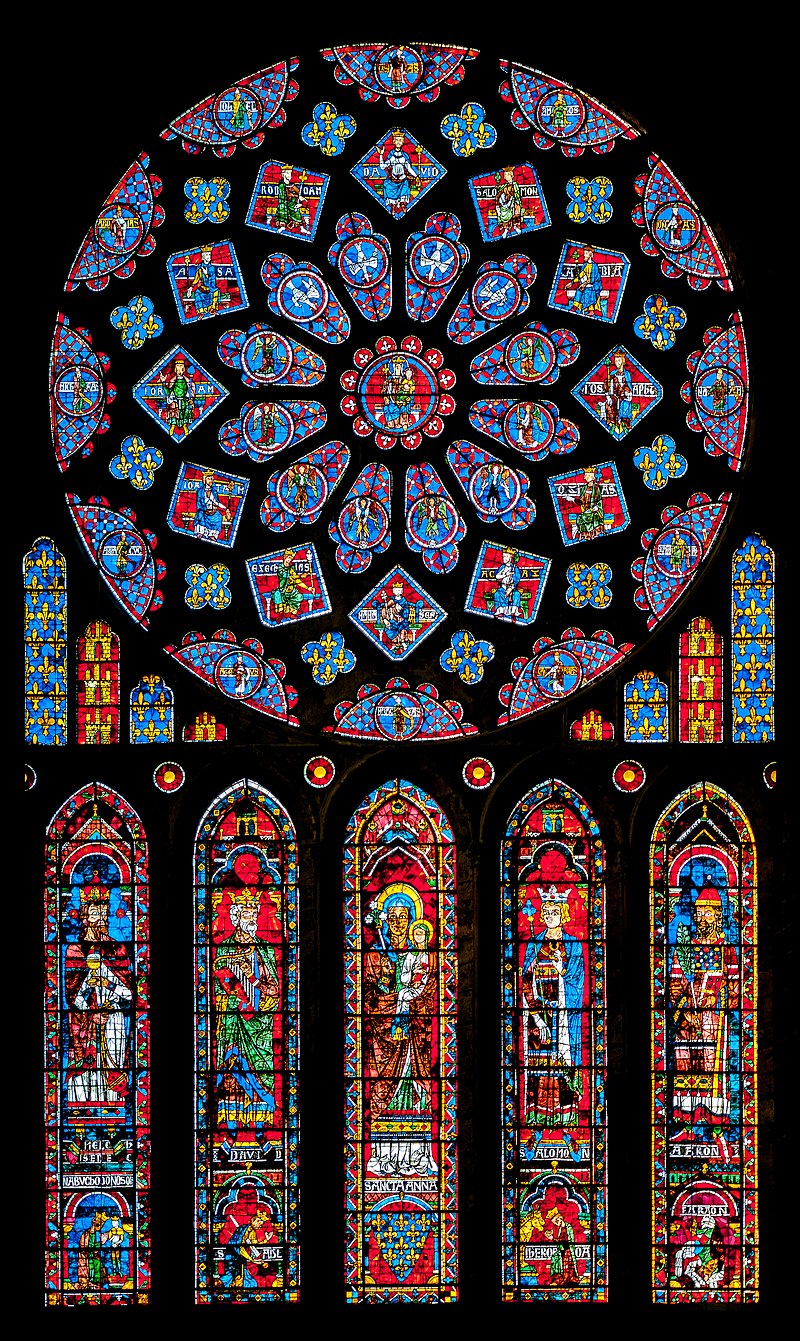
stained glass
colored glass used as an art material

rose window
circular window

muscovite

window blind
type of window covering

dormer
thumb|upright=1.2|Dormer window of the Building of Préfecture de police de Paris (île de la Cité)
thumb|upright=1.2|Gable dormers at Hospices de Beaune in Beaune, France
thumb|upright=1.2|Pair of hip roof dormer windows on the Howard Memorial Hall, [[Letchworth]]

embrasure
thumb|Embrasure with three angles of fire, Keoti Fort, India
thumb|upright|A loophole or inverted keyhole embrasure, allowing both arrow fire (through the arrowslit at the top) and small cannon fire through the circular openings, [[Fort-la-Latte, France]]
thumb|Embrasure of Chinese wall
thumb|Embrasures at Fortifications of Mdina|Mdina, [[Malta]]
thumb|upright|Embrasure at Atalaya Castle (Spain)|Atalaya Castle, Spain
oriel window
bay window which protrudes from the main wall of a building but does not reach to the ground

defenestration
thumb|right|upright=1.35|Matthäus Merian's impression of the 1618 Defenestration of Prague
display window
window in a shop displaying items for sale
shutter
window screen formed by either a solid panel or a louvered scheme
oculus
circular opening in the center of a dome or in a wall
broken windows theory
criminological theory
bay
space defined by the vertical piers, in a building

clerestory
thumb|upright|Interior elevation of a Gothic cathedral, with clerestory highlighted
thumb|The church of St. Nicholas' Church (Stralsund)|St Nicholas, Stralsund in Germany – the clerestory is the level between the two green roofs, reinforced here by [[flying buttresses]]

porthole
thumb|right|Jewish refugees look out through a porthole of a ship while docked in the port of Haifa, 1950–1959
.png)
window sill
thumb|class=skin-invert-image|
thumb|Books placed on an interior window sill or stool
roof lantern
architectural element

tracery
Tracery is an architectural device by which windows (or screens, panels, and vaults) are divided into sections of various proportions by stone bars or ribs of moulding. Most commonly, it refers to the stonework elements that support the glass in a window. The purpose of the device is practical as well as decorative, because the increasingly large windows of Gothic buildings needed maximum support against the wind. The term probably derives from the tracing floors on which the complex patterns of windows were laid out in late Gothic architecture. Tracery can be found on the exterior of building
insulated glazing
construction element consisting of at least two glass plates for windows and other glazing

shōji
thumb|upright=1.35|Shoji paper sliding doors in the Rinshunkaku at Sankei-en (Important Cultural Property)
thumb|upright=1.35|Shoji doors next to the tokonoma alcove, Rinshunkaku
thumb|upright=1.35| alt=View along wood-floored engawa towards a corner showing shoji edge-on and, on the far side of the corner, from the inside, with light shining through.|A tatami room surrounded by paper shoji (paper outside, lattice inside). The shoji are surrounded by an engawa (porch/corridor); the engawa is surrounded by [[garasu-do, all-glass sliding panels.]]
.jpg)
skylight
thumb|Skylight in the rotunda of Centro Cultural Banco do Brasil in [[Rio de Janeiro]]
thumb|Oculus (architecture)|Oculus of the [[Pantheon, Rome, an open skylight]]
thumb|Skylight in the vault in the Chapel of the Constable of the Burgos Cathedral, a glazed closed skylight from the 15th century
bifora
type of window
parable of the broken window
parable by French economist Frédéric Bastiat
window tax
property tax based on the number of windows in a house
roller shutter
type of door or window shutter consisting of many horizontal slats hinged together

Mashrabiya
thumb|300px|A mashrabiya in Tunisia
bay window
window space projecting outward from the main walls of a building and forming a bay in a room
.png)
louver
thumb|250px|right|Type of louver in concept
thumb|250px|right|Louver used in a Stevenson screen
thumb|Louver shutters in Italy
thumb|250px|right|Louvered cupola bell house

noren
thumb|Traditional fabric shop in Nara, Nara|Nara with in front of the entrance
light tube
architectural element that transmits light for the purpose of illumination
oeil-de-boeuf window
REDIRECT Oculus (architecture)#Oeil-de-boeuf

mullion
thumb|upright|A mullioned window in the church of San Francesco (Lodi)|San Francesco of [[Lodi, Lombardy]]
A mullion is the vertical element that forms a division between units of a window or screen, or is used decoratively. When dividing adjacent window units its primary purpose is a rigid support to the glazing of the window. Its secondary purpose is to provide structural support to the horizontal lintel above the window opening (Horizontal elements separating the head of a door from a window above are called transoms). In the case of multiple arched windows combined building a bifora (or tr

Rayonnant
Rayonnant was a very refined style of Gothic Architecture which appeared in France in the 13th century. It was the defining style of the High Gothic period, and is often described as the high point of French Gothic architecture.
French architects turned their attention from building cathedrals of greater size and height towards bringing greater light into the cathedral interiors and adding more extensive decoration. The architects made the vertical columns and supports thinner, made extensive use of pinnacles and moldings. They combined the triforium gallery and the clerestory into single spa

glazier
A glazier is a tradesperson responsible for cutting, installing, and removing glass (and materials used as substitutes for glass, such as some plastics). They also refer to blueprints to figure out the size, shape, and location of the glass in the building. They may have to consider the type and size of scaffolding they need to stand on to fit and install the glass. Glaziers may work with glass in various surfaces and settings, such as cutting and installing windows, doors, shower doors, skylights, storefronts, display cases, mirrors, facades, interior walls, ceilings, and tabletops.

chambranle
thumb|upright|Chambranle (Moravec (Žďár nad Sázavou District)|Moravec, [[Czech Republic)]]

Trifora
thumb|upright|A trifora over Porta della carta, Doge's Palace, Venice
Trifora is a type of three-light window. The trifora usually appears in towers and belfries—on the top floors, where it is necessary to lighten the structure with wider openings.
window film
thin laminate film installed on glass surfaces
daylighting
practice of using daylight in building by windows or other openings

Monofora
thumb|right|250px|Casa dos Patudos
Monofora is a type of the single-light window, usually narrow, crowned by an arch, and decorated by small columns or pilasters.
lancet window
very narrow pointed window
window screen
cover for the opening of a window
clear view screen
spinning window to disperse rain/spray/snow
sash window
window including one or more movable panels, or "sashes"

windowpane oyster
species of mollusc
roof window
outward opening window that is incorporated as part of the design of a roof

hagioscope
thumb|Squint in wall of north aisle chapel, St Nicholas's Church, Walcot, Lincolnshire|Walcot, Lincolnshire, looking towards south-east, with a view of the high altar in the chancel beyond. To its right is a [[piscina supported by a carving of a man's head on the jamb of the wall.]]
thumb|The squint at the Church of the Blessed Virgin Mary, Compton Pauncefoot, Somerset

Quadrifora
thumb|right|250px|Convent/nunnery of the Kalocsa School sisters named after Our Lady, Hungary. Built in 1860.
Quadrifora is a type of four-light window. It appears in towers and belfries on top floors, where it is necessary to lighten the structure with wider openings. The quadrifora can also be a group closely set windows.

witch window
window rotated 45° from vertical, found primarily on 19th century famhouses in Vermont, US

jalousie window
window composed of parallel glass, acrylic, or wooden louvres set in a frame

espagnolette
right|thumb|Espagnolette locking device An espagnolette is a locking device, normally mounted on the vertical frame of a French door or casement window. A handle or knob is connected to a metal rod mounted to the surface of the frame, about a metre above the floor. Operating the handle rotates the rod, which has hooks at each end that fit into sockets at the head and sill of the opening. This type of lock is often used on semi-trailer trucks with dry van and reefer semi-trailers to fasten the rear doors as well as in intermodal containers. It can be identified by the use of a round bar, instea

lightwell
thumb|Lightwell
.jpg)
muntin
thumb|Diagonal muntins separating diamond-shaped panes of glass in a casement window.
thumb|Muntins divide each window into six panes of glass. Rounded mullions separate the three casement windows. [[Nový Bor, the Czech Republic.]]
Diocletian window
type of semicircular window

awning
thumb|Spherical awning of a Bandstand|bandshell
An awning or overhang is a secondary covering attached to the exterior wall of a building. It is typically composed of canvas woven of acrylic, cotton or polyester yarn, or vinyl laminated to polyester fabric that is stretched tightly over a light structure of aluminium, iron or steel, possibly wood or transparent material (used to cover solar thermal panels in the summer, but that must allow as much light as possible in the winter). The configuration of this structure is something of a truss, space frame or planar frame. Awnings are also often c
buchetta shop
shop selling goods through a small hole in a wall
fortochka
thumb|A window with a fortochka (in the upper left corner)
A fortochka () is a small ventilation window generally not greater than 35x45 cm. It usually spans the frame of one window pane and opens on hinges independently of the whole window. Fortochkas are in common use in Russia, other post-Soviet states (, ), and Finland ().
fanlight
thumb|Fanlight at Montgomery's Inn in [[Toronto, Ontario]]
thumb|Hotel in Ariah Park, [[New South Wales, with its name in the fanlight]]