Category
page 1WonderSwan games

Tetris
Tetris () is a puzzle video game created by Alexey Pajitnov, a Soviet software engineer, in the mid-1980s. In Tetris, falling pieces consisting of four connected blocks, known as tetrominoes, must be sorted into a pile. Once a horizontal line of the playfield is filled with blocks, the line disappears, granting points and preventing the pile from reaching the top. This gameplay has been used in approximately 220 versions across at least 70 platforms. Newer versions frequently add game mechanics, some of which have become standard. , Tetris is the second-best-selling video game series, with ove
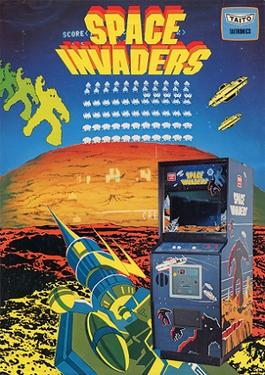
Space Invaders
1978 fixed shooter video game
Lode Runner
1983 video game
Ghosts 'n Goblins
1985 video game

Puzzle Bobble
1994 video game

Clock Tower
1995 horror video game

Slitherlink
thumb|right|class=skin-invert-image|Moderately difficult Slitherlink puzzle (Media:Slitherlink-answer.png|solution)
Slitherlink (also known as Sli-Lin, Fences, Takegaki, Loop the Loop, Loopy, Ouroboros, Suriza, Rundweg, Tectonic and Dotty Dilemma) is a logic puzzle developed by publisher Nikoli.
Rainbow Islands: The Story of Bubble Bobble 2
1987 video game
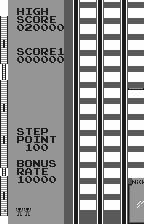
Crazy Climber
1980 video game
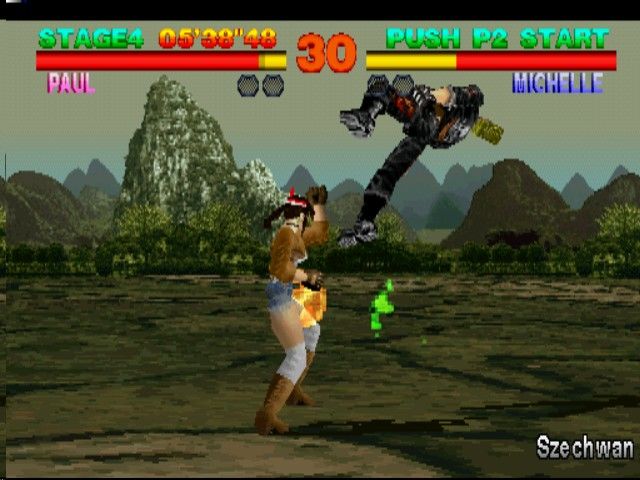
Tekken Card Challenge
1999 video game

Romance of the Three Kingdoms
1986 video game
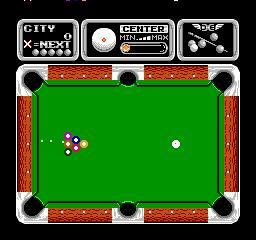
Side Pocket
1986 video game
list of WonderSwan games
Wikimedia list article
Romance of the Three Kingdoms II
1990 video game

Puyo Puyo Tsu
1994 video game

Ninja JaJaMaru-kun
1985 video game
Super Gem Fighter Mini Mix
1998 video game

Kaze no Klonoa: Moonlight Museum
1999 video game

Densha de Go! 64
1999 video game

Rockman & Forte Mirai kara no Chōsensha
1999 video game
Blue Wing Blitz
2001 video game
Gunpey
, often written as Gun Pey or GunPey, is a series of puzzle video games released by Bandai. It was originally released for the WonderSwan, and has been ported to WonderSwan Color, PlayStation, Nintendo DS and PlayStation Portable. The game was named as a tribute to the developer of the game, Gunpei Yokoi. He is known for developing several handheld consoles such as Nintendo's Game Boy, Virtual Boy, and Bandai's Wonderswan system. In the series, players move line fragments vertically in a grid in order to make a single branching line connect horizontally from one end to the other. The objective

Digimon Adventure: Anode/Cathode Tamer
1999 video game